Algeria
 Egypt
 Libya
 Morocco
 Sudan
 Tunisia
 Benin
 Burkina Faso
 Côte d'Ivoire
 Ghana
 Guinea
 Guinea-Bissau
 Liberia
 Mali
 Mauritania
 Niger
 Nigeria
 Senegal
 Sierra Leone
 The Gambia
 Togo
 Cameroon
 Central African Republic
 Chad
 DR Congo
 Equatorial Guinea
 Gabon
 Republic of the Congo
 São Tomé and Príncipe
 Burundi
 Comoros
 Djibouti
 Eritrea
 Ethiopia
 Kenya
 Madagascar
 Malawi
 Mauritius
 Mozambique
 Rwanda
 Seychelles
 Somalia
 South Sudan
 Tanzania
 Uganda
 Angola
 Botswana
 Eswatini
 Lesotho
 Namibia
 South Africa
 Zambia
 Zimbabwe

In Praia and across the islands, the presidential election on Sunday 15 November is testing a political achievement often regarded as secure: citizens’ trust in their institutions. In Cabo Verde, six candidates are contesting the presidency, in a country where voter turnout and the hardships of daily life are weighing on the campaign.
An election in a stable West African democracy
Since gaining independence in 1975, the archipelago has experienced regular and peaceful changes of government. This record contrasts with the institutional ruptures seen in several West African countries. It does not, however, shield the country from political disengagement, particularly among young people.
Cabo Verde is a member of the Economic Community of West African States (ECOWAS), which brings countries in the region together around cooperation and crisis prevention. The organisation has deployed a long-term election observation mission, with 20 experts in the archipelago from 3 to 19 November. The African Union has also sent a mission of 37 observers from 22 member states. ECOWAS’s election mission in Cabo Verde and the announcement of the African Union mission confirm the region’s focus on the vote.
Voters elect the president directly for a five-year term. The post is distinct from that of head of government: under Cabo Verde’s system, the prime minister leads government policy, while the head of state performs institutional functions and can veto legislation.
Six candidates, two party figures
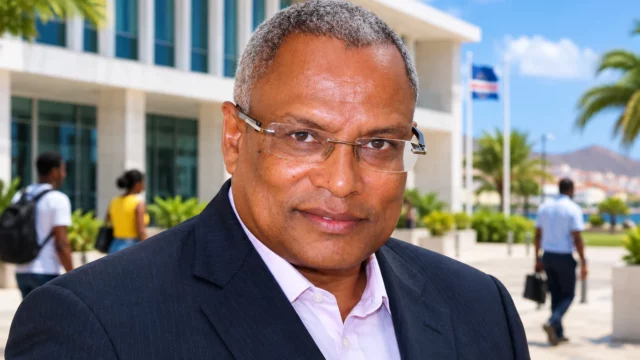
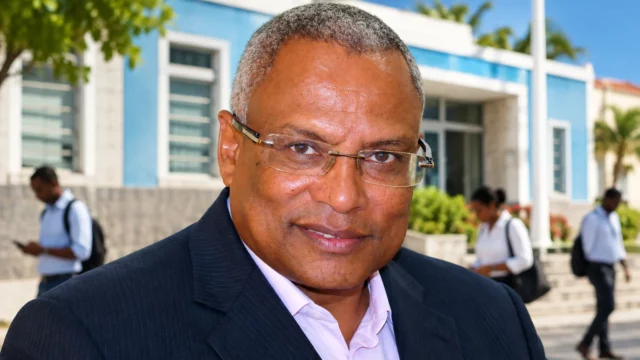
The National Electoral Commission has approved six candidates for the 15 November vote. The incumbent, José Maria Neves, is seeking a second term with the backing of the African Party for the Independence of Cabo Verde (PAICV). His main party-backed rival, Joana Rosa, is standing for the Movement for Democracy (MpD). Four independent candidates complete the list: Antero Tavares, Casimiro de Pina, Gilson Alves and Loisito Tavares. The official list is published by the National Electoral Commission and corroborated by the Cabo Verdean news agency Inforpress.
The election follows the May 2026 parliamentary elections, won by the PAICV, which returned to government after ten years of MpD rule. The presidential vote does not choose the head of the executive, but it can alter the political balance at the top of the state. Joana Rosa is advocating a presidency able to act as a counterweight to the government and parliament. A victory for José Maria Neves, by contrast, would extend the PAICV’s presence at the head of state, at a time when the party also leads the government.
The previous election favours the incumbent: José Maria Neves won the 2021 vote with about 52 per cent of the vote. He is the first president elected by universal suffrage since independence to seek re-election. Joana Rosa, a former justice minister and lawyer, represents a first: according to the Associated Press, no woman had previously stood for the presidency since 1975. Her candidacy therefore highlights women’s place in political competition, without her gender defining either her programme or voters’ expectations.
Everyday concerns at the heart of the choice
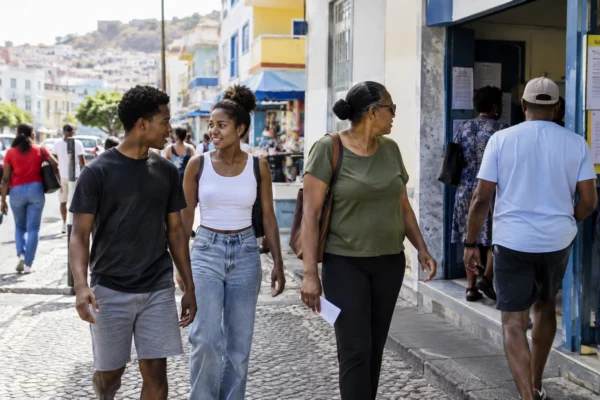
The campaign has focused on jobs, the cost of living, wages and maritime links between the islands. These issues do not affect all residents in the same way. Transport difficulties directly affect travel between islands and access to services. For young people, the search for jobs and economic prospects also fuels emigration. Entrepreneurs, meanwhile, have highlighted constraints holding back investment, including the level of import taxes cited during the campaign.
Turnout is another issue. A summary of electoral data provided in the campaign material indicates a decline between 2016 and the parliamentary elections of May 2026. This figure alone is not enough to establish the reasons for the fall: abstention, population mobility and voter registration may each play a different role. It nevertheless serves as a reminder that trust in political promises is measured not only in speeches, but also in voters’ presence at the ballot box.
Nearly 426,000 voters are expected to cast ballots, including about 77,000 registered abroad, according to figures published before the election. The diaspora therefore has a role in the electoral balance, while experiencing realities distinct from those of island residents. Polling stations are due to close at 18:00 local time. If no candidate wins an absolute majority, a second round is scheduled for 29 November.
A signal watched across the region
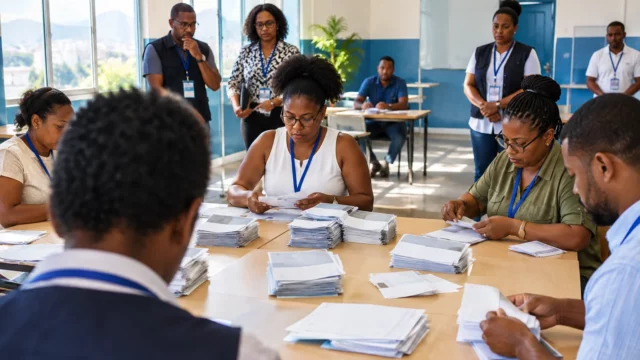
ECOWAS and African Union observers are monitoring the voting process as well as the political environment before and after the election. Their presence does not prejudge the final assessment. The National Electoral Commission remains the institution responsible for organising the process and publishing the results.
Beyond the presidential succession, the issue is whether the institutions can maintain open competition and respond to concerns raised during the campaign. For other West African countries, the Cabo Verdean election offers a point of comparison on civilian transfers of power and constitutional continuity. In Cabo Verde, the result and turnout will show whether this stability is accompanied by renewed voter engagement.