Algeria
 Egypt
 Libya
 Morocco
 Sudan
 Tunisia
 Benin
 Burkina Faso
 Cabo Verde
 Côte d'Ivoire
 Ghana
 Guinea
 Guinea-Bissau
 Liberia
 Mali
 Mauritania
 Niger
 Nigeria
 Senegal
 Sierra Leone
 The Gambia
 Togo
 Cameroon
 Central African Republic
 Chad
 DR Congo
 Equatorial Guinea
 Gabon
 Republic of the Congo
 Burundi
 Comoros
 Djibouti
 Eritrea
 Ethiopia
 Kenya
 Madagascar
 Malawi
 Mauritius
 Mozambique
 Rwanda
 Seychelles
 Somalia
 South Sudan
 Tanzania
 Uganda
 Angola
 Botswana
 Eswatini
 Lesotho
 Namibia
 South Africa
 Zambia
 Zimbabwe
In São Tomé and Príncipe, the reappointed Prime Minister does not have a majority of his own from the ballot box. His ability to govern will therefore depend on agreements reached in Parliament and how they translate into upcoming votes. This balance of power puts the stability of the executive at the heart of the new political cycle.
An Assembly without an absolute majority
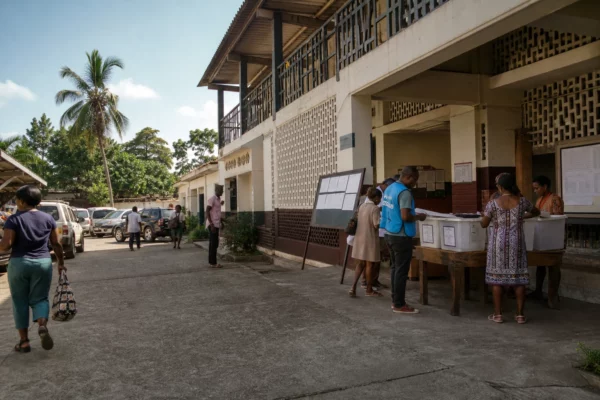
The general election on 27 September renewed all 55 seats in the National Assembly. The Movement for the Liberation of São Tomé and Príncipe (MLSTP) won 24. The Independent Democratic Action (ADI), the party of Prime Minister Américo Ramos, secured 23. The MCI-PS/PUN coalition has six elected members, and the BASTA Movement has two. No party alone has the 28 seats needed for an absolute majority.
These final results, published by the Constitutional Court on 6 October, are also recorded by the Inter-Parliamentary Union. São Tomé’s Centre for Public Integrity confirms the distribution of seats and notes that no political group can govern without seeking support beyond its own MPs.
President Carlos Vila Nova appointed Américo Ramos to head the 20th constitutional government on 12 November. The presidency said that ADI had provided a written guarantee of what it considered sufficient parliamentary support. The content of that guarantee has not been made public. Domingos Monteiro, leader of the MCI-PS/PUN coalition, for his part said that his agreement with ADI remained in force and was intended to support the government for four years.
The formation of the government gave rise to conflicting accounts. According to the presidency, the MLSTP, which was approached first, did not provide a sufficient guarantee. Its leader, Américo Barros, disputed this account: he said his party had proposed a combination of MLSTP and BASTA MPs, along with other members of parliament. Those additional supporters, he said, had asked to remain discreet. At this stage, the public information does not make it possible to independently verify the number of MPs who have actually pledged their support.
The appointment therefore does not put an end to debate about the strength of the majority. It opens a period in which votes in the Assembly, notably on the government programme and the budget, will provide a practical measure of the support the executive commands.
The presidential choice and its parliamentary limits
The MLSTP came first, but its 24 seats did not guarantee it the leadership of the government. ADI, in second place, was able to point to an agreement with the MCI-PS/PUN coalition. Together, their seats amount to 29, provided the coalition’s six MPs do in fact support the government in votes. This arithmetic explains the decisive weight of smaller political groups in a fragmented Assembly.
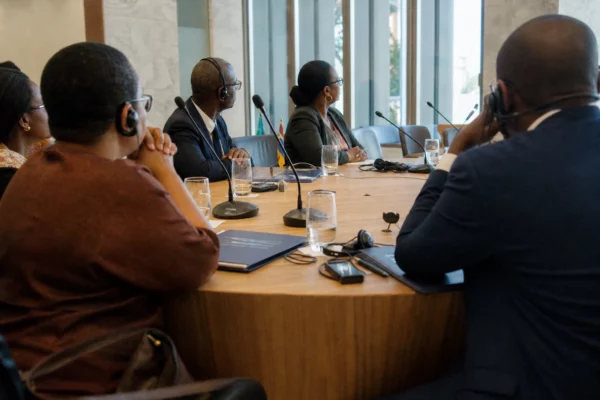
This configuration distinguishes the number of seats won from the ability to assemble parliamentary support. In itself, it does not determine how long the government will last. BASTA’s position and the choices of MPs who have expressed reservations could also matter in close votes. The election of Nilda Borges da Mata, an ADI MP, as Speaker of the Assembly at its first sitting on 10 November is another element of the parliamentary context, but does not replace confidence votes or votes on legislation.
Américo Ramos had already been Prime Minister since January 2025. He was appointed by Carlos Vila Nova after the departure of Patrice Trovoada, who also belongs to ADI. His reappointment ensures continuity at the head of the executive, but follows an election that reduced his party’s parliamentary representation. The new legislature will therefore test the team’s ability to negotiate beyond its own camp.
This institutional test is taking place in a country where economic constraints directly limit the government’s room for manoeuvre. The African Development Bank notes a slow recovery after the effects of the pandemic, persistent inequalities and limited job opportunities, particularly for young people. It also highlights heavy dependence on external financing, difficulties with electricity supply and exposure to fluctuations in global prices.
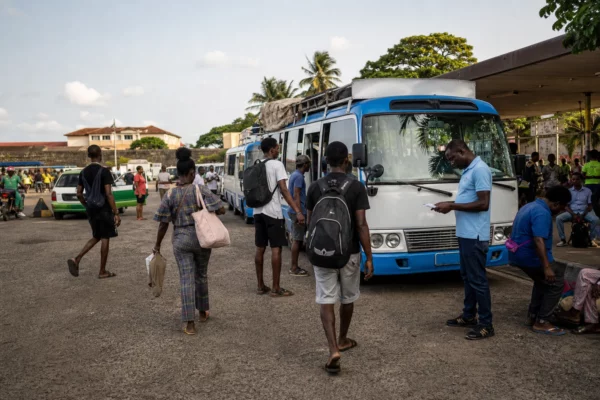
For residents of São Tomé, the capital, as well as those on the island of Príncipe and in less central communities, these issues take different forms. Difficulties accessing energy and infrastructure hamper business and public services. In areas where formal jobs are scarce, the lack of opportunities particularly affects young people and fuels emigration. The African Development Bank cites limited job opportunities among the factors associated with emigration, without reducing it to a single cause.
A national issue with regional resonance
São Tomé and Príncipe is an island state in Central Africa, independent since 1975 and a member of the Economic Community of Central African States (ECCAS), the regional organisation for economic and political cooperation. The archipelago is not a member of ECOWAS, which brings together West African countries. This distinction places the country in its relevant institutional context, at the heart of the Gulf of Guinea.
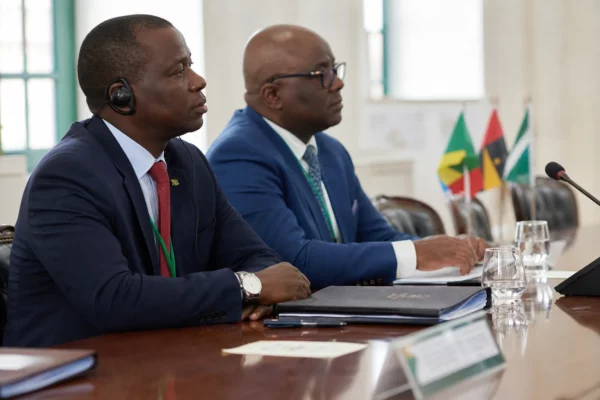
Parliamentary stability also matters to its regional partners. Budgetary choices, infrastructure, energy and economic exchanges extend beyond decisions made in São Tomé alone. But membership of ECCAS does not mean that national difficulties will automatically receive a regional response: implementation will depend on agreements between states and the resources deployed.
The election therefore confronts São Toméan leaders with two linked demands: to respect the election result while building a working majority, and then to turn that support into decisions that benefit residents. For now, Américo Ramos’s appointment rests on a guarantee announced by the presidency and backed by ADI and its partner. Its strength will have to be tested in Parliament, through the government programme, the budget and upcoming votes.