Algeria
 Egypt
 Libya
 Morocco
 Sudan
 Tunisia
 Benin
 Burkina Faso
 Cabo Verde
 Côte d'Ivoire
 Ghana
 Guinea
 Guinea-Bissau
 Liberia
 Mali
 Mauritania
 Niger
 Nigeria
 Senegal
 Sierra Leone
 The Gambia
 Togo
 Cameroon
 Central African Republic
 Chad
 DR Congo
 Equatorial Guinea
 Gabon
 Republic of the Congo
 São Tomé and Príncipe
 Burundi
 Comoros
 Djibouti
 Eritrea
 Ethiopia
 Kenya
 Madagascar
 Mauritius
 Mozambique
 Rwanda
 Seychelles
 Somalia
 South Sudan
 Tanzania
 Uganda
 Angola
 Botswana
 Eswatini
 Lesotho
 Namibia
 South Africa
 Zambia
 Zimbabwe
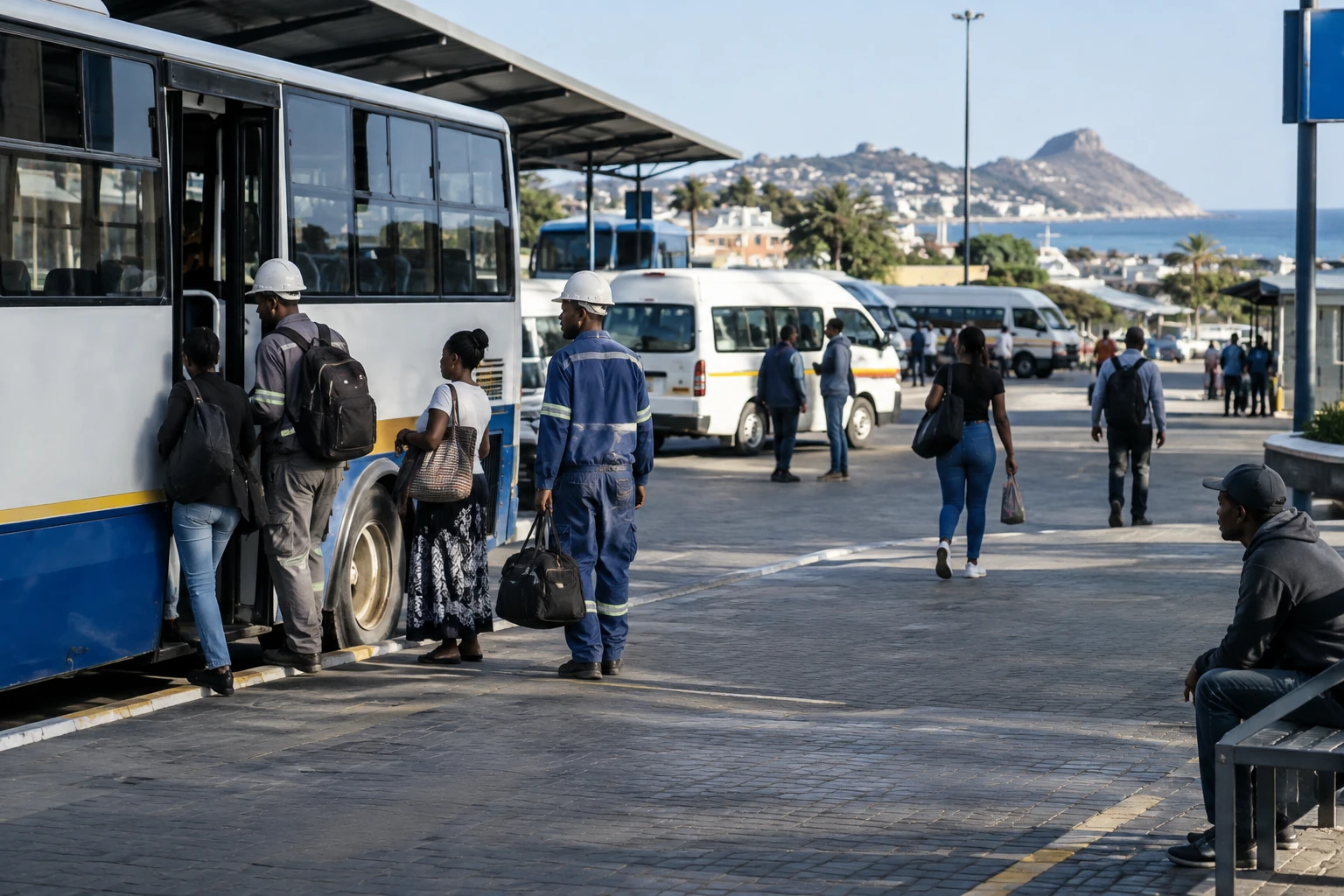
For Namibia, the overseas expansion of a mining group raises a concrete question: what happens to the economic importance of a local mine when its owner is also financing new projects elsewhere? Paladin Energy has just raised capital to develop a Canadian deposit, while Langer Heinrich remains its only producing African asset.
A fundraising round focused on Canada
The Australian group announced on 13 November 2026 that it had completed a A$525 million fundraising round, equivalent to about US$356 million. The transaction combines a share issue in Australia and a placement in Canada. Paladin also plans to separately offer a share purchase plan that could raise up to an additional A$50 million from certain shareholders.
The financing is intended to support development of the Patterson Lake South project in the Canadian province of Saskatchewan. Paladin is targeting first production in 2031. The group also intends to fund exploration in the Athabasca Basin and extend the life of its Triple R project. Diversification, then, is not just about shifting production: it expands the project portfolio and spreads spending across several assets.
The announcement follows the sale in 2020 of Kayelekera, a mine in Malawi. Since then, Langer Heinrich, in Namibia’s Erongo Region, has been Paladin’s only African asset. The company owns 75% of the mine; China National Nuclear Corporation owns the remaining 25%.
Langer Heinrich, a central asset in Namibia
The mine produced 4.82 million pounds of uranium oxide, or U3O8, in the financial year ended 30 June 2026. Revenue reached US$304.3 million, up 71% year on year. Paladin attributes the increase to higher sales volumes and a better average realised price.
For the 2027 financial year, which runs from July 2026 to June 2027, the company forecasts production of 5.1 million to 5.6 million pounds. This forecast remains a target, not a result already achieved. The site continued to ramp up after production restarted in 2024; mining operations resumed in 2025. The group must therefore confirm that ore supply and plant performance are keeping pace with its plans.
Paladin remains heavily reliant on the Namibian mine until production is expected to begin in Canada. For Namibia, the stakes extend beyond the company’s accounts: the mine supports employment and local procurement in Erongo. The Chamber of Mines of Namibia says 88% of Langer Heinrich’s procurement spending in 2025 went to suppliers in the country. This figure, however, relates to that company’s purchases, not the overall benefits of the national mining sector.
Local benefits to watch
The fundraising does not mean Paladin is withdrawing its capital from Namibia. Rather, it points to a strategy in which Langer Heinrich’s revenues and experience coexist with development investments abroad. For Windhoek and Erongo’s communities, the decisive indicators will remain continuity of operations, jobs, contracts awarded to Namibian businesses and public revenues linked to the activity.
This assessment must also take account of the constraints inherent in mining. A company’s results do not automatically translate into equivalent benefits for workers, local suppliers or public finances. How benefits are distributed depends in particular on jobs created, purchases made in the country, and applicable tax and regulatory obligations.
At regional level, Namibia belongs to the Southern African Development Community (SADC), a framework for cooperation among countries in the region. The announcement is not a SADC decision, but it comes amid global competition to secure uranium supplies. It also highlights how African producers are seeking greater influence in the value chain, beyond extracting and exporting ore.
Canada’s timeline does not settle the question for Namibia
The Canadian project could eventually reduce Paladin’s geographic concentration. But first production, announced for 2031, is still some way off and depends on continued development of the site. Until then, Langer Heinrich remains a mainstay of the group’s operations. The next production figures will show whether the mine meets its 2027 target, while progress on work in Canada will provide a more concrete measure of the announced timeline.
For Namibia, the focus will therefore be twofold: maintaining Langer Heinrich’s contribution to the local economy and ensuring that its ramp-up also benefits domestic players. For other African uranium-producing countries, the case highlights a shared challenge, without erasing the differences between their markets: attracting investment while negotiating lasting local benefits in a sector where financing decisions are often made internationally.