Algeria
 Egypt
 Libya
 Morocco
 Sudan
 Tunisia
 Benin
 Burkina Faso
 Cabo Verde
 Côte d'Ivoire
 Ghana
 Guinea
 Guinea-Bissau
 Liberia
 Mali
 Mauritania
 Niger
 Nigeria
 Senegal
 Sierra Leone
 The Gambia
 Togo
 Cameroon
 Central African Republic
 Chad
 DR Congo
 Equatorial Guinea
 Republic of the Congo
 São Tomé and Príncipe
 Burundi
 Comoros
 Djibouti
 Eritrea
 Ethiopia
 Kenya
 Madagascar
 Malawi
 Mauritius
 Mozambique
 Rwanda
 Seychelles
 Somalia
 South Sudan
 Tanzania
 Uganda
 Angola
 Botswana
 Eswatini
 Lesotho
 Namibia
 South Africa
 Zambia
 Zimbabwe
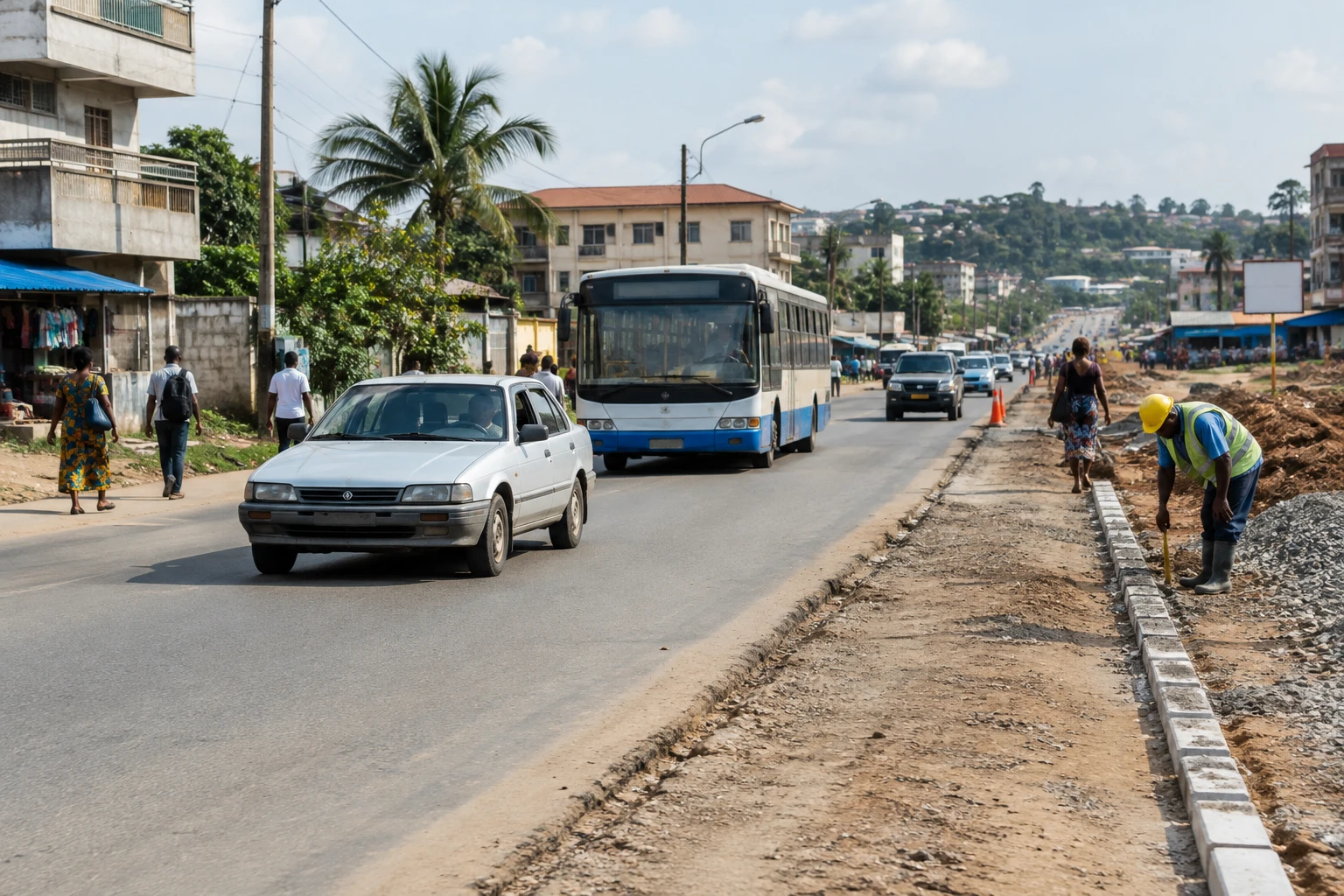
In Libreville, the impact of a road project is measured not only by the lives it displaces. In affected neighbourhoods, the questions are not just about traffic: they concern how soon people must leave, the amount of compensation and whether they can rebuild elsewhere.
Road project disrupts neighbourhoods across Greater Libreville
Land clearance operations began on 4 November 2026 in Okala, north of Gabon’s capital, and between Lac Bleu and Diba-Diba. Here, a road reserve refers to the strip of land set aside for roadworks. The stated aim is to widen and improve routes to ease traffic across Greater Libreville.
The timetable has nevertheless sparked deep concern. Residents say they were given about two weeks to leave their homes. Some describe houses occupied for decades and denounce demolitions that began before the promised sums were paid. These are residents’ accounts, which on their own do not establish the situation in every case.
Before work began, the government had announced consultations, financial assistance and resettlement options. The Gabonese daily L’Union also reported that the authorities planned to provide social support and measures to ensure displaced children could continue their schooling.
Compensation announced, payments still awaited
On 11 November, government spokesman Emmanuel Eyeghe Nze presented an initial assessment. According to figures reported by GabonReview, 424 people had been registered and 193 had received payments totalling 3.573 billion CFA francs. The government also announced an additional allocation of 4 billion CFA francs to continue payments.
These official figures give an indication of disbursements, but do not resolve the question of timing for each family. The number of people registered exceeds the number of beneficiaries already paid. Residents still waiting for compensation therefore face immediate uncertainty: where to move, how to cover relocation costs and how to maintain their household’s livelihood.
The authorities say only 13 of the 424 people registered hold a valid land title. They nevertheless say financial measures have been extended to families without titles. This administrative distinction does not capture every situation: a plot, a house built over the years and occupancy rights can raise different questions, which the registration and assessment processes must address clearly.
The government has also mentioned resettlement plots in Malibé 2 and Ntoum, as well as support for vulnerable households. These announcements will need to translate into solutions that are genuinely accessible: an allocated plot, a title issued, the possibility of building a home and nearby services. Without that, a one-off financial payment may not meet the long-term needs of displaced families.
Procedure is another challenge for the project
The debate is not limited to the usefulness of the roads. In August 2026, a citizens’ group challenged the planned procedure around the Cité de la Démocratie, calling for the publication of official decisions and land documents. That challenge concerns a separate area and project; nevertheless, it reflects broader concerns about the transparency of land operations in Libreville.
The challenge is to reconcile urban development with the safeguards owed to those affected. A road can ease some congestion and make travel easier. But for families, traders and workers who lose a home or place of business, the outcome also depends on the quality of the registration process, the opportunity to challenge an assessment and when compensation is paid.
The difference in impact matters. Households with savings or another home may sometimes absorb a move more easily. Those who rely on a business run from home, proximity to a school or access to transport risk losing more than a building. The project’s real cost cannot therefore be reduced to the total amount paid by the state.
A test of trust in public action
Gabon is a member of CEMAC, the Economic and Monetary Community of Central Africa. Libreville’s transformation is not itself a regional project, but it raises a question shared by cities across Central Africa: how can infrastructure be expanded while ensuring people receive information in advance, rules are clear and affected residents have avenues of appeal?
President Brice Clotaire Oligui Nguema convened the ministers involved after the criticism, calling for greater support and faster settlement of compensation claims, according to information provided by the government and reported by Gabonese media. The intervention underscores that the way the operation is handled has become a political as well as an urban issue.
What happens next will be judged by verifiable measures: the number of payments actually made, the delivery of the promised plots and the handling of households still waiting. In Libreville, improvements to the roads will be judged not only by the flow of traffic, but also by whether displaced families can rebuild their lives.