Algeria
 Egypt
 Libya
 Morocco
 Sudan
 Tunisia
 Benin
 Burkina Faso
 Cabo Verde
 Ghana
 Guinea
 Guinea-Bissau
 Liberia
 Mali
 Mauritania
 Niger
 Nigeria
 Senegal
 Sierra Leone
 The Gambia
 Togo
 Cameroon
 Central African Republic
 Chad
 DR Congo
 Equatorial Guinea
 Gabon
 Republic of the Congo
 São Tomé and Príncipe
 Burundi
 Comoros
 Djibouti
 Eritrea
 Ethiopia
 Kenya
 Madagascar
 Malawi
 Mauritius
 Mozambique
 Rwanda
 Seychelles
 Somalia
 South Sudan
 Tanzania
 Uganda
 Angola
 Botswana
 Eswatini
 Lesotho
 Namibia
 South Africa
 Zambia
 Zimbabwe
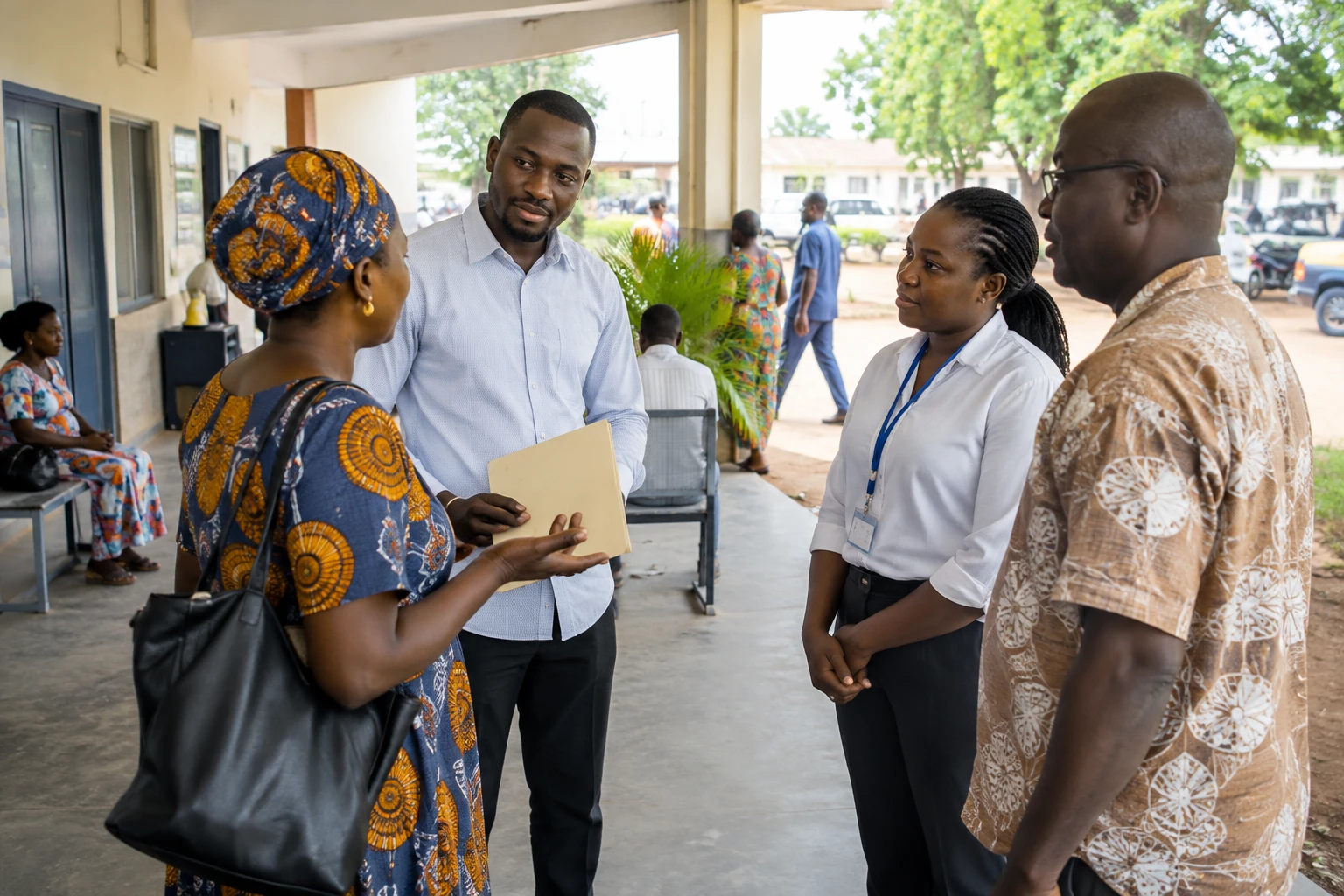
An increase in military funding does not, in itself, show which capabilities will actually be strengthened. In Côte d’Ivoire, the challenge for the 2027 budget will be to turn an allocation into operational resources while meeting the needs of people living near the borders.
Committee vote ahead of final adoption
On 10 November 2026, the National Assembly’s Committee on Economic and Financial Affairs (CAEF) unanimously approved the draft budget for the Ministry of Defence. The proposed amount is 561.57 billion CFA francs, compared with 491.59 billion in 2026. That represents an increase of about 14.2%, or nearly 70 billion more.
This is, however, a parliamentary step, not proof that all the funding has already been definitively adopted and spent. The 2027 Finance Bill is continuing its passage through the National Assembly. The distinction matters: a planned allocation must still go through budgetary procedures and be implemented before it can have an impact on the ground.
The authorities describe the allocation as a means of modernising the defence apparatus, securing the borders and preserving territorial integrity. It is intended to cover the operations of the armed forces, special forces and gendarmerie, as well as investments to improve their capabilities. The Ivorian Press Agency details the CAEF vote and the planned allocations.
A range of threats beyond the northern border
The country’s geographical position makes the issue a sensitive one. To the north, Côte d’Ivoire shares borders with Mali and Burkina Faso, which have faced attacks by armed groups for several years. Ivorian authorities also cite the risks of terrorist financing, serious crime, illegal gold mining and maritime piracy. These phenomena are distinct, but they involve different services and require sustained coordination.
The security response does not rely solely on military resources. In border regions, the state’s presence also depends on access to public services, livelihood opportunities and trust between residents and institutions. Security deployments can strengthen surveillance and response capabilities. They do not replace civilian policies that reduce the isolation of communities and address everyday needs.
The Northern Operational Zone is presented by the government as a tool to consolidate the military presence, improve territorial intelligence and coordinate the defence and security forces. Social programmes have also been announced in border areas. Their impact will depend in particular on their continuity, geographical coverage and responsiveness to local expectations.
Funding split between personnel, operations and equipment
The budget increase will not automatically translate into a corresponding rise in equipment. According to figures reported during the parliamentary review, 45% of the funding is earmarked for personnel costs and 41.57% for goods and services. Transfers account for 2.23%, while investment is estimated at 10.6%.
This breakdown highlights a practical trade-off: funding salaries and day-to-day operations while renewing material resources. Personnel costs support staffing and daily operations. Purchases of goods and services may cover a wide range of needs, but the budget heading alone does not identify the equipment involved. To assess the promised modernisation, it will therefore be necessary to track the funding actually allocated to investment, the contracts awarded and their implementation. Published details on the structure of defence spending shed light on these trade-offs.
People experience these choices differently depending on where they live and what they do. In border areas, a stronger capacity to maintain a presence can affect the safety of travel and trade. In urban centres, issues also include domestic security and the fight against criminal networks. For informal activities, particularly artisanal gold mining, public action must combine enforcement, the application of rules and realistic economic alternatives.
Partnerships and military planning to watch
Côte d’Ivoire is also adjusting its defence partnerships. In January 2026, the Ivorian armed forces and the Pennsylvania National Guard launched a partnership under the US State Partnership Program. An agreement was subsequently formalised in July. Announced areas of cooperation include training, the professional development of non-commissioned officers, disaster response, medical preparedness and air operations. This cooperation complements national policy choices; on its own, it does not show how Ivorian budget funds are being used.
The government has also listed a 2026-2030 military programming law among its objectives. Such a programme aims to organise investment and capabilities over several years, rather than taking a year-by-year approach. The central question will be how it is translated into practice: the priorities chosen, the funding available and the implementation timetable.
At the regional level, Ivorian security is linked to that of its neighbours and to cooperation mechanisms in West Africa, particularly within ECOWAS, the regional organisation for political and economic cooperation. But national responses are not uniform: each state combines its own measures, resources and partnerships. For Côte d’Ivoire, scrutiny will therefore focus as much on the budget’s final adoption as on its implementation, the situation in border areas and the ability to link security with public services and local development.