Algeria
 Egypt
 Libya
 Morocco
 Sudan
 Tunisia
 Benin
 Burkina Faso
 Cabo Verde
 Côte d'Ivoire
 Ghana
 Guinea
 Guinea-Bissau
 Liberia
 Mali
 Mauritania
 Niger
 Nigeria
 Senegal
 Sierra Leone
 Togo
 Cameroon
 Central African Republic
 Chad
 DR Congo
 Equatorial Guinea
 Gabon
 Republic of the Congo
 São Tomé and Príncipe
 Burundi
 Comoros
 Djibouti
 Eritrea
 Ethiopia
 Kenya
 Madagascar
 Malawi
 Mauritius
 Mozambique
 Rwanda
 Seychelles
 Somalia
 South Sudan
 Tanzania
 Uganda
 Angola
 Botswana
 Eswatini
 Lesotho
 Namibia
 South Africa
 Zambia
 Zimbabwe
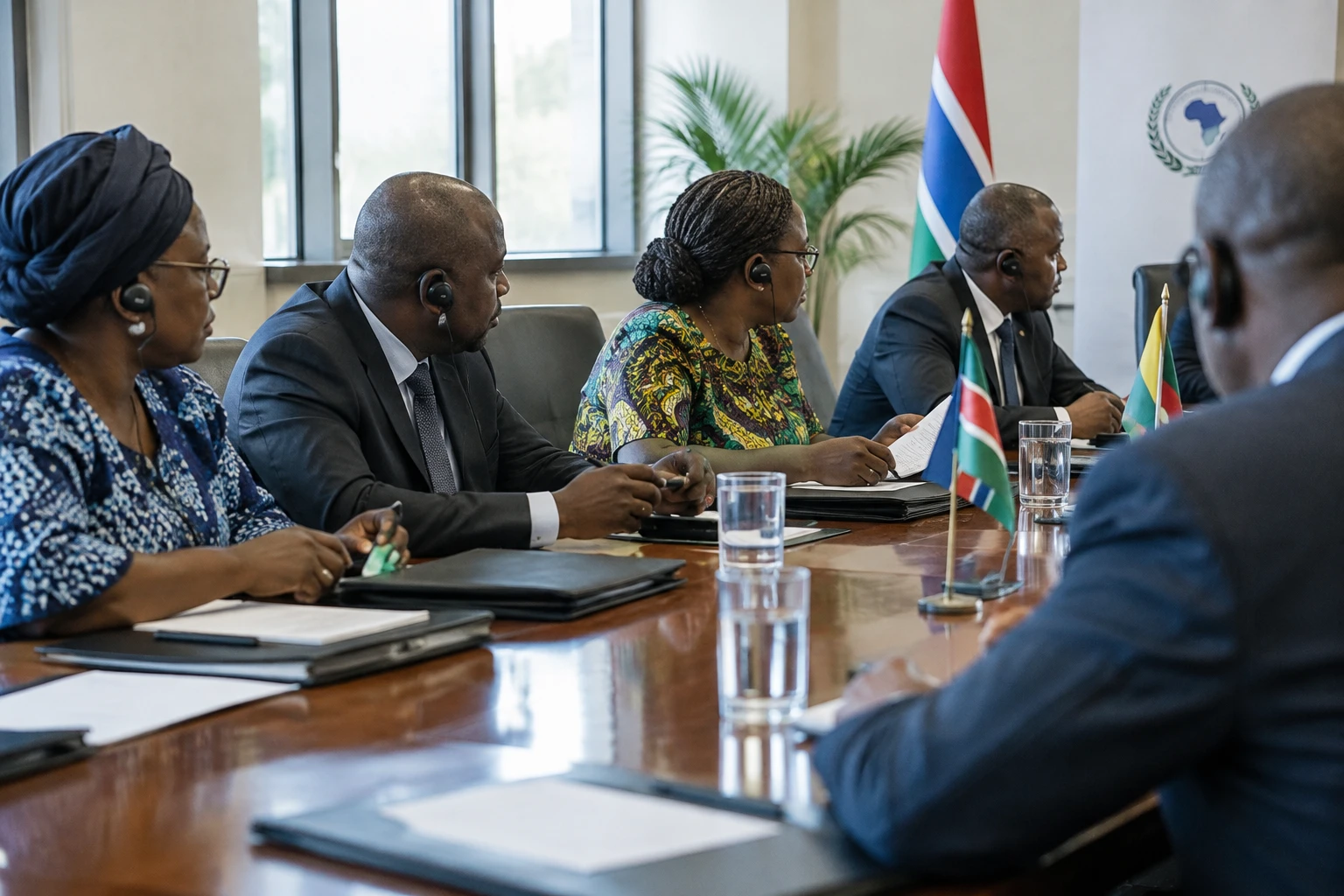
In The Gambia, the presidential campaign is opening with a question of trust: who can promise greater transparency while meeting voters’ practical expectations? Almameh Gibba’s candidacy adds a new player to a contest in which incumbent President Adama Barrow is seeking a third term.
Election set for 5 December
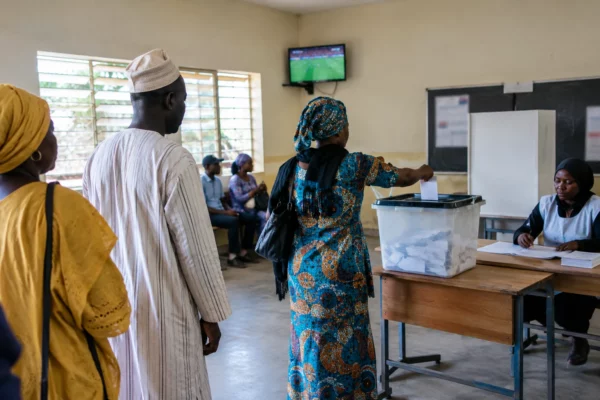
The Gambian Independent Electoral Commission has set the presidential election for 5 December 2026. The candidate nomination period runs from 3 to 14 November. The vote is to elect the president for the following five years. These dates now frame the contest and the timetable for the final weeks of campaigning.
The election comes in a country that turned the page on Yahya Jammeh’s 22 years in power in 2017. The Gambia remains a member of ECOWAS, the Economic Community of West African States, which brings the countries of the region together around goals of cooperation and integration. The vote will be watched beyond Gambia’s borders, in a region where the strength of electoral institutions remains a major political issue.
The debate over the duration of presidential power is also weighing on the campaign. Adama Barrow is seeking a third term. Attempts to replace the 1997 Constitution with a new text failed, leaving in force a framework that does not retroactively limit the number of presidential terms. The president is therefore eligible to run under the current rules, but his candidacy has revived discussion of his past commitments to constitutional reform.
Gibba runs under the “No to Alliance” banner
MP Almameh Gibba has submitted his nomination papers to the Electoral Commission under the banner of the “No to Alliance” movement. He is running as an independent. Submitting a file does not, however, in itself mean that a candidacy has been approved: the Commission must still examine the papers in accordance with the electoral procedure.
Gibba represents the Foni Kansala constituency. His candidacy comes amid a political landscape in which several figures are seeking to distinguish themselves from the government, while the incumbent president already has political allies. The movement backing the MP is associated with former president Jammeh, who went into exile in Equatorial Guinea after leaving office in 2017. This backing gives the candidacy a particular political dimension, without erasing the distinction between the candidate and the former head of state.
Gibba has highlighted governance, transparency and oversight of public funds. In particular, he has promised to reopen the case of Jammeh’s assets, whose management and restitution have fuelled controversy. The Gambian authorities have taken steps to recover assets linked to the former regime and compensate victims. For voters, the issue is therefore not limited to a campaign promise: it also concerns the ability of institutions to account for decisions made in the public interest.
Controversies go beyond election promises
The MP also remains associated with the debate over the ban on female genital mutilation (FGM). In 2024, he backed a proposal to repeal the ban in force since 2015. Parliament ultimately upheld the ban. In 2025, a criminal case linked to the death of an infant after an excision was a reminder that the issue directly concerns the protection of girls and the enforcement of the law.
In the campaign material presented, Gibba says he distinguishes “female circumcision” from female genital mutilation and insists that he does not support the latter. This distinction is contested in public debate: the terms can refer to excision practices that fall under Gambian law. His position should therefore be reported without presenting it as a legal clarification. The legal framework remains one of prohibition.
This issue puts the rights of women and girls at the heart of the election. It concerns the authorities responsible for enforcing the law, health and rights organisations, as well as communities where debates about tradition, religion and child protection continue. The campaign should not separate these questions from candidates’ responsibility towards women voters.
Power and the cost of living take centre stage
The contest is also unfolding against a backdrop of power cuts. In September, protests against outages took place in Banjul and other localities. Protesters denounced prolonged interruptions and called for Barrow to step down. Residents interviewed by Reuters reported outages lasting as long as 48 hours; this figure reflects reported testimony and is not a uniform measure for the whole country.
The consequences vary by activity. Households have to cope without electricity, while small businesses can lose working hours or incur extra costs to secure power. The effects are not confined to the capital: access to energy and the reliability of the network also affect localities outside Banjul, where alternatives may be less readily available.
For Barrow, the response to this crisis will weigh on the record he presents to voters. For Gibba and the other candidates, promising better management will not be enough without explaining how improvements will be financed and implemented. Their proposals will have to be weighed against the state’s responsibilities, the condition of the electricity sector and public budget constraints.
A candidacy put to the test
The 5 December election will be a test for Gambian institutions, but also for candidates’ ability to turn demands into verifiable commitments. Voters will have to assess plans for governance, electricity, public finances and freedoms, while also scrutinising positions taken on fundamental rights.
Across West Africa, attention will focus on the regularity of the process and the acceptance of its results. In The Gambia, the next immediate step is for the Electoral Commission to examine the nomination papers. Only after that review will the final list of candidates make it possible to assess more precisely the balance of forces against Adama Barrow.