Algeria
 Egypt
 Libya
 Morocco
 Sudan
 Tunisia
 Benin
 Burkina Faso
 Cabo Verde
 Ghana
 Guinea
 Guinea-Bissau
 Liberia
 Mali
 Mauritania
 Niger
 Nigeria
 Senegal
 Sierra Leone
 The Gambia
 Togo
 Cameroon
 Central African Republic
 Chad
 DR Congo
 Equatorial Guinea
 Gabon
 Republic of the Congo
 São Tomé and Príncipe
 Burundi
 Comoros
 Djibouti
 Eritrea
 Ethiopia
 Kenya
 Madagascar
 Malawi
 Mauritius
 Mozambique
 Rwanda
 Seychelles
 Somalia
 South Sudan
 Tanzania
 Uganda
 Angola
 Botswana
 Eswatini
 Lesotho
 Namibia
 South Africa
 Zambia
 Zimbabwe
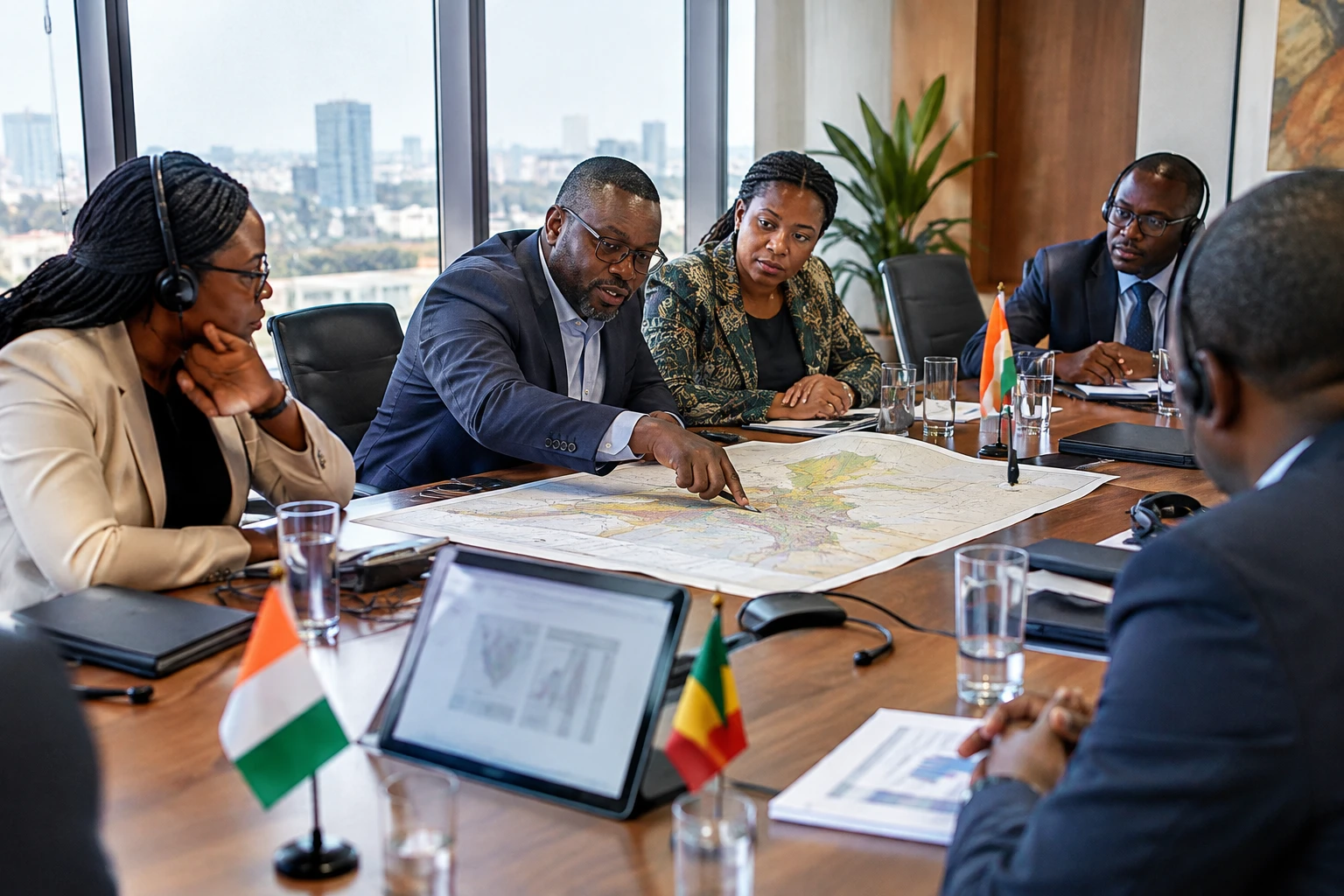
At Doropo, the question is no longer simply when gold will be brought out of the ground. Resolute Mining is already examining how to process ore from a deposit far from the main industrial site, and whether this arrangement makes economic sense.
A mining project in north-eastern Côte d’Ivoire
Doropo is in the Bounkani region of north-eastern Côte d’Ivoire, near the border with Burkina Faso. The mine is part of the expansion of Ivorian gold mining and is located in a region where access to jobs, markets and infrastructure remains a tangible issue for residents.
The project is moving forward amid national mining development. The Ivorian government granted an exploitation permit to Resolute’s local subsidiary in February 2026. The group then approved its final investment decision in March, confirming the start of construction. The Ivorian Press Agency also reported that discussions with local communities had addressed arrangements for land and agricultural compensation. These issues will shape how the benefits of the project are experienced in Doropo, beyond the production figures.
At the regional level, the project is part of a West Africa where gold plays a significant role in economies and investment strategies. Côte d’Ivoire is a member of ECOWAS, the West African organisation for economic and political cooperation. Decisions around Doropo — on financing, local content, land management and environmental monitoring — will therefore be watched in a sector where promised benefits must translate into verifiable outcomes for local communities.
Kilosegui, a separate deposit in the original plan
The mine, whose construction is estimated to cost $516 million, is initially due to operate with a single central plant. It is designed to process 4.9 million tonnes of ore a year. Under the current plan, Doropo could produce an average of 169,000 ounces of gold a year for about 13 years. First production is expected in the first half of 2028, according to company documents.
But Resolute is examining another option for Kilosegui, one of the deposits in the complex. Located about 30 kilometres from the main plant, it accounts for 856,000 ounces of reserves in the updated mine plan. The company is therefore studying the possibility of installing a standalone processing unit there, along with tailings infrastructure. This does not mean that a second plant has been approved: the base case remains processing at the main facility.
In the third quarter of 2026, the group launched an initial 20,000-metre drilling programme at Kilosegui. The work is intended to test extensions of the deposit at depth and clarify its potential. Resolute says the studies are also assessing the feasibility of a separate plant. No quantified target for increasing reserves has been announced at this stage.
Resolute’s published information was reported separately by specialist outlet Miningmx. The drilling results, followed by technical and economic studies, will help determine whether the deposit warrants dedicated infrastructure.
A trade-off between costs, capacity and local benefits
The distance between Kilosegui and the central plant gives the study an operational rationale. Processing the ore nearby could reduce transport and provide greater flexibility if the deposit’s resources increase. But a second plant would also require new investment, equipment and tailings management facilities. Potential savings alone are therefore not enough to demonstrate that the project is profitable.
Timing also matters. Doropo is already under construction, and Resolute says the project remains on schedule and within budget. An expansion decided on later could alter how construction is organised, although the company has not announced any change to the planned first production date. The Kilosegui option must therefore be distinguished from the project that is already funded and under way.
For residents, the benefits will depend less on the announcement of an additional plant than on the jobs that are actually accessible, purchases made from Ivorian businesses, and the management of land and environmental impacts. A facility closer to the deposit could shift some demand for labour and services to that area. This remains a possibility, however, not a quantified commitment from Resolute.
Compensation has already been discussed with the communities concerned, according to the Ivorian Press Agency. Monitoring will need to focus on the implementation of the agreements and the distribution of benefits among the construction project, local businesses and neighbouring communities. A mine’s effects are not limited to production: they also affect land, existing economic activities and services under pressure from the arrival of the project.
Next steps to watch
The immediate priority is the drilling campaign at Kilosegui. Its results should clarify the amount of recoverable ore and whether a potential plant could operate viably. Any decision will then require studies of costs, related infrastructure and implications for the overall mine plan.
In the meantime, construction of the central facility continues. The Ivorian government presents gold development as an economic driver, while local authorities expect tangible benefits and monitoring of commitments made on the ground. For West Africa, the issue therefore goes beyond production capacity: it is also about how major mining projects bring together capital, skills and local benefits. At Doropo, a second plant remains an option to be assessed, not a decision already taken.