Algeria
 Egypt
 Libya
 Morocco
 Sudan
 Tunisia
 Benin
 Burkina Faso
 Cabo Verde
 Côte d'Ivoire
 Ghana
 Guinea
 Guinea-Bissau
 Liberia
 Mali
 Mauritania
 Niger
 Nigeria
 Senegal
 Sierra Leone
 The Gambia
 Togo
 Cameroon
 Central African Republic
 Chad
 DR Congo
 Equatorial Guinea
 Gabon
 Republic of the Congo
 São Tomé and Príncipe
 Burundi
 Comoros
 Djibouti
 Eritrea
 Ethiopia
 Kenya
 Madagascar
 Malawi
 Mauritius
 Mozambique
 Rwanda
 Seychelles
 Somalia
 South Sudan
 Tanzania
 Uganda
 Angola
 Botswana
 Eswatini
 Lesotho
 South Africa
 Zambia
 Zimbabwe
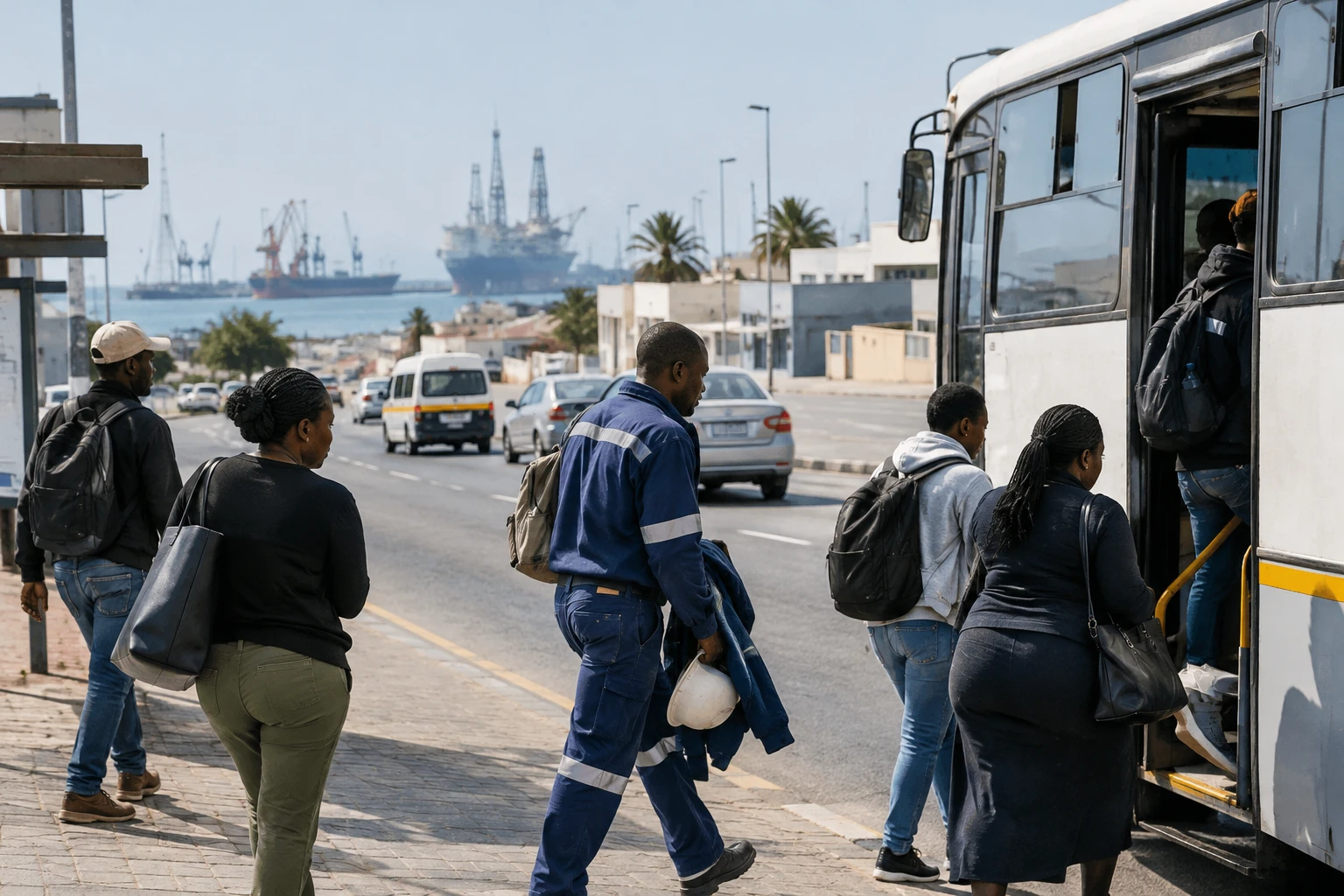
In Namibia, oil interest is no longer confined to areas where discoveries have already attracted major companies. In the Walvis Basin, off the Atlantic coast, partners are preparing to test whether geological indications could lead to a commercially viable discovery. The stakes go beyond exploration maps: they also concern the role Namibians could play in a potential new energy industry.
A licence still at the exploration stage
On 9 November 2026, QatarEnergy announced an agreement to acquire a 25% stake in the PEL 82 petroleum exploration licence, held and operated by Chevron. The licence covers blocks 2112B and 2212A, spanning about 11,444 km² in the Walvis Basin. Water depths range from 350 to 2,300 metres. The transaction still requires regulatory approval from Namibia.
Once completed, Chevron would retain 55% and the role of operator, meaning responsibility for conducting the work. Namcor E&P, the exploration arm of Namibia’s state-owned oil company, and Custos Energy would each retain 10%. These stakes and the area covered were announced by QatarEnergy and reported by Namibian media outlet The Namibian.
The agreement does not mean a deposit has been discovered. PEL 82 remains an exploration licence, and the financial terms of QatarEnergy’s entry have not been made public. The Qatari group is taking a minority stake, while Chevron retains operational responsibility and the largest share of the licence.
The Walvis Basin is still seeking its first major result
The licence is less advanced than acreage in the Orange Basin further south, where several discoveries have triggered appraisal campaigns. For Walvis, the available data offer leads, not proof of exploitable reserves. According to partner company Sintana Energy, three-dimensional seismic surveys cover about 70% of the area. These images of the subsurface help identify potential structures, but only a well can directly test for the presence of hydrocarbons.
Two wells were drilled in 2013. Wingat-1 brought oil to the surface, while Murombe-1 passed through rocks that may have generated hydrocarbons. These indications do not prove the existence of a commercial deposit or the possibility of profitable production. Sintana Energy’s PEL 82 page says an exploration well is being considered for 2027. This remains a provisional plan, which could change depending on approvals and the partners’ decisions.
Chevron took an 80% stake in the licence and the role of operator in 2024. QatarEnergy’s arrival would spread financial exposure among more companies without changing how the project is run. An additional partner can help fund operations and share risk; it does not guarantee either the drilling schedule or its outcome.
The benefits will also depend on decisions in Windhoek
For the authorities in Windhoek, Namibia’s capital, the challenge is to turn companies’ interest into lasting benefits for the country. Exploration can support services, logistics and training activities, particularly around ports and coastal towns. But these effects will remain limited until a commercial development is approved. Public revenues, local jobs and infrastructure needs will depend on discoveries, costs and the rules in force.
The issue involves stakeholders with different interests. Companies seek to reduce technical and financial risks. The state must protect revenues and national interests. Namibian businesses may seek contracts and a greater role in operations. For households, any benefits will not be automatic: they will depend on how revenues are collected, spent and distributed, as well as the effects on other sectors of the economy.
Namcor also acts as a custodian of public interests in licence areas and holds exploration data. In its January 2025 progress update, the state-owned company described appraisal and development work on several licences in the Orange Basin. The contrast is a reminder that developments in Walvis form part of a wider sector, where results achieved elsewhere cannot automatically be applied to PEL 82. The operational update published by Namcor also highlighted the role of geological studies and data in assessing licences.
A regional stake, but no shortcut to production
The deal is part of QatarEnergy’s strategy; the company is already present on other Namibian licences alongside major international groups. It confirms foreign investors’ interest in the country’s offshore sector, but does not prejudge the outcome of the work. Across the region, coastal energy projects are progressing at different rates: each country must contend with its own resources, rules and industrial capabilities.
As a member of the Southern African Development Community (SADC), Namibia could, if resources are established and developed, see its energy sector play a greater role in regional trade and investment. For the African Union, the case highlights the importance of negotiating extractive partnerships in ways that build skills and value added on the continent, rather than reducing producer countries to exporters of raw materials.
In the short term, the concrete milestones are regulatory approval of the transaction and the partners’ decision on the next well. The central question remains simple: will the indications at PEL 82 stand up to the test of drilling? Until that answer is known, the Walvis Basin represents a geological possibility, not a new source of Namibian oil production.