Algeria
 Egypt
 Libya
 Morocco
 Sudan
 Tunisia
 Benin
 Burkina Faso
 Cabo Verde
 Côte d'Ivoire
 Ghana
 Guinea
 Guinea-Bissau
 Liberia
 Mali
 Mauritania
 Niger
 Nigeria
 Senegal
 Sierra Leone
 Togo
 Cameroon
 Central African Republic
 Chad
 DR Congo
 Equatorial Guinea
 Gabon
 Republic of the Congo
 São Tomé and Príncipe
 Burundi
 Comoros
 Djibouti
 Eritrea
 Ethiopia
 Kenya
 Madagascar
 Malawi
 Mauritius
 Mozambique
 Rwanda
 Seychelles
 Somalia
 South Sudan
 Tanzania
 Uganda
 Angola
 Botswana
 Eswatini
 Lesotho
 Namibia
 South Africa
 Zambia
 Zimbabwe
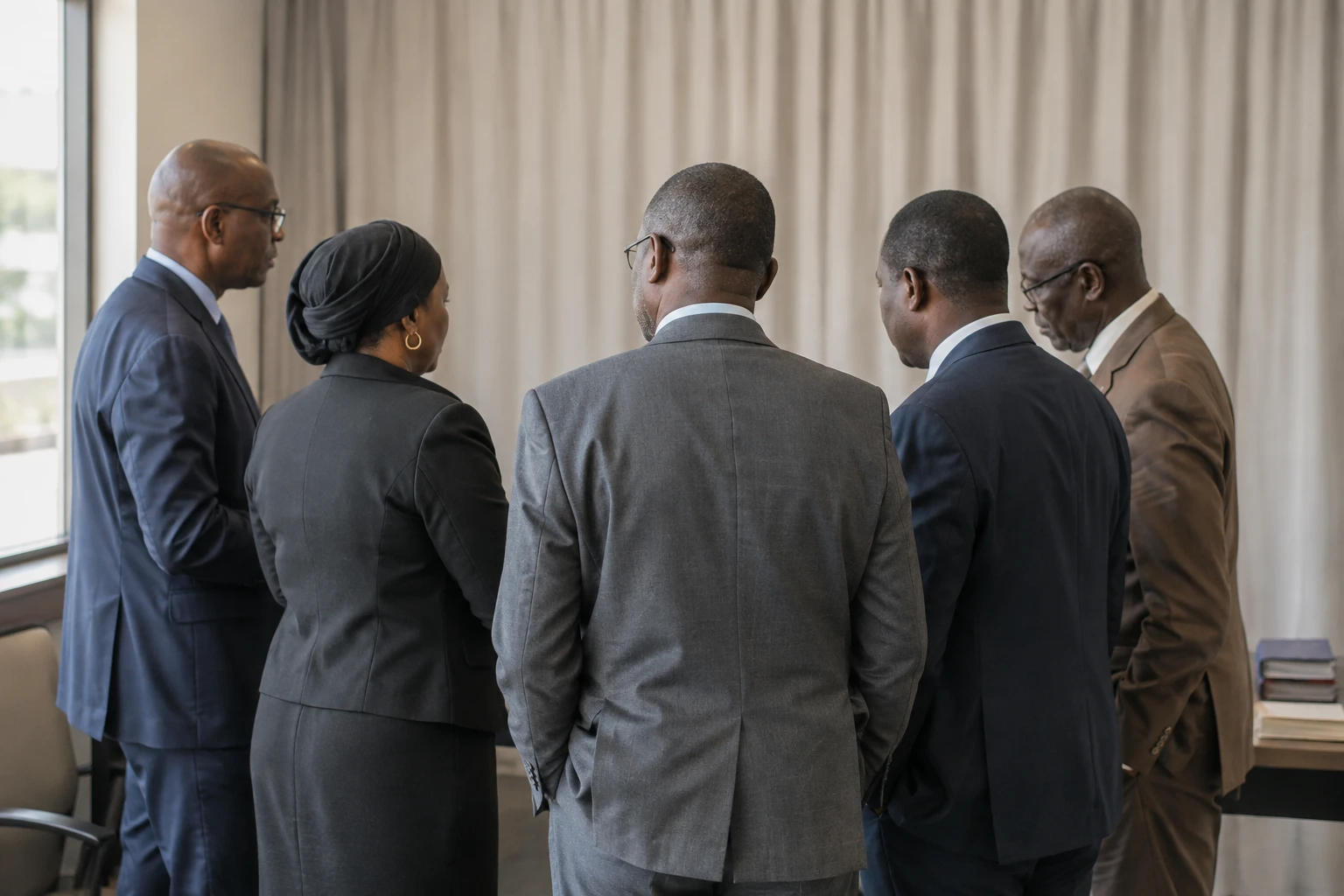
The 5 December presidential election in The Gambia will also hinge on an institutional question: after Adama Barrow’s two terms, the country has still not adopted a new Constitution setting a presidential term limit. Ousainou Darboe’s candidacy puts the issue back at the heart of a vote that will be decisive for the country’s democratic trajectory.
A political split becomes an electoral duel
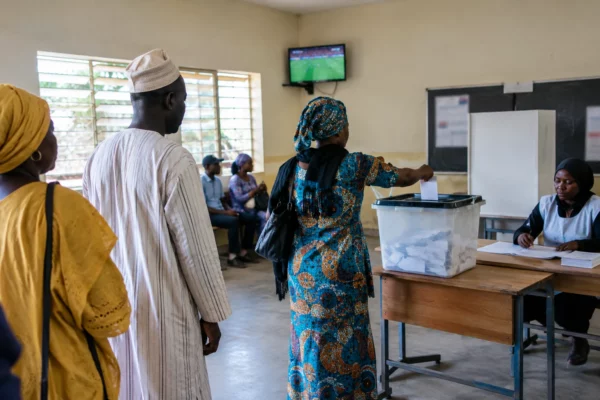
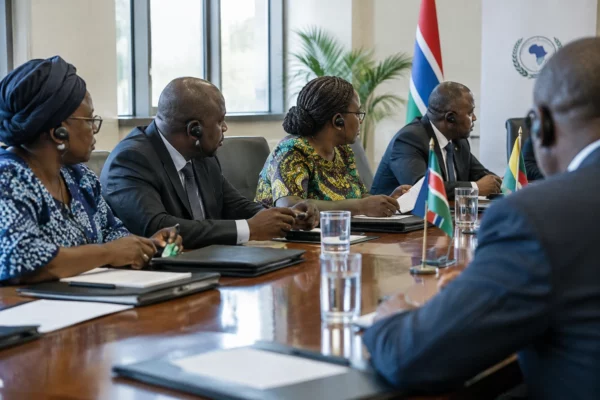
The date is set: Gambians will go to the polls on 5 December 2026. The Independent Electoral Commission has included the date in its official timetable. A pre-election mission from ECOWAS — the regional integration organisation for West African states — has also assessed preparations and the level of trust among stakeholders. The Gambian electoral calendar and the ECOWAS mission confirm the date.
The vote comes during a period that began with Yahya Jammeh’s defeat in 2016, after 22 years in power. Adama Barrow, then backed by the United Democratic Party (UDP), won that election. Ousainou Darboe, who had been imprisoned under Jammeh’s regime, had supported his candidacy. He later joined the government as foreign minister, then vice-president.
The two men parted ways politically in 2019. Barrow founded the National People’s Party (NPP), now in power, while Darboe remained at the helm of the UDP, the main opposition party. In 2021, Barrow was re-elected over Darboe. The official result of that presidential election is held in the Gambian Electoral Commission’s archives.
Candidacies submitted, but still subject to approval
On 9 November, Darboe, 78, submitted his application to the Independent Electoral Commission. This would be his sixth presidential bid, following those of 1996, 2001, 2006, 2011 and 2021. Pan-African news agency APA and Gambian outlet The Standard report the submission and his electoral record. APA confirmed the submission of his candidacy.
Incumbent President Adama Barrow has also begun the process of seeking a third term. APA reported on 10 November that he had submitted his documents. The anticipated contest between the NPP and UDP is not yet a definitive list, however: the Commission must review the candidacies before the campaign begins. Caution is therefore warranted over the final number of candidates and the precise make-up of the ballot.
The UDP source says that about 1.1 million people are registered to vote. This figure has not been cross-checked here against a recent independent electoral publication, so it should remain attributed rather than presented as an officially verified total.
A third term and constitutional reform
Barrow’s candidacy comes amid a contested constitutional framework. The draft new Constitution, which included limits on the number of presidential terms, has twice failed to pass the National Assembly. The second attempt was rejected at its second reading on 7 July 2025. The Constitution in force, dating from 1997, contains no retroactive limit that would prevent Barrow from running again. International IDEA examines the failed reform, which was also reported by APA.
The debate goes beyond the rivalry between two leaders. For the presidential majority, a new term would extend the programme launched in 2017. For the opposition and election-monitoring organisations, the absence of new rules leaves long-term political alternation uncertain. Voters, meanwhile, will have to choose between the candidates on the basis of their proposals and records, in a country whose institutions remain shaped by the post-Jammeh transition.
Darboe has said he wants to make constitutional reform a priority and has described any term he might serve as a single term. He has also mentioned changes to the security and public administration sectors. These commitments, reported by the Gambian daily The Standard after he submitted his candidacy, are campaign promises: their implementation would depend on the result and the balance of power in Parliament.
An election being watched beyond The Gambia’s borders
The Gambia, a West African country almost entirely surrounded by Senegal, is a member of ECOWAS and the African Union. The regional stakes are tangible: the country’s political stability directly concerns neighbouring Senegal and West African crisis-prevention mechanisms. The presence of the ECOWAS pre-election mission reflects this attention, without prejudging the outcome of the vote.
For residents of Banjul and rural areas alike, the election period will also be judged in practice: access to information, the conduct of the campaign, the handling of candidacies and the publication of results. A campaign focused on the two main parties could give the impression of a two-way contest, but the Commission has not yet completed its review of the applications.
The next step is therefore as much administrative as political: official approval of the candidacies, followed by the start of the campaign. With just weeks to go before the vote, the election will test both the institutions’ ability to organise a credible contest and the main candidates’ willingness to make democratic reform a verifiable issue rather than a promise of convenience.