Algeria
 Egypt
 Libya
 Morocco
 Sudan
 Tunisia
 Benin
 Burkina Faso
 Cabo Verde
 Côte d'Ivoire
 Ghana
 Guinea
 Guinea-Bissau
 Liberia
 Mali
 Mauritania
 Niger
 Senegal
 Sierra Leone
 The Gambia
 Togo
 Cameroon
 Central African Republic
 Chad
 DR Congo
 Equatorial Guinea
 Gabon
 Republic of the Congo
 São Tomé and Príncipe
 Burundi
 Comoros
 Djibouti
 Eritrea
 Ethiopia
 Kenya
 Madagascar
 Malawi
 Mauritius
 Mozambique
 Rwanda
 Seychelles
 Somalia
 South Sudan
 Tanzania
 Uganda
 Angola
 Botswana
 Eswatini
 Lesotho
 Namibia
 South Africa
 Zambia
 Zimbabwe
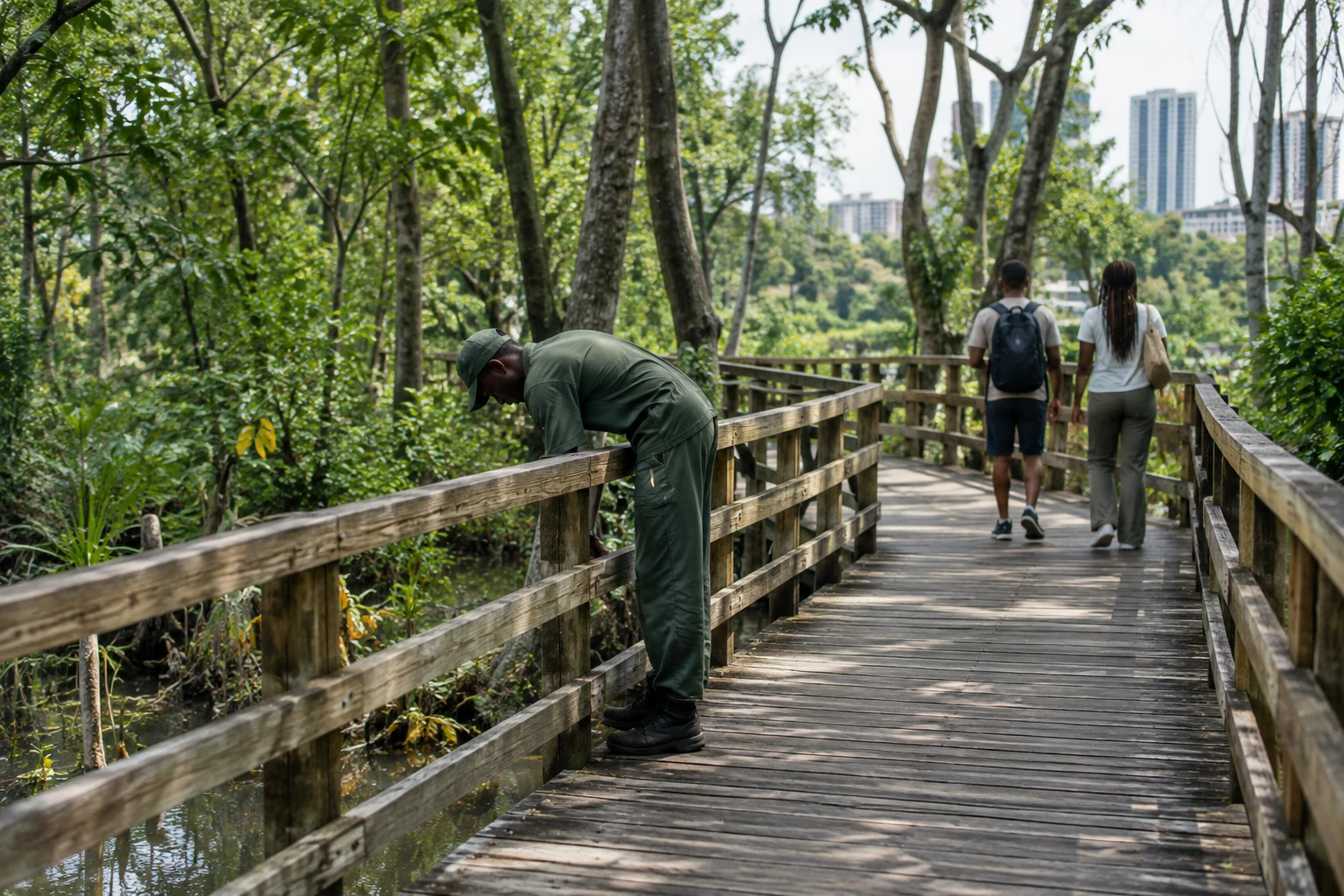
In Lekki, Lagos’s growth is also measured by what it leaves room to breathe. Amid roads, housing and land reclaimed from wetlands, a 78-hectare reserve is a reminder that an urban green space is more than a place for a walk: it protects habitats and helps maintain the balance of a coastal region.
A natural space in an expanding city
Lagos is Nigeria’s main economic centre. The city stretches along a low-lying coastline edged by lagoons and wetlands. In the Lekki district, Lekki Conservation Centre (LCC) preserves part of this environment amid a changing urban frontier.
The Nigerian Conservation Foundation (NCF), a Nigerian nature conservation organisation, established the centre in 1990 and manages it. The site covers 78 hectares and is home to local species, including mona monkeys and turtles. The foundation also presents the reserve as a space for reforestation, conservation and environmental education. The Nigerian Conservation Foundation’s description of the centre details its history and aims.
The site also attracts visitors. Its 401-metre-long canopy walkway, rising to about 22 metres, crosses several levels of the forest. It reveals layers that are generally difficult to observe from the ground. Radio Nigeria Lagos and the Nigerian daily The Guardian give consistent dimensions for the structure. Radio Nigeria Lagos and The Guardian Nigeria report a length of 401 metres and a height of about 22.5 metres.
Wetlands and the challenge of urban planning
The landscape around Lekki has changed with urbanisation. The construction of new neighbourhoods and infrastructure is often accompanied by land reclamation, which creates land on wet soils. The project manager cited in the available information says water now accumulates in some parts of the reserve, damaging facilities and trees. This local observation is a reminder that changes to the land can have effects even within protected areas.
The issue extends beyond the centre’s boundaries. Wetlands absorb some rainfall and help slow its flow. Their decline may therefore increase exposure to flooding, although the risk also depends on drainage, topography and the intensity of rainfall. A study published in a Nigerian journal estimates that the area it examined around Lagos lost nearly 59 per cent of its wetlands over a period of about 30 years, mainly to built-up areas. This figure applies to the study area and should not be confused with a measurement of Lekki reserve. This study on wetland loss and flood management in Lagos examines changes using satellite imagery.
A report on flooding in Lagos, held by the United Nations digital library, also describes the effects of urbanisation in wetlands and floodplains. It notes that land reclamation and the occupation of waterways reduce the capacity of coastal ecosystems to absorb floodwaters. The technical report on flooding in Lagos links these changes to urban planning decisions and residents’ exposure to risk.
Conserving the reserve without isolating it from the city
LCC gives residents, schools and visitors a tangible way to experience the peninsula’s biodiversity. The walkway turns the forest canopy into an observation point; trails and awareness-raising activities bring conservation closer to everyday life. Tourism can also support the site’s upkeep and associated jobs. But it is no substitute for planning rules, controls on land reclamation or the protection of waterways.
Nor can the reserve alone protect neighbouring districts from flooding. Its ecological effectiveness depends on the continuity of surrounding habitats: forests, marshes, lagoons and drainage corridors. If these areas are fragmented or filled in, pressure on the remaining spaces intensifies. Residents living near drainage routes and in low-lying areas may then face different consequences from households on higher ground. Activities linked to fishing and coastal waters are also affected by changes to the lagoons.
This tension is present in many coastal cities in West Africa, but responses must be rooted in local realities. In Lagos, the priority is to reconcile the need for housing and infrastructure with the preservation of habitats that support biodiversity and water management. Responsibility is shared by the Lagos State authorities, developers, conservation organisations and neighbouring communities. It also requires publicly available data and regular monitoring of changes in land use.
A useful signal for Nigeria and the region
For Nigeria, Lekki shows that an urban reserve can combine conservation, education and public access. It is not, by itself, a model that can be applied everywhere: ecosystems, population densities and available resources vary from one city to another. Its experience nevertheless raises a question shared by the region’s major cities: what place should wetlands have in urban plans before construction makes their restoration more difficult?
Protecting these habitats is also relevant to climate commitments and coastal management beyond national borders. For residents, the stakes are immediate: preserving natural spaces can help limit some risks and maintain habitats, but cannot on its own guarantee protection from floods. Monitoring land reclamation around Lekki, maintaining the reserve and protecting waterways will show whether the coexistence of urban development and nature is reflected in planning decisions, and not just in the visitor experience.