Algeria
 Egypt
 Libya
 Morocco
 Tunisia
 Benin
 Burkina Faso
 Cabo Verde
 Côte d'Ivoire
 Ghana
 Guinea
 Guinea-Bissau
 Liberia
 Mali
 Mauritania
 Niger
 Nigeria
 Senegal
 Sierra Leone
 The Gambia
 Togo
 Cameroon
 Central African Republic
 Chad
 DR Congo
 Equatorial Guinea
 Gabon
 Republic of the Congo
 São Tomé and Príncipe
 Burundi
 Comoros
 Djibouti
 Eritrea
 Ethiopia
 Kenya
 Madagascar
 Malawi
 Mauritius
 Mozambique
 Rwanda
 Seychelles
 Somalia
 South Sudan
 Tanzania
 Uganda
 Angola
 Botswana
 Eswatini
 Lesotho
 Namibia
 South Africa
 Zambia
 Zimbabwe
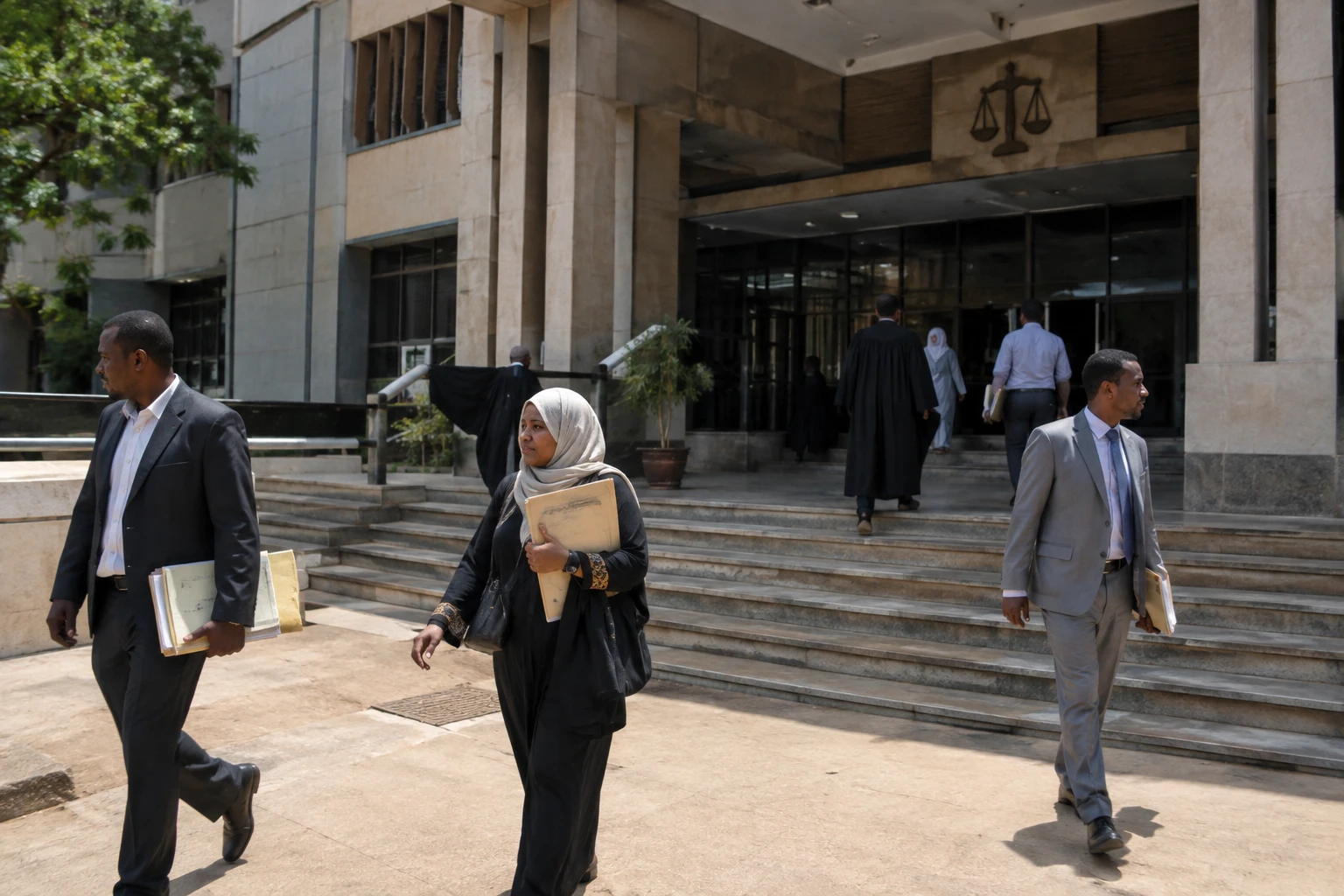
In Sudan, an arrest can be a security measure, a political signal and a possible step towards international justice. Ahmed Haroun’s case brings all three issues together as the army and the Rapid Support Forces (RSF) have vied for power since April 2023.
Arrest reported, but location remains unclear
On Sunday 8 November 2026, Ahmed Haroun was arrested by authorities linked to the army, according to several media outlets and officials from his party. Initial reports differed, however, on where he was detained: some sources placed the arrest in Omdurman, near Khartoum, while others cited Kassala in the east of the country, or a transfer from that region. His lawyers say they do not know where he is being held. At the time of the available reports, no detailed official announcement had resolved these discrepancies.
This caution matters. The arrest was reported by several sources, including Sudanese outlet Sudan Tribune and Radio Tamazuj, which cited a party official. But the precise location and circumstances remain disputed or incomplete. The National Congress Party, the former ruling party, confirmed his detention and called for its leader’s immediate release. It says Haroun was arrested for his opinions. This is the party’s accusation, not an officially established reason.
The arrest came shortly after a lengthy interview broadcast on Sudan Podcast. Haroun spoke about the fall of Omar al-Bashir’s regime, relations between Islamists and the army, and the war against the RSF. He described his party and the army as united against the paramilitary group, despite their political differences. Sudanese opponents interpreted the arrest as a response to his remarks; the authorities have not confirmed this account.
A case opened nearly 20 years ago
Haroun is more than a figure from the former regime. A deputy interior minister under Omar al-Bashir, he is wanted by the International Criminal Court (ICC), the court responsible for trying people accused of the most serious crimes. The arrest warrant was issued on 27 April 2007 for alleged crimes committed in Darfur between 2003 and 2004.
The ICC accuses him of crimes against humanity and war crimes, including murder, rape, forced population transfers, persecution, torture and attacks on civilians. These accusations do not amount to a conviction. Haroun rejects them and has not been tried by the Court. In its case record, the ICC says his case remains at the pre-trial stage and that he is still “at large”, as he has not been transferred to The Hague.
This status highlights the legal significance of the new arrest. Detention by Sudanese authorities does not, by itself, amount to a surrender to the ICC. Sudan is not a party to the Rome Statute, but the UN Security Council referred the situation in Darfur to the Court in 2005. The question, then, is whether the authorities will confirm the detention, ensure access to lawyers and begin a transfer process, or whether Haroun will remain under national control.
War has reshaped the political balance
First arrested after Omar al-Bashir’s fall in 2019, Haroun said in April 2023 that he had left Kober prison in Khartoum at the start of the war. This episode marked the return of former regime officials at a time when Sudanese institutions were fragmenting. The army, led by Abdel Fattah al-Burhan, has been fighting the RSF, led by Mohamed Hamdan Dagalo, known as Hemedti, since 15 April 2023. The conflict has shifted the balance of power and weakened the ability of public services to operate in many regions.
In this context, the political presence of former National Congress officials is sensitive. Some present themselves as supporters of the army against the RSF; their opponents fear the war is being used to restore networks from the ousted regime. Haroun’s arrest does not settle this dispute. It does, however, show that military leaders can both rely on political forces from the former order and rein in their ambitions when they become inconvenient.
For Sudanese people, the case is therefore not simply a rivalry between officials. Residents of Khartoum and Omdurman are experiencing the direct effects of fighting and displacement, while people in Darfur continue to face longstanding violence, reignited by the current war. A credible process could recognise victims’ rights and establish individual responsibility. By contrast, opaque detention without judicial safeguards would risk adding a new political battle to an already weakened justice system.
Justice and peace remain linked at regional level
The case extends beyond Sudan’s borders. The Intergovernmental Authority on Development (IGAD), a regional organisation in the Horn of Africa, is involved in diplomatic efforts, while the African Union is seeking to support a ceasefire and an inclusive political transition. In August 2026, IGAD said the African Union, the UN, the Arab League and the European Union were continuing consultations with Sudanese actors. These efforts face the fragmentation of political forces and disagreements over the role of the military after the war.
Haroun’s case poses a concrete question for these mediation efforts: can the fighting be brought to an end without addressing accusations of serious crimes? Human rights organisations calling for his transfer to the ICC uphold the principle of accountability. Haroun’s party, for its part, invokes freedom of expression and denounces an arbitrary arrest. These positions are not equivalent in judicial terms: the accusations against Haroun are the subject of an ICC warrant, while the reasons for his new detention still need to be clarified.
The next steps will be decisive: official confirmation of his place of detention, access for his lawyers, any transfer process and the authorities’ response to the Court’s request. Until these details are clear, the arrest remains a reported event, but what follows is uncertain. For Sudan and its neighbours, the outcome will also show how much weight is given to justice in any eventual end to the war.