Algeria
 Egypt
 Libya
 Morocco
 Sudan
 Tunisia
 Benin
 Burkina Faso
 Cabo Verde
 Côte d'Ivoire
 Ghana
 Guinea
 Guinea-Bissau
 Liberia
 Mali
 Mauritania
 Niger
 Nigeria
 Sierra Leone
 The Gambia
 Togo
 Cameroon
 Central African Republic
 Chad
 DR Congo
 Equatorial Guinea
 Gabon
 Republic of the Congo
 São Tomé and Príncipe
 Burundi
 Comoros
 Djibouti
 Eritrea
 Ethiopia
 Kenya
 Madagascar
 Malawi
 Mauritius
 Mozambique
 Rwanda
 Seychelles
 Somalia
 South Sudan
 Tanzania
 Uganda
 Angola
 Botswana
 Eswatini
 Lesotho
 Namibia
 South Africa
 Zambia
 Zimbabwe
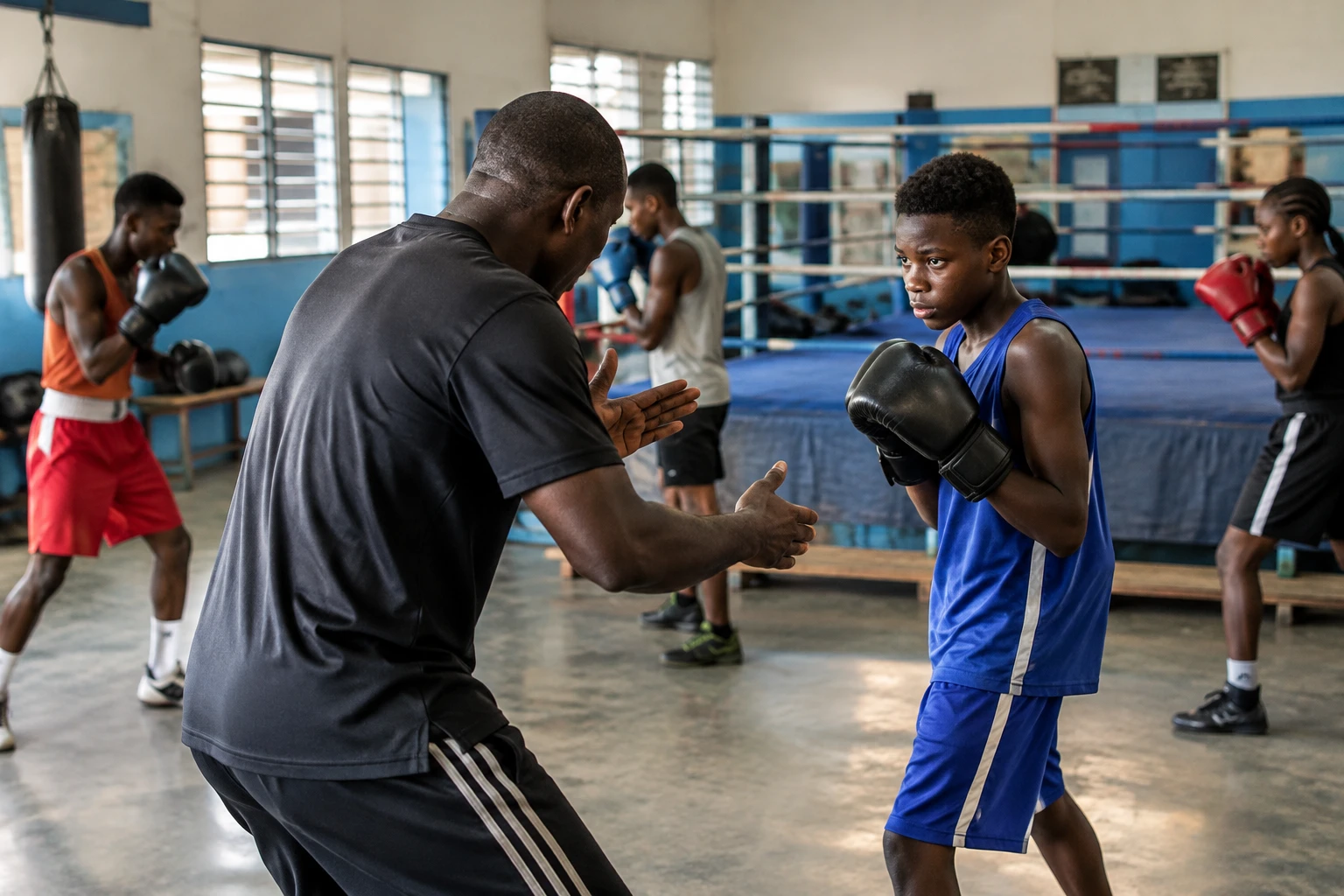
A boxing ring can teach more than fighting technique. In Dakar, the Keur of Champions academy has a broader ambition: to give young Senegalese a setting in which to progress in boxing, as the country hosts the Youth Olympic Games and already looks ahead to the 2028 Olympic horizon.
An academy at the heart of a historic event
The Dakar Youth Olympic Games take place from 31 October to 13 November 2026. They bring together athletes under the age of 18 and are the first Olympic sporting event to be held on African soil. Competitions are spread across Dakar, Diamniadio and Saly. Boxing is on the programme, with bouts scheduled from 7 to 12 November in Diamniadio.
The event puts young athletes at the centre of attention. But hosting an international competition is not enough to build a sustainable pathway. Talent identification, day-to-day coaching and access to equipment also take place in clubs and academies, away from the ceremonies and stands.
It was with this in mind that Souleymane M’Baye founded Keur of Champions in Dakar. A former French boxer and, according to the account of his career, a three-time world champion, he supports young Senegalese in their practice. The name of the organisation means “house of champions” in Wolof. A presentation of the academy published in 2024 describes a project focused on training a new generation of boxers.
Training every day, not just for the Games
A boxer’s preparation is not limited to sessions practising punches and footwork. It requires consistency, progress suited to the athlete’s age and coaching that ensures safety rules are followed. In a community-based organisation, this continuity can help young people turn an interest in sport into regular practice.
Available information on Keur of Champions sets out the academy’s broad ambition, but does not detail its numbers, financial resources or the precise backgrounds of the young people it trains. It would therefore be premature to claim that it has already trained athletes selected for Dakar 2026 or Los Angeles 2028. Its role here is that of a place for passing on skills and preparation, not a guarantee of results.
This distinction matters. The Games may give Senegalese boxing new visibility, but the legacy will depend on what continues after the competition: access to gyms, coach training, regular competitions and support for athletes. The needs of a young registered boxer in Dakar are not necessarily those of a boxer from another region, where travel and access to facilities may present greater challenges.
For families, taking part in sport also requires a commitment of time and resources. Training schedules, transport and continuing education matter as much as talent. A sustainable training policy must therefore link clubs, schools and sports organisations, rather than placing the entire promise on a handful of champions or a single event.
From individual legacy to a Senegalese pathway
M’Baye’s career as a champion under the French flag gives this passing on of skills a particular dimension. It connects experience gained in the international professional circuit with a project based in his country of origin. This alone does not make it possible to measure the academy’s impact. But the move from individual experience to local coaching raises a central question: how can young Senegalese benefit sustainably from the expertise found in the diaspora?
The answer also depends on national sports bodies. Clubs do an essential share of the work, but progress to the elite level requires structured competitions, trained coaches and clear selection criteria. Coordination with international bodies is also crucial to ensure boxers can take part in the events that matter.
The Olympic calendar offers a horizon, not a shortcut. Boxing has been included in the programme for the 2028 Los Angeles Games, and the qualification system has been approved by the International Olympic Committee. For young people at Keur of Champions, however, the immediate priority remains sporting progress. Any future participation will depend on the level they reach, selection and the applicable qualification rules, not simply on the existence of an academy.
A regional reach to be built
For Senegal, hosting the Youth Olympic Games strengthens the country’s sporting visibility in West Africa. The competition may also give fresh impetus to exchanges between federations, coaches and young athletes across the region. This reach should not, however, be confused with an automatic benefit for the entire sub-region: it will be built through partnerships, competitions and opportunities accessible beyond Dakar.
The Games draw attention to performances. The months that follow will reveal more about their legacy: will the facilities continue to serve athletes? Will local organisations be able to maintain coaching? And will young people identified during this period have access to regular competitions? For Keur of Champions, as for the country’s other gyms, the answer will be measured by the continuity of the work after the final bell.
In Dakar, Souleymane M’Baye’s academy thus places boxing within an issue broader than the podium. The Youth Olympic Games offer an exceptional showcase for African sport. Daily training, meanwhile, will show whether that showcase can also open up lasting opportunities for young Senegalese.