Algeria
 Egypt
 Libya
 Morocco
 Sudan
 Tunisia
 Benin
 Burkina Faso
 Cabo Verde
 Côte d'Ivoire
 Ghana
 Guinea
 Guinea-Bissau
 Liberia
 Mauritania
 Niger
 Nigeria
 Senegal
 Sierra Leone
 The Gambia
 Togo
 Cameroon
 Central African Republic
 Chad
 DR Congo
 Equatorial Guinea
 Gabon
 Republic of the Congo
 São Tomé and Príncipe
 Burundi
 Comoros
 Djibouti
 Eritrea
 Ethiopia
 Kenya
 Madagascar
 Malawi
 Mauritius
 Mozambique
 Rwanda
 Seychelles
 Somalia
 South Sudan
 Tanzania
 Uganda
 Angola
 Botswana
 Eswatini
 Lesotho
 Namibia
 South Africa
 Zambia
 Zimbabwe
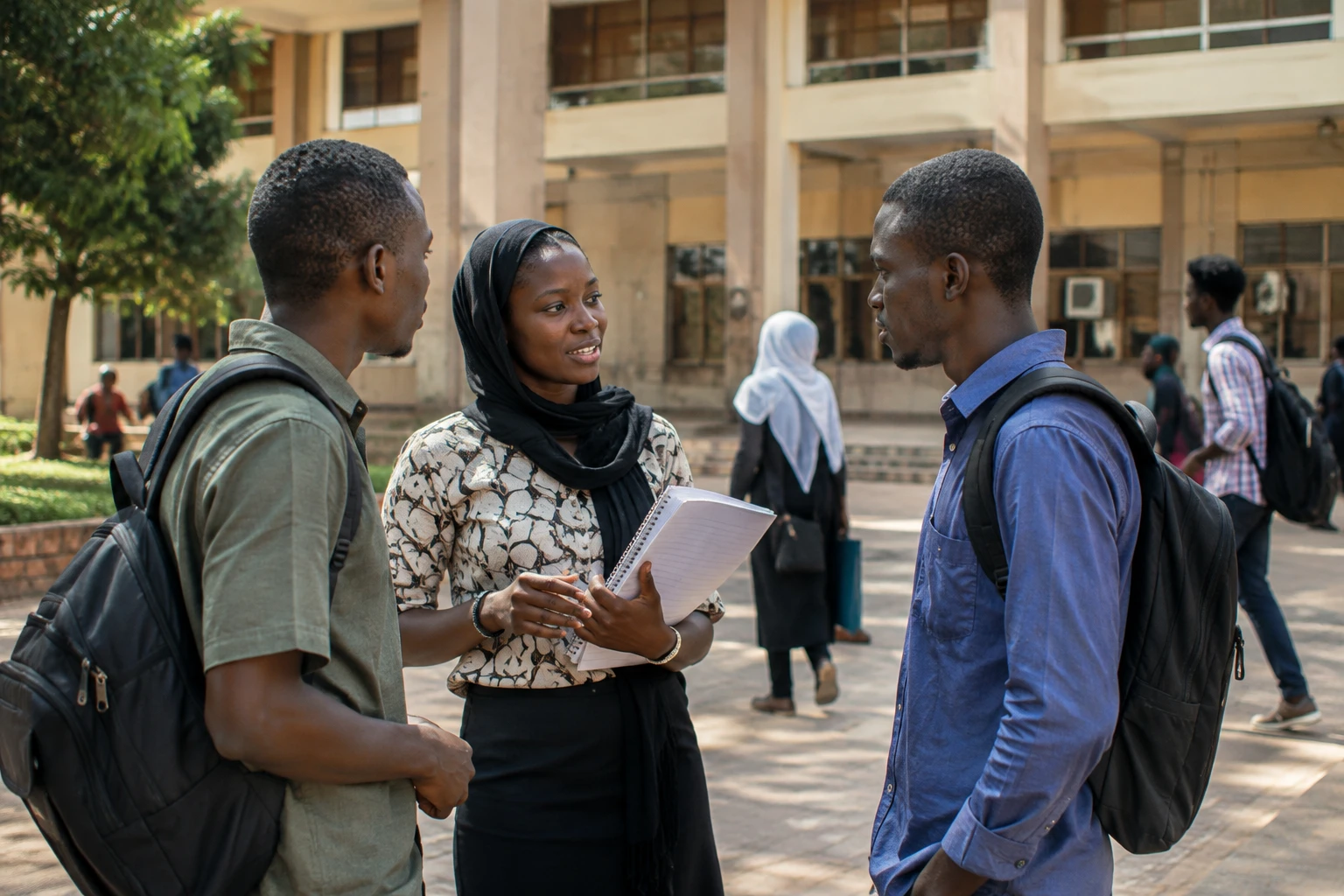
In Mali’s universities, the issue is no longer just an unpaid allowance. The continuing strike also threatens the timetable for classes and exams, as students fear further delays to their studies.
A 2017 decree still not fully implemented
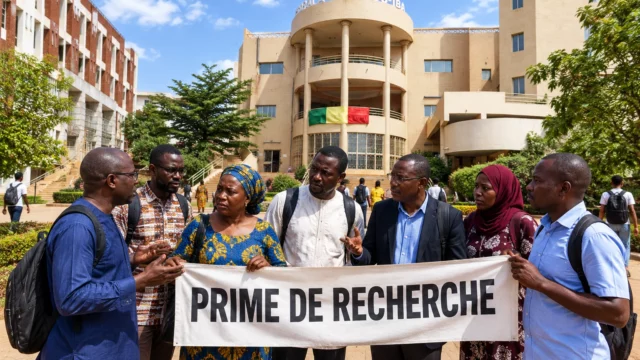
The CEN-SNESUP — the National Executive Committee of the National Union of Higher Education and Scientific Research — launched its strike on 26 October 2026 with a 120-hour, or five-day, work stoppage. The union then renewed it and is now calling on its members to continue the strike until their demand is met.
At the heart of the dispute is the research allowance set out in Article 34 of Decree No. 2017-0850/P-RM of 9 October 2017. The text provides for several bonuses and allowances. According to the African Press Agency, some are already being paid, including the documentation allowance, but the amount and payment terms for the research allowance have yet to be set.
The union is therefore calling for three concrete decisions: setting the amount, starting payments and settling the back payments it believes have been owed since the decree was adopted. It presents this demand as the implementation of an existing statute, not the start of a new pay negotiation.
On 7 November, representatives of the High Islamic Council, the Network of Traditional Communicators of Mali and the Coordination of Neighbourhood Chiefs of Bamako’s Commune II met union officials. They offered to help find a solution through dialogue. CEN-SNESUP welcomed the initiative but did not suspend its strike call.
A standoff already marked by inconclusive negotiations
The issue does not date from this academic year. In 2022, a committee bringing together the government and the union was tasked with discussing the allowance. After further talks in February 2025, lecturers had suspended a strike, but the amount had not been definitively set. This sequence partly explains the current mistrust: in the union’s view, the discussions did not lead to effective implementation.
CEN-SNESUP says no government negotiations have begun since the strike started. The government has not announced a settlement timetable in the reports consulted. This lack of progress is fuelling the dispute, but on its own does not allow the conclusion that the authorities are refusing all discussion.
The strike affects higher education and research institutions. Local sources differ on its precise reach: the Malian newspaper Le Jalon refers to at least a dozen institutions affected, while Info-Matin reports at least 13. It is therefore more accurate to speak of widespread disruption than a uniform shutdown of every university in the country.
Students bear the brunt of delays
The effects go beyond the dispute between the state and lecturers. In Bamako, students interviewed by Studio Tamani say they fear delays to classes and exams. Some explain that repeated delays make it harder to prepare for competitive examinations or progress through their courses. These accounts shed light on individual experiences, but do not in themselves measure the national impact.
A prolonged strike may also affect students differently: those who have to travel to campus incur costs even when classes are suspended. Lecturers, for their part, are calling for the resources provided for research to be properly defined and paid. A swift return to work will therefore depend as much on the resumption of dialogue as on clear commitments on the amount, deadlines and arrears.
A research issue that goes beyond the labour dispute
The allowance also relates to the practical conditions for producing scientific research: carrying out studies, documenting them and publishing them all involve costs. But no independently established figure for the measure’s total cost or the number of beneficiaries has been confirmed in the sources cross-checked. The budget debate must therefore still clarify who would be covered, on what terms and by when.
The issue arises in a regional context where academic and scientific co-operation matters for skills development and the movement of researchers. However, a union comparison should not be treated as a general rule: the claim that all other member countries of the African and Malagasy Council for Higher Education pay a comparable allowance has been reported by Malian stakeholders, but has not been verified country by country.
For now, the immediate priority is national: to prevent the dispute from further disrupting the academic year in Mali and to obtain a verifiable response on a provision that is nearly nine years old. The next step will depend on whether negotiations open and whether the authorities can present a precise timetable, while students await the effective resumption of teaching.
Reports by Malian media and the African Press Agency corroborate the renewal of the strike, the union’s demand and the 7 November meeting. Information on the effects on students is based on accounts gathered by Studio Tamani.