Algeria
 Egypt
 Libya
 Morocco
 Sudan
 Tunisia
 Benin
 Burkina Faso
 Cabo Verde
 Côte d'Ivoire
 Ghana
 Guinea
 Guinea-Bissau
 Liberia
 Mali
 Mauritania
 Niger
 Nigeria
 Senegal
 Sierra Leone
 The Gambia
 Togo
 Cameroon
 Central African Republic
 Chad
 DR Congo
 Equatorial Guinea
 Gabon
 Republic of the Congo
 São Tomé and Príncipe
 Burundi
 Comoros
 Djibouti
 Eritrea
 Ethiopia
 Kenya
 Madagascar
 Malawi
 Mauritius
 Mozambique
 Rwanda
 Seychelles
 Somalia
 Tanzania
 Uganda
 Angola
 Botswana
 Eswatini
 Lesotho
 Namibia
 South Africa
 Zambia
 Zimbabwe
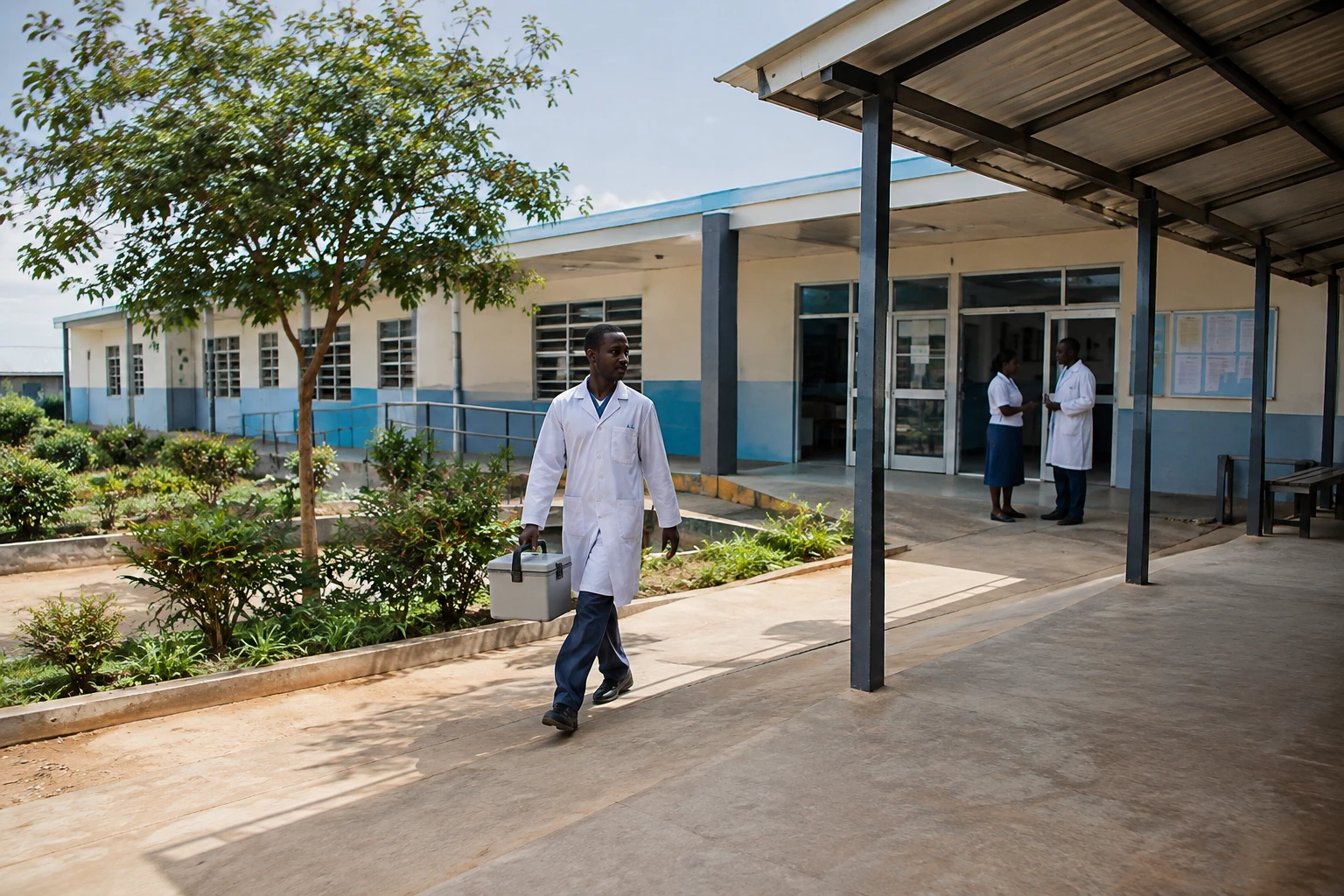
In Akobo, in eastern South Sudan, a woman travelled for two and a half hours to hospital after the health centre near her village closed. She gave birth there, then died of a postpartum haemorrhage. The tragedy, reported by Médecins Sans Frontières (MSF), shows how a local closure can turn a treatable complication into a fatal emergency.
Closures shift care towards hospitals
The problem extends beyond Akobo. The United Nations Children’s Fund (UNICEF) says funding shortages led to the closure of 185 of 1,230 sites in nutrition programmes in 2025, or 15% of the network concerned. This figure relates to nutrition sites, not all health centres in the country.
The same report notes a fall in admissions to nutrition programmes between 2024 and 2025: 14% for severe acute malnutrition and 13% for moderate malnutrition. These declines reflect closures linked to funding shortages, conflict and difficulties with follow-up. They therefore do not mean that needs have fallen.
On 29 August 2026, according to MSF’s account, Nyamuoch Geng, who was eight months pregnant, died after giving birth at Akobo hospital. The primary care centre a ten-minute walk from her home had closed on 15 July. The hospital had neither an operating theatre nor a blood bank. A medical evacuation did not arrive in time.
Growing needs, fragile services
The consequences are also being felt in the camps at Bentiu, in Unity State, and Malakal, in Upper Nile. MSF estimates that around 150,000 displaced people there lack essential health, water and sanitation services. The organisation warns that shortcomings in waste collection, latrine maintenance and water supply increase the risk of cholera and other waterborne diseases.
The camp at Bentiu hosts around 111,000 people. An MSF assessment found one functioning latrine for every 60 or so people. In Malakal, reduced resources are cutting health and sanitation services. The International Organization for Migration (IOM) has become the sole provider of these services at both sites, while local authorities lack the staff and supplies to fill the gaps.
The World Health Organization (WHO) estimates that 6.3 million people will need health assistance in South Sudan in 2026. Flooding, displacement, outbreaks of cholera, measles and mpox, as well as staff shortages and supply disruptions, are already putting pressure on a fragile system.
A crisis of funding, but also of access
Budget cuts are not the only cause of service disruptions. In some areas, fighting, insecurity and movement restrictions also hamper the work of teams and the delivery of supplies. In Akobo, the closure of services is therefore taking place in a context where conflict and logistical difficulties reinforce one another.
The consequences vary depending on location and families’ means. In towns, a hospital that remains open may take in patients from closed clinics, but risk becoming overwhelmed. In rural areas, distance becomes an additional obstacle: transport costs time and money, and an obstetric or paediatric emergency can worsen on the way. Displaced households, which depend on shared services in camps, are particularly exposed when water and sanitation provision declines.
The withdrawal of the US agency USAID in January 2025 marked a turning point in international aid, but the cuts are not coming from a single donor. MSF reports that the UK cut its overall aid budget for South Sudan by 23% for the 2025-2026 financial year and plans a further 39% reduction in 2026-2027. These figures are attributed to the organisation. UNICEF, for its part, confirms that funding shortages have led to site closures and service interruptions.
An issue for South Sudan and the region
The South Sudanese government faces the challenge of maintaining continuity of care as humanitarian partners scale back some activities. Transferring the management of camps to the authorities does not eliminate residents’ needs. It requires resources, staff and supplies to maintain services. UN agencies have highlighted the constraints on this capacity.
The issue also concerns the Intergovernmental Authority on Development (IGAD), an East African regional organisation of which South Sudan is a member. Displacement and epidemics can cross borders, while instability affects regional peace and development efforts. At continental level, the challenge is concrete: preserve primary care and strengthen national actors, rather than relying solely on short-term emergency funding.
The next developments will depend on the continuity of services in camps and remote counties, as well as the ability of the authorities and their partners to maintain maternal care, nutrition treatment and epidemic prevention. For families, these decisions determine whether a health centre remains accessible before a patient’s condition becomes critical.