Algeria
 Egypt
 Libya
 Morocco
 Sudan
 Tunisia
 Benin
 Burkina Faso
 Cabo Verde
 Côte d'Ivoire
 Ghana
 Guinea
 Guinea-Bissau
 Liberia
 Mali
 Mauritania
 Niger
 Nigeria
 Senegal
 Sierra Leone
 The Gambia
 Togo
 Cameroon
 Central African Republic
 Chad
 DR Congo
 Equatorial Guinea
 Gabon
 Republic of the Congo
 São Tomé and Príncipe
 Burundi
 Comoros
 Djibouti
 Eritrea
 Ethiopia
 Kenya
 Madagascar
 Malawi
 Mauritius
 Mozambique
 Rwanda
 Seychelles
 Somalia
 South Sudan
 Tanzania
 Uganda
 Angola
 Botswana
 Eswatini
 Lesotho
 Namibia
 Zambia
 Zimbabwe
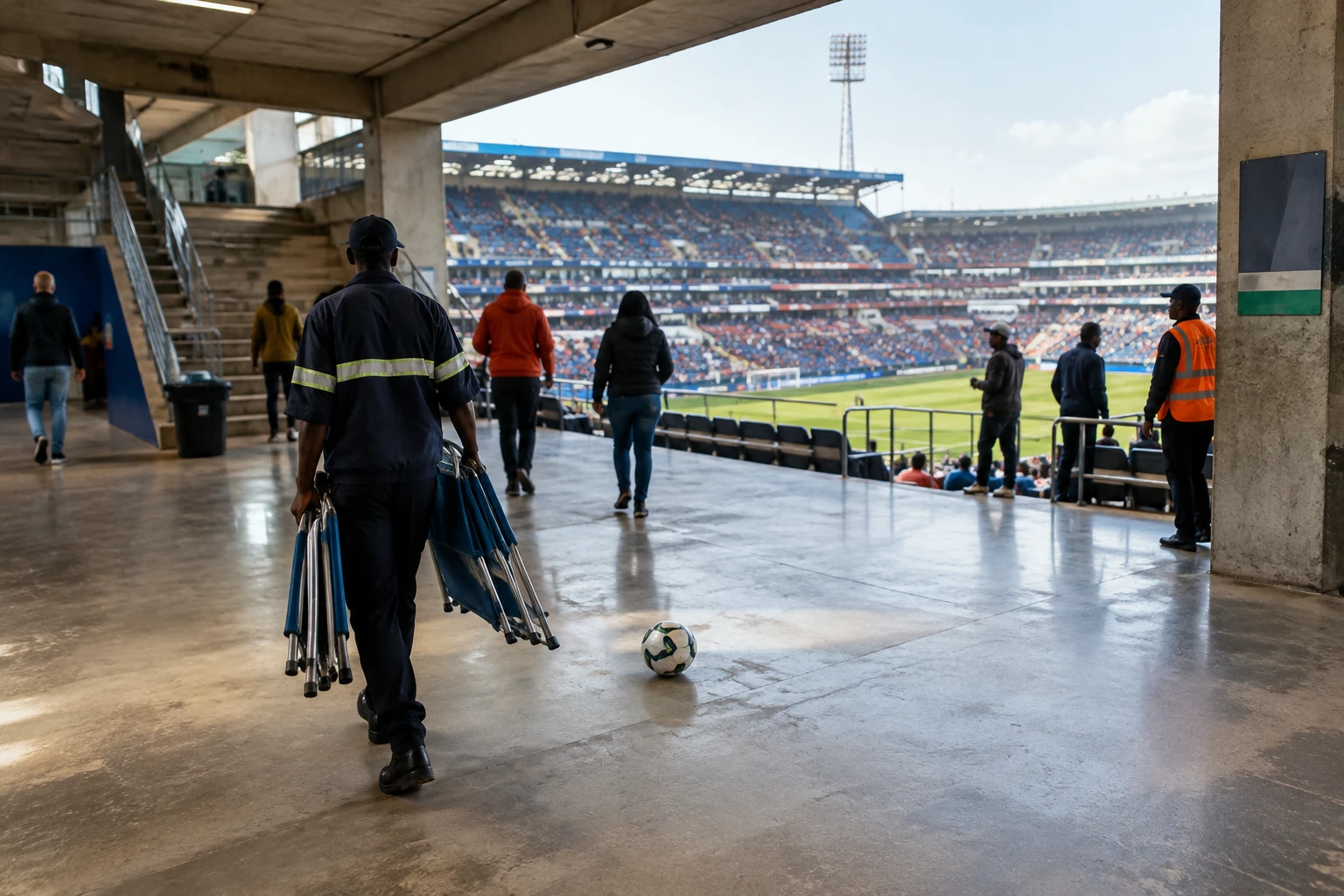
In Algiers, a trophy won in Pretoria is a reminder that clubs from across the continent can set the pace far from home. USM Alger turned a final played in South Africa into their second CAF Super Cup title, following their 2023 triumph.
A clash between two African champions
The Super Cup pits the winners of the Confederation of African Football (CAF) Champions League against those of the Confederation Cup, the continent’s second inter-club competition. On 8 November 2026, at Loftus Versfeld Stadium in Pretoria, USM Alger faced Mamelodi Sundowns, the reigning African champions. The Algerian club had just won the Confederation Cup. CAF had announced the fixture between the holders of the continent’s two leading trophies.
This encounter was about more than a face-off between a club from Algiers and one from Pretoria. It tested teams’ ability to travel, adapt to the conditions on the pitch and handle the pressure of a final played on their opponents’ home ground. For supporters, the Super Cup also offers a snapshot of the African football pecking order at the start of a new campaign.
Three Algerian goals, a response after the equaliser
USM Alger struck early. Zakaria Draoui opened the scoring in the 4th minute. Mamelodi Sundowns equalised in the 25th minute from the penalty spot, with Iqraam Rayners converting. But the Algiers side regained the lead before the break: Saâdi Radouani scored in the 37th minute.
Ahmed Khaldi extended the lead in the 55th minute with a left-footed strike. The final score, 3-1, was confirmed by APS, Algeria’s press agency, and CAF. The three goalscorers — Draoui, Radouani and Khaldi — thus gave the club its second title in the competition, after its 2023 triumph. APS confirmed the result and the sequence of goals.
The result was not down to finishing alone. After conceding the equaliser, USMA took the initiative again before half-time, then protected its lead. CAF’s report also highlights Khaldi’s role as both goalscorer and provider of an assist. Two forced substitutions disrupted Sundowns’ plans, but the result cannot be attributed solely to those injuries: the Algerian side converted its chances and withstood the expected South African comeback. CAF’s report details the goalscorers and the changes on the South African side.
A trophy that also matters to the Algerian season
For USM Alger, this victory adds a continental honour to a campaign already marked by success in the Confederation Cup. It could boost the squad’s confidence and raise the club’s profile. But winning one final does not, by itself, settle the challenges of the domestic league or the upcoming African campaign. The schedule remains demanding, and results will need to be sustained over time.
The title also has a tangible financial benefit: CAF has announced a $500,000 prize for the winner. This is a significant resource for a club, although it does not in itself reveal how the funds will be divided between players, operations and travel. Across continental football, prize money and competition revenues affect teams’ ability to build squads and cover travel costs.
The success is also a source of pride for Algerian supporters, but it is not solely a matter for the capital. Clubs’ campaigns in African competitions fuel interest in domestic football in different parts of the country. Conversely, the travel and resources required for these campaigns are managed primarily by clubs and their partners: the benefits are therefore not automatically shared across the sports sector.
Regional significance, without conflating the issues
Algeria belongs to the Arab Maghreb Union (AMU), a regional organisation in North Africa, and to the African Union. The Super Cup, however, falls under CAF’s continental sporting framework, not the AMU. This distinction matters: the trophy pits clubs from two different regions against each other and showcases an African competition in which results are not confined to a single geographical area. The African Union recognises the AMU as one of the continent’s regional economic communities. The African Union’s overview of regional communities places the AMU within this group.
The result also has implications for Mamelodi Sundowns. Beaten at home, the South African club missed the chance to add the Super Cup to its African champions’ title. For USMA, the victory confirms that the Confederation Cup winner can compete with the Champions League holders in a decisive match. This remains a conclusion drawn from one final: it is not enough to establish lasting dominance by one competition over the other.
The next measure will be USM Alger’s ability to build on this success in domestic and continental fixtures. The Super Cup sends a strong signal, but its sporting value will also be judged by the club’s consistency, how it manages its schedule and its results when competition resumes. For Algerian football, the trophy adds another honour to the record books and a prestigious victory; for the continent, it is a reminder that finals remain open until the match is played.