
 Algeria
 Egypt
 Libya
 Morocco
 Sudan
 Tunisia
 Benin
 Cabo Verde
 Côte d'Ivoire
 Ghana
 Guinea
 Guinea-Bissau
 Liberia
 Mali
 Mauritania
 Niger
 Nigeria
 Senegal
 Sierra Leone
 The Gambia
 Togo
 Cameroon
 Central African Republic
 Chad
 DR Congo
 Equatorial Guinea
 Gabon
 Republic of the Congo
 São Tomé and Príncipe
 Burundi
 Comoros
 Djibouti
 Eritrea
 Ethiopia
 Kenya
 Madagascar
 Malawi
 Mauritius
 Mozambique
 Rwanda
 Seychelles
 Somalia
 South Sudan
 Tanzania
 Uganda
 Angola
 Botswana
 Eswatini
 Lesotho
 Namibia
 South Africa
 Zambia
 Zimbabwe
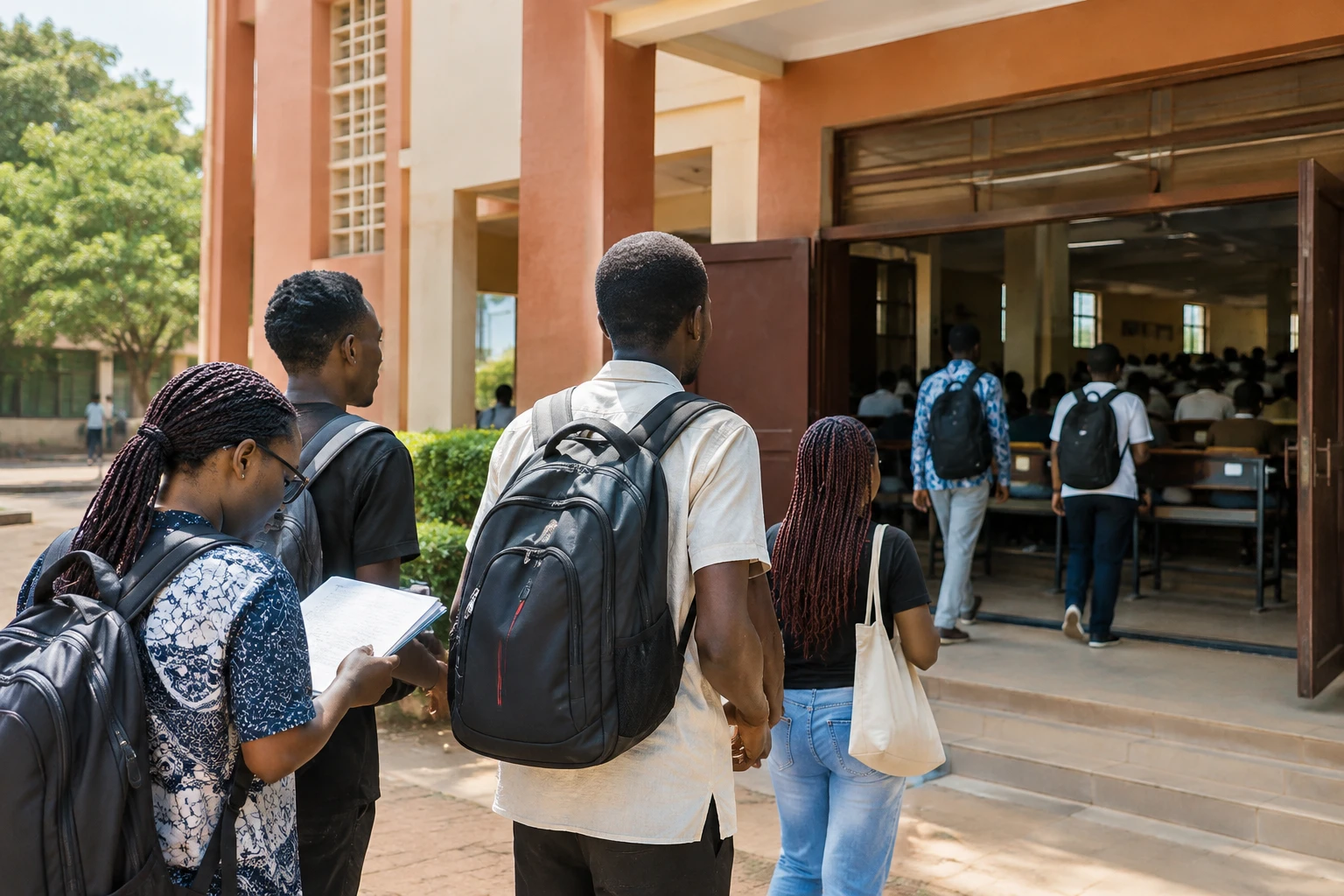
Choosing to continue one’s studies at home can be a return to one’s roots. But when classes are held in packed rooms and university services remain difficult to access, the promise of studying in Burkina Faso soon runs up against day-to-day reality. Videos of newly qualified Burkinabè students who have returned from Côte d’Ivoire have put the issue back at the centre of debate.
A debate born on Ouagadougou campuses
Footage shared on social media notably shows students at Thomas Sankara University, near Ouagadougou. They say they cannot find a place to attend classes and describe difficulties accessing the campus or the distance to the university restaurant. These are individual accounts: on their own, they are not enough to assess the situation at every university in the country.
Higher Education Minister Adjima Thiombiano responded to the criticism at a ceremony in Ouagadougou on 2 November 2026. He warned that no attempt to disrupt the education system would be tolerated and described the young people concerned as “lost children”. He also said that if Burkina Faso did not suit them, they could leave. At the same time, he said students from abroad were welcome if their intentions were good, the African Press Agency reported.
The official response thus shifts the debate from the material conditions of study to students’ conduct and patriotism. Yet the two issues are not mutually exclusive. It is possible to want to study in one’s country and to report concrete obstacles. Beyond the videos, however, the scale of the difficulties raised and the responses from institutions remain to be established.
Rising enrolment, needs that remain significant
National data give an indication of the pressure on the sector. In 2023-2024, Burkina Faso had 225,902 students in higher education, according to a dashboard published by the ministry. The same document notes continuing needs for infrastructure and teaching staff, as well as challenges relating to the quality of education and governance.
This national figure does not establish that every lecture hall is full. It nevertheless shows the scale of demand: student numbers have risen over the years, while access remains below the benchmark of 2,000 students per 100,000 inhabitants cited in the ministerial document. The challenge is therefore twofold: to accommodate more young people and to ensure suitable learning conditions.
The response is not limited to classrooms. The distance between lecture halls, university restaurants and accommodation can affect students’ time and expenses. Difficulties may vary by campus, subject and family resources. For students without nearby accommodation or a comfortable transport budget, a distant service can become an additional obstacle to attending classes regularly.
Projects announced, results to be assessed
The authorities have announced investments to increase capacity. At Thomas Sankara University, the foundation stone for a 1,000-seat lecture hall was laid on 2 January 2025. The programme presented by the presidency also provides for laboratories and tutorial rooms at the site. Nationwide, the Presidential Initiative for Quality Education plans to build 40 lecture halls with 500 or 1,000 seats.
These announcements address part of the problem, but their impact depends on the projects being completed and brought into service. One additional lecture hall will not, by itself, resolve difficulties with transport, catering, accommodation or academic supervision. Students and families therefore expect verifiable details: construction timetables, capacity actually brought into use, distribution among institutions and changes to services on campuses.
For university leaders, the challenge also lies in organising enrolment and classes as student numbers grow. For students, the quality of an education is also measured by whether they can attend teaching, access resources and complete their studies without repeated delays. Capacity indicators and accounts from the ground shed light on different aspects of the same issue.
Student mobility, between choice and national policy
The controversy also touches on young people’s mobility. The Burkinabè government says it wants to strengthen education in the country and limit the loss of skills. This aim could help consolidate national institutions, provided that the courses offered, facilities and career prospects meet students’ expectations. Students do not all go abroad for the same reasons: their decisions may depend on available specialisations, financial means, family plans or admission opportunities.
The regional dimension matters too. Burkina Faso is part of the Alliance of Sahel States (AES), alongside Mali and Niger, and has withdrawn from the Economic Community of West African States (ECOWAS), the West African regional integration organisation. Study paths and links between institutions, however, cross borders: these young people obtained their baccalaureate in Côte d’Ivoire before returning to Burkina Faso. Student mobility therefore remains a regional reality, even as national policy directions change.
What happens next will be measured less by statements than by how institutions receive new students and handle their complaints. Announced projects, their timetables and effective access to classes will be concrete indicators. For the authorities and universities alike, the challenge is to make returning home a credible option without conflating criticism of study conditions with rejection of Burkina Faso.



