
 Algeria
 Egypt
 Libya
 Morocco
 Sudan
 Tunisia
 Benin
 Burkina Faso
 Cabo Verde
 Côte d'Ivoire
 Ghana
 Guinea
 Guinea-Bissau
 Liberia
 Mali
 Mauritania
 Niger
 Nigeria
 Senegal
 Sierra Leone
 The Gambia
 Togo
 Cameroon
 Central African Republic
 Chad
 DR Congo
 Equatorial Guinea
 Gabon
 Republic of the Congo
 São Tomé and Príncipe
 Burundi
 Comoros
 Djibouti
 Eritrea
 Ethiopia
 Kenya
 Madagascar
 Malawi
 Mauritius
 Mozambique
 Rwanda
 Seychelles
 Somalia
 South Sudan
 Tanzania
 Uganda
 Angola
 Botswana
 Eswatini
 Lesotho
 Namibia
 Zambia
 Zimbabwe
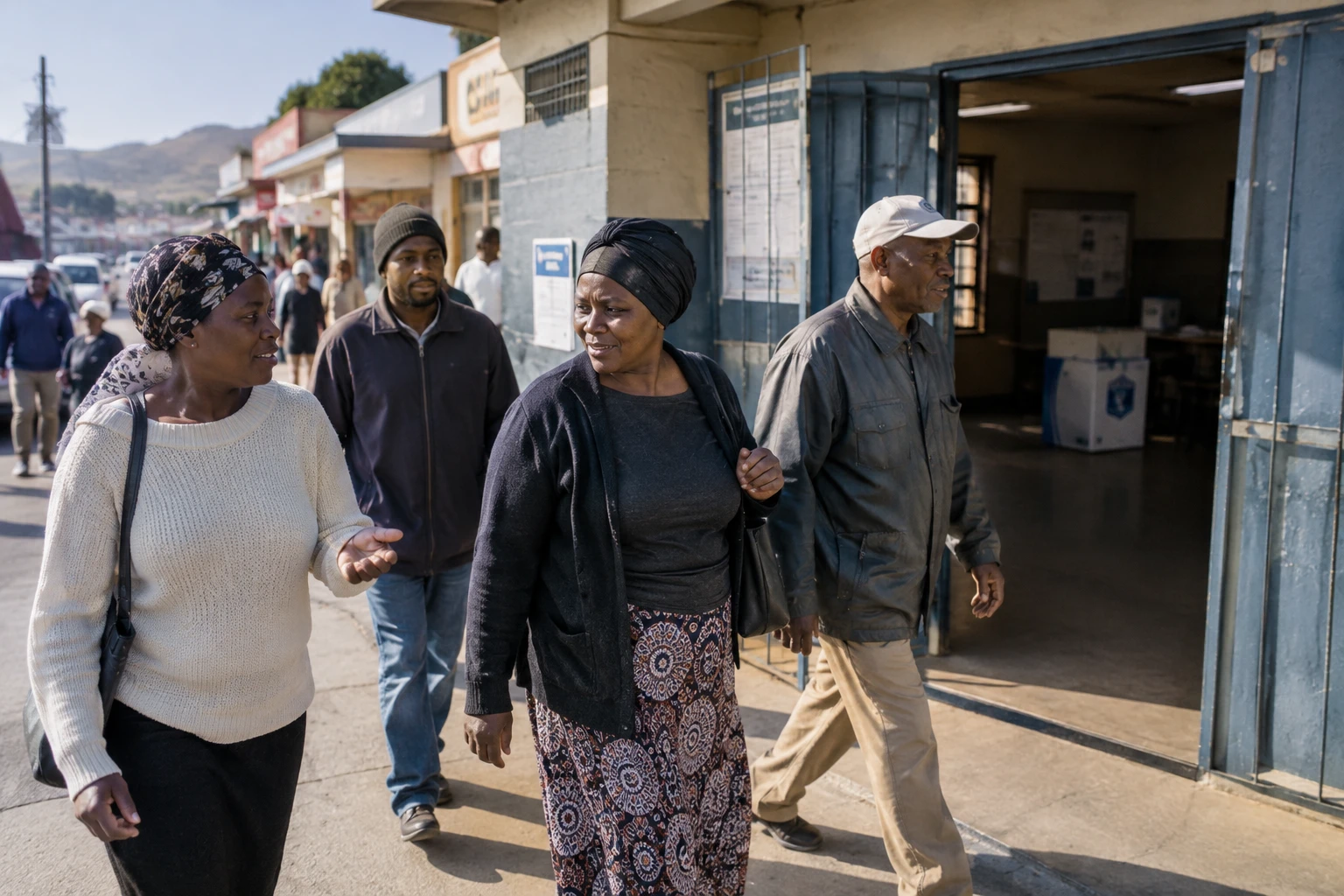
In a South African municipality, an election result is measured not only by the number of votes. It also decides who will have to repair roads, organise rubbish collection and ensure access to water. The local elections on 4 November are reshuffling these responsibilities as the African National Congress (ANC) loses ground and many councils look set to have no overall majority.
A local election in a transformed political landscape
Since the first democratic elections in 1994, the ANC has long dominated South African politics. But its decline has accelerated. In 2021, it already won less than half the vote in municipal elections. In 2024, it lost its majority in Parliament for the first time and formed a national unity government with the Democratic Alliance (DA) and other parties.
This partnership at national level does not mean an automatic alliance in cities. Parties that sit together in government can oppose one another in municipal councils. Voters elect councillors, not mayors directly: the councils then appoint municipal executives.
The stakes are concrete. Municipalities manage, among other things, water supplies, road maintenance and rubbish collection. Residents of neighbourhoods and outlying areas feel service failures directly. Major cities also concentrate economic resources and formal jobs, while councils have to meet the needs of very different neighbourhoods.
Sharp decline, but results still provisional
On Friday 6 November, with 76% of votes counted nationally, the ANC had nearly 31% of the vote, according to provisional results reported that day. The party was trailing its rivals in several major centres, including Johannesburg, Tshwane and eThekwini, the municipality that includes Durban.
These figures are a snapshot of the count, not a final tally. By Saturday 7 November, a count based on data from the Electoral Commission of South Africa (IEC) showed that 99.3% of polling stations had been counted and 200 of 213 councils declared. The ANC was then on 30.9% nationally, down from 45.6% in 2021. Results remain provisional until the IEC has declared every council.
The trend is not playing out in the same way everywhere. Results in Johannesburg and Tshwane leave several parties in a position to negotiate. In eThekwini, the uMkhonto weSizwe (MK) party, founded by former president Jacob Zuma, is making strong gains in a region where the ANC has long had a significant base. The balance of power therefore varies between provinces and municipalities.
Coalitions become a new test of governance
Without an absolute majority, no party can govern a council alone. Parties must then negotiate a coalition agreement, sharing responsibilities and reaching agreement on a municipal programme. These talks can give medium-sized parties decisive influence, even when they have not come first.
In Tshwane, the administrative capital, where Pretoria is located, ActionSA intends to negotiate to keep Nasiphi Moya in the mayor’s office. On 6 November, according to South African media outlet IOL, the DA was ahead of ActionSA and the ANC in the ongoing count. ActionSA nevertheless said it wanted to talk with various parties about priorities such as municipal services, stability and the fight against corruption. The final make-up of the council, rather than the provisional ranking alone, will determine the outcome of the negotiations.
Immigration also featured in the campaign in Tshwane. Nasiphi Moya advocated a restrictive stance towards people in the country unlawfully. This is the position of a candidate and a party: it should not be confused with a policy already adopted by a municipal coalition. The negotiations will show whether these issues become shared commitments or remain points of disagreement.
In Johannesburg, early results also indicated that no party would have a majority on its own. The DA said it would consider partnerships on a case-by-case basis. In councils without a majority, the strength of agreements and their ability to last will matter as much as a party’s election victory.
The test of service delivery and the regional significance
For the ANC, losing votes raises questions of trust as well as strategy. The national decline is not enough to explain each voter’s choices, but municipal issues make elected officials’ performance visible in daily life. Roads, water and rubbish provide concrete criteria for judging a council. Parties joining coalitions will therefore have to turn compromises into decisions that deliver results.
South African politics also matters to the Southern African Development Community (SADC), the regional organisation that brings the countries of the region together around cooperation and integration. The renewal of councils does not, by itself, change Pretoria’s foreign commitments. It does, however, offer an indicator of the confidence placed in parties and of how coalitions can function in the continent’s most industrialised economy.
The next step is for the IEC to finalise the results, followed by the formation of executives in the councils concerned. In Johannesburg, Tshwane and eThekwini, negotiations will show which alliances can govern, and on what programme. The ANC’s decline is clear in the provisional figures; how it translates into municipal policy will depend on these agreements and how long they last.



