Algeria
 Egypt
 Libya
 Morocco
 Sudan
 Tunisia
 Benin
 Cabo Verde
 Côte d'Ivoire
 Ghana
 Guinea
 Guinea-Bissau
 Liberia
 Mali
 Mauritania
 Niger
 Nigeria
 Senegal
 Sierra Leone
 The Gambia
 Togo
 Cameroon
 Central African Republic
 Chad
 DR Congo
 Equatorial Guinea
 Gabon
 Republic of the Congo
 São Tomé and Príncipe
 Burundi
 Comoros
 Djibouti
 Eritrea
 Ethiopia
 Kenya
 Madagascar
 Malawi
 Mauritius
 Mozambique
 Rwanda
 Seychelles
 Somalia
 South Sudan
 Tanzania
 Uganda
 Angola
 Botswana
 Eswatini
 Lesotho
 Namibia
 South Africa
 Zambia
 Zimbabwe
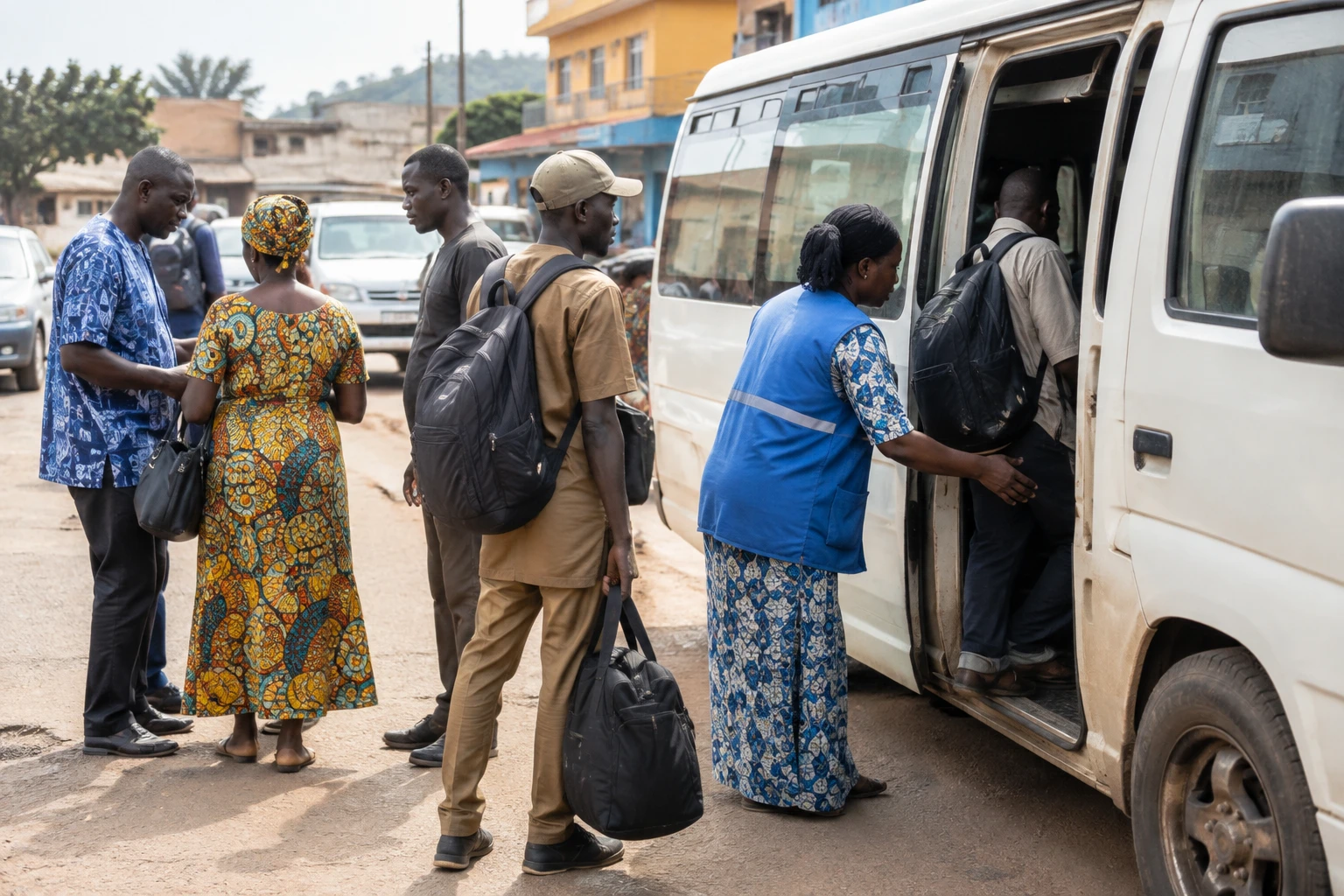
In the gold-mining areas of Upper Guinea, artisanal mining provides a livelihood for thousands of people, but it often falls outside the authorities’ control. The closure of sites in Siguiri has abruptly shifted this fragile balance: thousands of Burkinabè workers have left Guinea, while Bamako and Ouagadougou organise their return.
A mining decision with cross-border effects
On 2 November 2026, the Guinean government announced a ban on artisanal gold mining in several areas in the north-east of the country. It also planned the permanent deployment of defence and security forces to enforce the measure. The Guinean authorities cite environmental degradation and damage to waterways among the reasons.
The main area affected is the prefecture of Siguiri, in Upper Guinea, an important gold-mining region close to Mali. The area attracts workers from various regions of Guinea and neighbouring countries. The International Organization for Migration’s migration profile describes Siguiri as an important transit hub towards Mali, around the Kourémalé border crossing.
This proximity turns a national mining-control operation into a regional issue. People leaving Siguiri may travel to Mali before continuing to Burkina Faso. The movement therefore concerns mining management, borders and the protection of migrant workers alike.
More than 8,000 departures estimated, figure still attributed
The figure of more than 8,000 Burkinabè nationals affected comes from a count described as approximate by local officials in Guinea and reported by the Burkinabè authorities. It is not a final independent tally. Some were already in Mali, while others were still in Guinea when Burkina Faso launched its return operation.
Burkinabè Security Minister Mahamadou Sana travelled to Bamako on 4 November. He said Ouagadougou had not been informed in advance and condemned violent departure conditions. He reported injuries and deaths. A provisional toll relayed by the Burkinabè authorities cites four deaths, without specifying the circumstances. This information has not been confirmed by a publicly released independent investigation.
At the time the information was available, the Guinean authorities had not publicly responded to the allegations concerning the conditions of the operation. Two points must therefore be distinguished: Conakry announced the closure of illegal artisanal mining sites, while the allegations of ill-treatment and the death toll remain attributed to Burkinabè officials.
Mali reported an influx of people of several nationalities at its border with Guinea. Its crisis coordination mechanism said the authorities were organising the reception and onward transport of those concerned to their countries. In Bamako, associations and humanitarian organisations also distributed food, water and emergency medical care, according to accounts gathered locally.
Return organised, reintegration uncertain
Ouagadougou mobilised coaches to transport its nationals from Mali and Guinea. Announcements made on 4 November referred to around a hundred vehicles, some of which were to travel into Malian territory. The Burkinabè authorities also said they had identified reception sites to facilitate people’s return to their families.
Transport does not, however, resolve the question of what comes next. Workers interviewed in Mali say they have lost their tools, savings or expected income from their work. One of them called for support with reintegration, noting that those affected have varied backgrounds, from graduates to people with no formal qualifications.
The impact will not be the same for everyone. Workers who have only recently settled may have few resources to return home or start again. Families that depended on their remittances also risk losing a source of income. In Guinea, the closure may curb some mining practices, but it also deprives local communities of an economic activity, legal or otherwise, whose effects on incomes and trade will need to be documented.
Formalising artisanal mining therefore raises an implementation question: how can waterways be protected and the law enforced without leaving workers facing sudden displacement? This requires accessible information, coordinated procedures at borders and attention to people’s rights, regardless of their nationality.
A test of coordination between neighbours
Guinea belongs to the Economic Community of West African States (ECOWAS), while Mali and Burkina Faso are members of the Confederation of Sahel States (AES). These regional frameworks do not replace bilateral mechanisms, but the situation shows how quickly decisions taken in a border region can involve several administrations.
Mali’s ministry confirmed that talks had been held with a Burkinabè delegation to organise a safe and orderly return. This cooperation addressed the immediate emergency. It does not, however, settle either the allegations concerning the expulsions or the question of prior consultation with Conakry.
What happens next will depend on three concrete steps: the effective return of those still in transit, clarification of the death toll and a Guinean response on the conditions of the operation. In the longer term, the regional challenge will be to regulate mining activities and workers’ movements without conflating the control of illegal artisanal mining with collective expulsion. For people in Guinea’s gold-mining areas and Burkinabè migrants alike, decisions taken around Siguiri will have consequences far beyond the mining site.