Algeria
 Egypt
 Libya
 Morocco
 Tunisia
 Benin
 Burkina Faso
 Cabo Verde
 Côte d'Ivoire
 Ghana
 Guinea
 Guinea-Bissau
 Liberia
 Mali
 Mauritania
 Niger
 Nigeria
 Senegal
 Sierra Leone
 The Gambia
 Togo
 Cameroon
 Central African Republic
 Chad
 DR Congo
 Equatorial Guinea
 Gabon
 Republic of the Congo
 São Tomé and Príncipe
 Burundi
 Comoros
 Djibouti
 Eritrea
 Ethiopia
 Kenya
 Madagascar
 Malawi
 Mauritius
 Mozambique
 Rwanda
 Seychelles
 Somalia
 South Sudan
 Tanzania
 Uganda
 Angola
 Botswana
 Eswatini
 Lesotho
 Namibia
 South Africa
 Zambia
 Zimbabwe
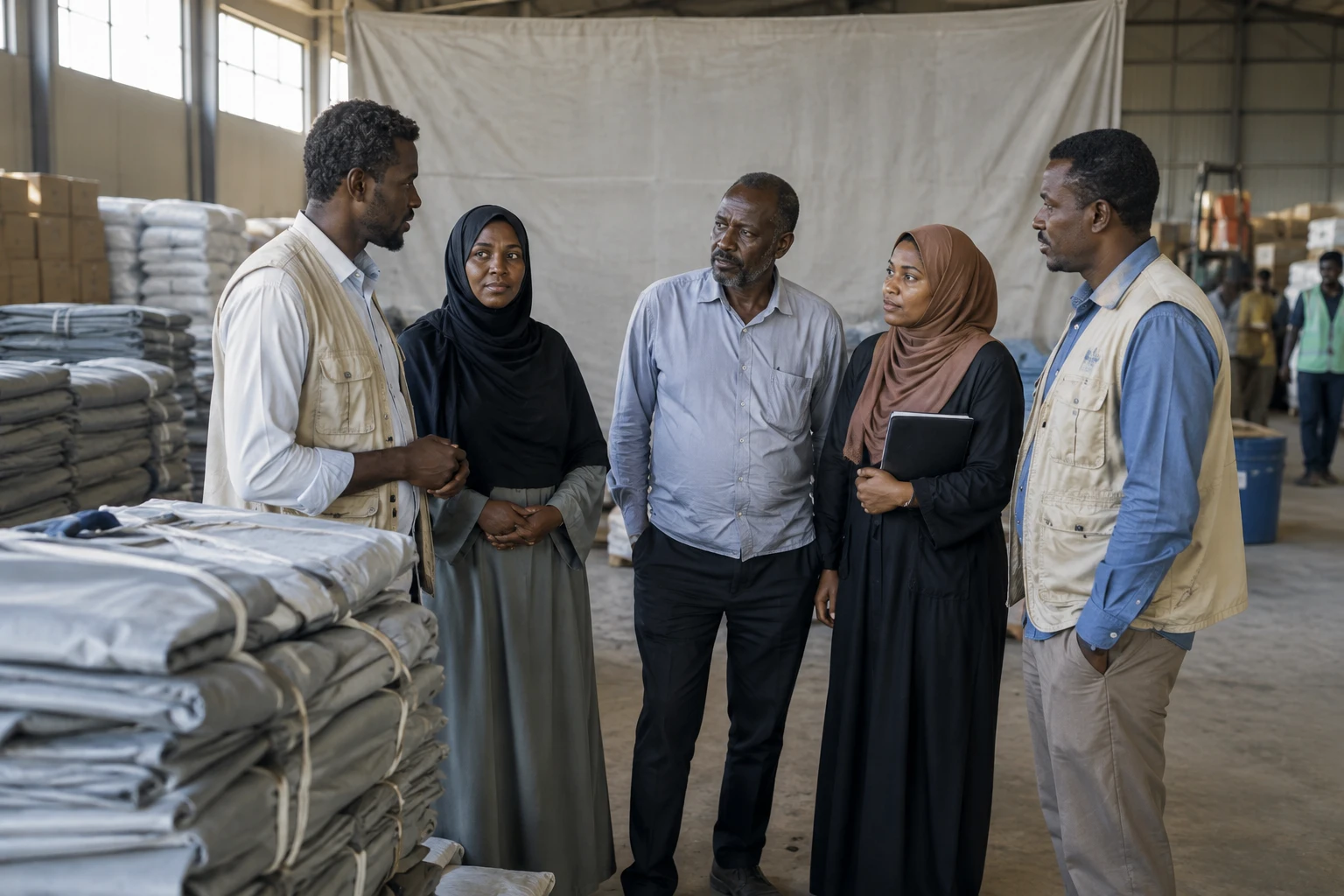
In Sudan, having a tent, a blanket or a solar lamp can determine whether a displaced family spends the night under cover or remains exposed. Yet as protection needs grow, emergency stocks are dwindling and funding is not keeping pace.
A response struggling to keep up with displacement
Since April 2023, war has pitted the Sudanese army against the Rapid Support Forces (RSF), a paramilitary force. Fighting and shifting front lines have caused repeated displacement. In June 2026, some 8.7 million people were displaced within the country, according to tracking data from the International Organization for Migration (IOM), cited in a British government briefing. Returns therefore do not necessarily mean that families can resume a stable life.
The crisis extends across borders. Millions of Sudanese have found refuge in neighbouring countries, notably Chad, Egypt and South Sudan. The Intergovernmental Authority on Development (IGAD), an East African regional organisation, and the African Union are monitoring the conflict and its consequences. Humanitarian access, civilian security and regional displacement remain central concerns.
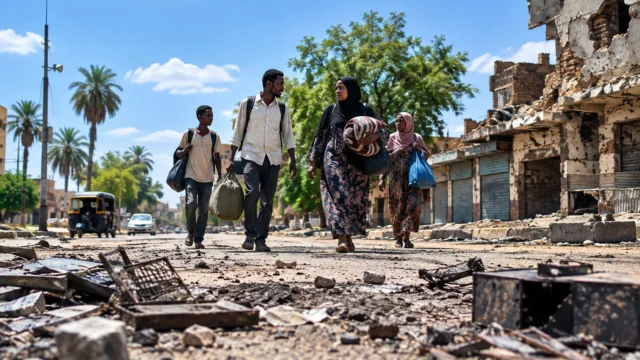
Returning to a place of origin can also shift the problem rather than solve it. Homes may have been destroyed or looted. In several areas, water, healthcare and electricity are scarce. Without these services, returnees risk leaving again, while the families hosting them often have limited resources.
Massive needs, nearly depleted stocks
On 6 November 2026, the IOM and the United Nations High Commissioner for Refugees (UNHCR) warned of the scale of needs for shelter and essential items. The two agencies estimate that 15.4 million people need assistance in this area. For lack of resources, humanitarian organisations can support only about one in ten of them.
From Khartoum, the IOM’s chief of mission in Sudan, Mohamed Refaat, said the organisation’s warehouses were empty after more than 40,000 tonnes of aid had been distributed this year. The 16 trucks that recently arrived in Darfur were, he said, the last available in its stocks. These figures and this statement were reported by UN agencies during their situation briefing.
Transport itself puts aid workers and relief supplies at risk. Abubakarr Jalloh, UNHCR’s deputy representative in Sudan, said drones had struck the organisation’s trucks twice this year. The drivers survived, but emergency shelters intended for more than 1,300 families burned, according to his account. Attacks on convoys therefore threaten both those delivering aid and those waiting for supplies.
The risks are not the same for everyone. Women and children make up three-quarters of displaced people, according to UNHCR. An enclosed shelter protects privacy and can reduce exposure to violence. A solar lamp helps people move around at night, while a cooking kit allows them to prepare a meal without having to find equipment. These items meet practical needs, but also address security concerns.
Funding shortfall curbs the response
Sudan’s 2026 humanitarian plan calls for $2.9 billion to assist 20.4 million people, out of 33.7 million considered to need aid. As of 6 November, only 47% of the required funds had been raised, according to figures presented by the IOM and UNHCR. Even with the planned funding, the plan does not cover everyone identified as being in need.
Data from OCHA, the UN office responsible for co-ordinating humanitarian affairs, give a concrete measure of the shortfall in the shelter and household items sector. In June, 600,000 people had received this assistance, out of 1.8 million targeted for 2026. Sector funding stood at 31% of requirements at the time, according to the British government’s September briefing, based on OCHA data. These June figures illustrate the underlying difficulties; they do not replace the more recent funding update announced in November.
Households are also facing rising food prices. In Darfur and Kordofan, below-average rainfall has affected harvests, according to UNHCR officials. When a family spends more on food, it has less to buy a blanket, repair a shelter or reach a safer place. Shortages of essential goods are thus compounded by insecurity and difficulties accessing services.
Returns illustrate the gap between movement and stability. More than 5.2 million people are reported to have returned to their regions of origin, according to UN agencies. But some find homes that cannot be used and services that have been disrupted. It is therefore necessary to track not only the number of returns, but also housing conditions, access to water and healthcare, and the risk of further displacement.
A Sudanese issue with regional consequences
The agencies are calling for additional, flexible funding to replenish stocks and maintain assistance where needs change rapidly. For people in affected areas, the timing is urgent: the arrival of colder months makes the lack of shelter more dangerous. For organisations, supply disruptions can also hamper the resumption of operations and distribution in hard-to-reach areas.
The consequences extend beyond Sudan’s borders. When people cannot remain safe in their region or access basic services, they may set out for other countries. Neighbouring countries must then respond to new reception needs, while displacement complicates regional stabilisation efforts. The course of the fighting, the security of convoys and the actual funding of the humanitarian plan will be decisive in determining whether aid can reach more Sudanese families.