Algeria
 Egypt
 Libya
 Morocco
 Sudan
 Tunisia
 Benin
 Burkina Faso
 Cabo Verde
 Côte d'Ivoire
 Ghana
 Guinea
 Guinea-Bissau
 Liberia
 Mali
 Mauritania
 Niger
 Nigeria
 Senegal
 Sierra Leone
 The Gambia
 Togo
 Cameroon
 Central African Republic
 Chad
 DR Congo
 Equatorial Guinea
 Gabon
 Republic of the Congo
 São Tomé and Príncipe
 Burundi
 Comoros
 Djibouti
 Eritrea
 Ethiopia
 Madagascar
 Malawi
 Mauritius
 Mozambique
 Rwanda
 Seychelles
 Somalia
 South Sudan
 Tanzania
 Uganda
 Angola
 Botswana
 Eswatini
 Lesotho
 Namibia
 South Africa
 Zambia
 Zimbabwe
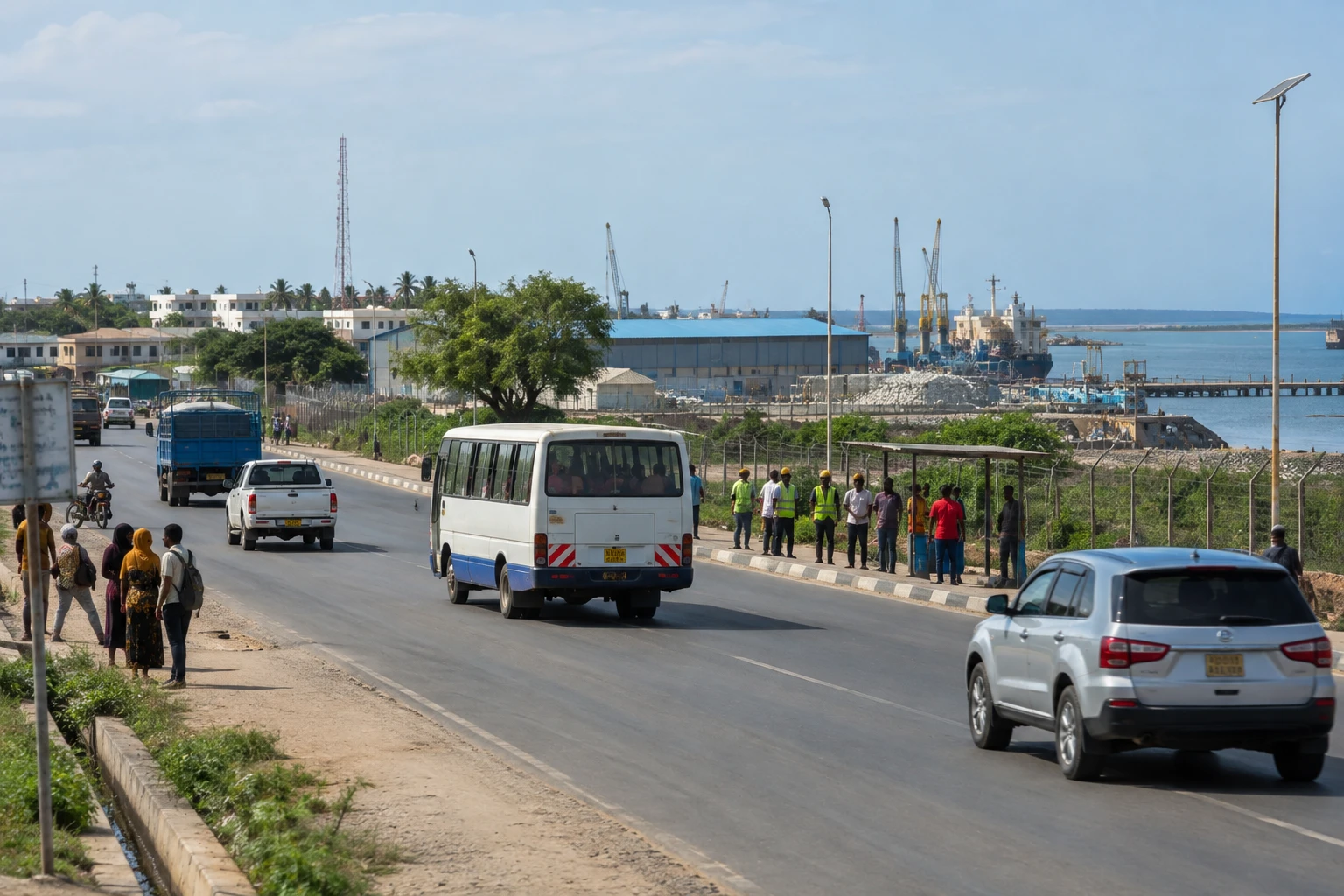
A major refinery can reduce a region’s dependence on imported fuel. But in Lamu, Kenya, one question is already being asked before construction begins: how much of the financial and land risk will fall to the state and local residents? The decision issued on 30 October on the project’s legal status resolves one specific stage, not all of these debates.
A decision limited to the public-private partnership framework
Kenya’s committee responsible for appeals relating to public-private partnerships (PPPs) dismissed a complaint by the Consumers Federation of Kenya (COFEK), a consumer advocacy organisation. The decision, dated 30 October and made public on 5 November, found that COFEK had not shown that the refinery fell under the PPP Act. The committee also ruled that no decision within its remit had been identified for review. Reuters’ account of the Kenyan committee’s decision and the Daily Nation’s report cite the same legal reasoning.
COFEK had approached the committee after the project’s official launch on 30 September. The organisation asked for the financial agreements, feasibility studies and associated risks to be made public. It also wanted the project’s permits to be reviewed under the rules governing PPPs.
The dismissal therefore does not mean that the committee approved the refinery’s financing structure, tax benefits or all its permits. It means that the body did not consider itself competent to rule on the application under that law. The distinction matters: a procedural decision is not a blanket green light for the entire project.
The state’s involvement remains to be clarified
The debate centres in part on the role the government might play. Before the committee, Treasury Secretary John Mbadi said discussions about possible public participation were still under way. Any state investment, he said, would be governed by public investment rules, not the PPP Act.
The National Infrastructure Fund, Kenya’s fund for financing infrastructure, said it had made no decision on the refinery. The Treasury has disclosed neither an officially committed amount nor a valuation of any potential public stake. Dangote representative Peter Lazarus, for his part, described the project as being developed, financed, owned and operated by a private company, with no public equity contribution at this stage.
These statements do not dispel the questions raised by the court proceedings. On 6 October, the High Court in Nairobi certified as urgent a separate application filed by Francis Onyango Awino, who is seeking information about possible public commitments: fund money, guarantees, land, tax benefits or an equity stake. This case is separate from COFEK’s appeal. The Daily Nation reported that the next mention was scheduled for 12 November. The High Court has not yet ruled on the substance of the application.
In Lamu, the stakes go beyond financing
The announced project is worth $16 billion and aims for a processing capacity of 700,000 barrels of crude oil a day. It is also due to include a 1,000-megawatt power plant, as well as fertiliser and chemical units. Commissioning is projected for 2030. These figures describe the announced targets, not capacity that has already been built or guaranteed. The launch of construction and the planned scale were reported by Associated Press.
Kenya’s ambition is to turn the port of Lamu into an industrial and energy hub as part of the wider LAPSSET corridor, which is intended to link the port with the country’s interior and neighbouring states. Across East Africa, a refinery of this size could alter fuel supply routes. But the scale of that impact will depend on whether the project is completed, its sources of supply and its costs. Projected capacity alone is not enough to conclude that prices will fall for households or businesses.
Any benefits would not automatically be distributed equally. Businesses linked to the port, transport and construction could gain new contracts. The effects on local employment, prices and small businesses will depend, among other things, on recruitment, local procurement and rules for sharing the benefits. For Lamu residents, immediate concerns also include land, compensation and access to construction areas.
These land issues are following their own path through the courts. Residents are challenging the use of land they say has been associated with their families for several generations. On 25 September, the Environment and Land Court in Malindi ordered that the status quo be maintained on a disputed plot, without in itself prohibiting the launch ceremony. The Daily Nation’s report distinguishes this land case from the challenge concerning transparency over public commitments. The legal status of a plot therefore cannot be inferred from the dismissal of COFEK’s complaint.
A transparency test for a regional project
Kenya is a member of the East African Community (EAC), which brings together several economies linked by trade and infrastructure. If the refinery is built, its potential market could extend beyond Kenya’s borders. This increases the project’s regional significance, as well as the importance of knowing the financing rules, any guarantees and the terms of access to refined products.
The 30 October decision therefore closes one specific avenue of appeal without resolving the substantive questions concerning public funds and land. The next step to watch is the mention announced in Nairobi for 12 November, while land proceedings continue in Malindi. For Kenyans and neighbouring countries alike, the question will be whether the announced industrial investment is accompanied by verifiable information and concrete safeguards for the communities concerned.