Algeria
 Egypt
 Libya
 Morocco
 Sudan
 Tunisia
 Benin
 Burkina Faso
 Cabo Verde
 Côte d'Ivoire
 Ghana
 Guinea
 Guinea-Bissau
 Liberia
 Mali
 Mauritania
 Niger
 Senegal
 Sierra Leone
 The Gambia
 Togo
 Cameroon
 Central African Republic
 Chad
 DR Congo
 Equatorial Guinea
 Gabon
 Republic of the Congo
 São Tomé and Príncipe
 Burundi
 Comoros
 Djibouti
 Eritrea
 Ethiopia
 Kenya
 Madagascar
 Malawi
 Mauritius
 Mozambique
 Rwanda
 Seychelles
 Somalia
 South Sudan
 Tanzania
 Uganda
 Angola
 Botswana
 Eswatini
 Lesotho
 Namibia
 South Africa
 Zambia
 Zimbabwe
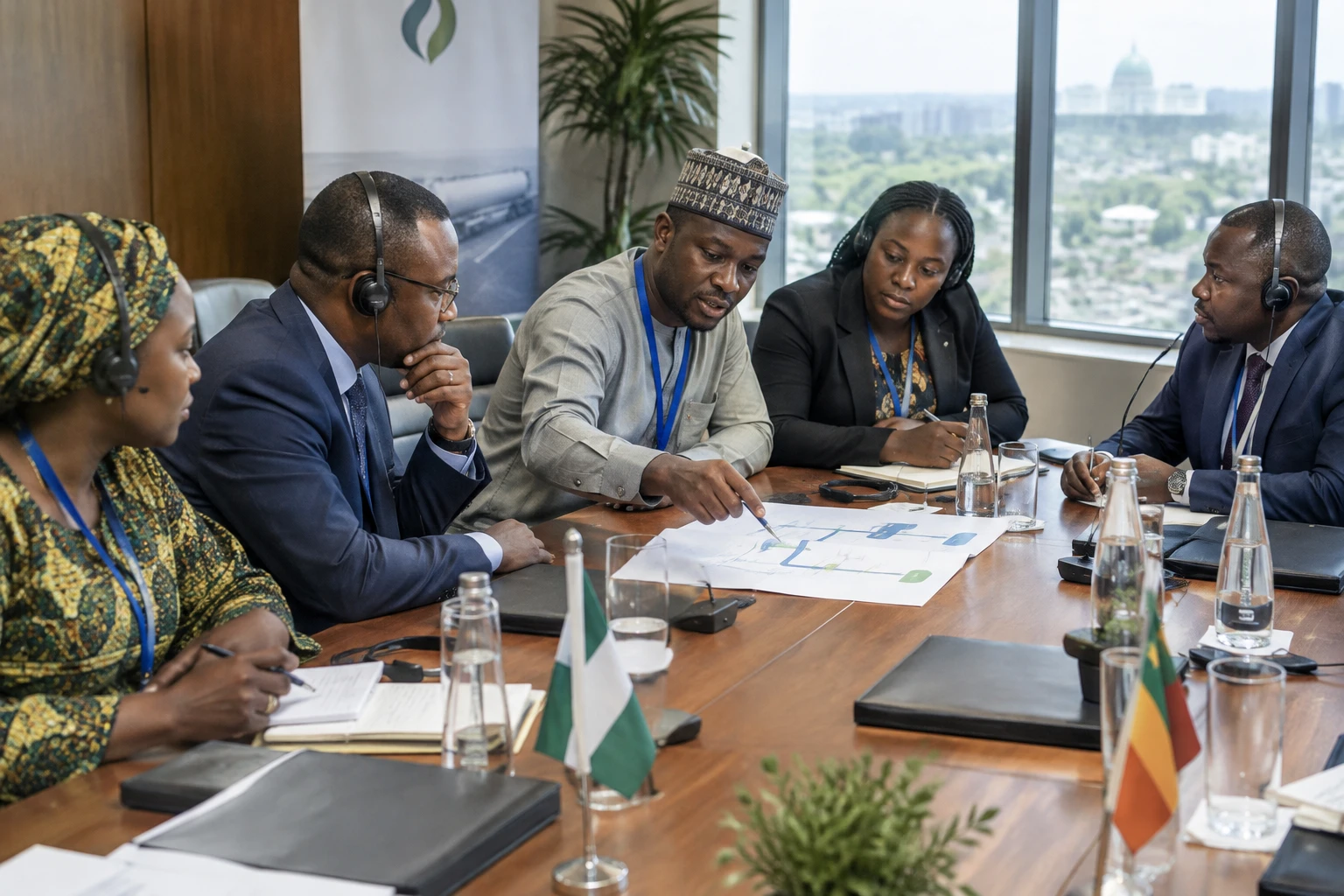
For Nigerian motorists, finding compressed natural gas (CNG) close to home can still be difficult. Nigeria therefore wants to use some of its existing service stations to bring the fuel closer to drivers, without waiting for new sites to be built across the country.
Converting a network of stations rather than rebuilding it
On 3 November 2026, Oluwole Adama, executive director of the Midstream and Downstream Gas Infrastructure Fund (MDGIF), announced that the fund was seeking partnerships with more than 1,000 outlets over two years. The idea is to install CNG refuelling equipment at stations that already sell petrol or diesel. The official cited more than 25,000 service stations in Nigeria. Both this figure and the announced target are attributed to him, as no independent confirmation was found.
In an interview with Per Second News on the sidelines of the ADIPEC exhibition in Abu Dhabi, Adama said that the first refuelling units were being rolled out. According to his comments reported by the outlet, an initial delivery of 15 units had just arrived, against an initial request for 75. He also said he wanted to install some before the end of the year. These milestones have been announced by the fund; they do not yet constitute a record of units being commissioned.
Using stations that are already operating could speed up access to CNG and reduce the cost of setting up each outlet. But installing a pump is not enough: gas must also arrive regularly, equipment must be maintained and motorists must be able to convert their vehicles.
The challenge also lies further up the supply chain
The announced scheme is part of a wider programme. In November 2025, the MDGIF, Endurance Group, the Bank of Industry and Séquor Investment Partners unveiled a project targeting 500 stations over three years. The proposed special-purpose company, CAM InfraCo, was also to develop supply infrastructure and organise gas transport. The current announcement places greater emphasis on equipping existing outlets; it does not explain how this target fits with the 500-station programme.
The supply chain requires several layers. So-called “mother” stations compress the gas. It can then reach “daughter” stations by pipeline or specialist trucks. The latter can serve areas far from pipelines, but require appropriate costs and logistics. Adama himself stressed that expanding pumps must go hand in hand with developing supply.
The first equipment matters, but it does not yet show where stations will be installed, which operators will be selected or how gas volumes will be guaranteed. The timetable, selection criteria and financial terms of the partnerships remain to be specified. Without this information, the number of outlets targeted is not, by itself, enough to measure actual access for users.
A response to transport costs, with limitations
CNG development comes after the federal petrol subsidy was removed in 2023, contributing to higher transport costs. For taxi drivers, transport operators and households that depend on daily travel, cheaper fuel could reduce the bill. But the benefit will depend on the price actually charged, the cost of converting vehicles and the distance to a station.
The challenges vary by location. In large urban centres, an additional station can serve many vehicles. In states less well served by gas pipelines, truck transport and the regularity of deliveries will weigh more heavily. Small transport businesses and independent drivers, who have limited margins, may also find it harder to finance a conversion than large operators.
An Associated Press report published in November 2024 had already described the network’s limitations and the long distances some drivers had to travel to refuel. It also noted the cost of conversion for private motorists. This finding, which predates the latest announcements, is a reminder that infrastructure expansion does not automatically guarantee affordable access. Price, installation safety and the availability of approved workshops remain decisive.
Implications for West African gas policy
The MDGIF was established under Nigeria’s 2021 Petroleum Industry Act. It operates in a sector where the country is seeking to make better use of its gas resources in the domestic market, particularly for transport and industry. The CNG programme is also a response to the economic effects of fuel reform: reducing dependence on imported petrol and containing logistics costs are linked objectives, but they are not the same.
Regionally, Nigeria is a major player in the Economic Community of West African States (ECOWAS), a body for co-operation among West African countries. A denser infrastructure network could support Nigerian transport and trade. However, the announcement concerns the national network; no regional distribution or gas co-operation mechanism has been specified at this stage.
The next step, then, will be less about the announced number than the ability to make the entire chain work: equipment, supply, transport, maintenance and vehicle conversions. The fund is targeting more than 1,000 partnerships over two years, while a separate project for 500 stations was announced in 2025. How the two fit together and how far they have actually progressed will be essential to determining whether CNG becomes an accessible option beyond a few corridors and major cities.
Sources consulted: MDGIF statements on 1,000 refuelling outlets, Nigeria’s project for 500 CNG stations, CNG infrastructure projects commissioned in Nigeria in 2026 and report on access to CNG and conversion costs.