Algeria
 Egypt
 Libya
 Morocco
 Sudan
 Tunisia
 Benin
 Burkina Faso
 Cabo Verde
 Côte d'Ivoire
 Ghana
 Guinea
 Guinea-Bissau
 Liberia
 Mali
 Mauritania
 Niger
 Nigeria
 Senegal
 Sierra Leone
 The Gambia
 Togo
 Cameroon
 Central African Republic
 Chad
 Equatorial Guinea
 Gabon
 Republic of the Congo
 São Tomé and Príncipe
 Burundi
 Comoros
 Djibouti
 Eritrea
 Ethiopia
 Kenya
 Madagascar
 Malawi
 Mauritius
 Mozambique
 Rwanda
 Seychelles
 Somalia
 South Sudan
 Tanzania
 Uganda
 Angola
 Botswana
 Eswatini
 Lesotho
 Namibia
 South Africa
 Zambia
 Zimbabwe
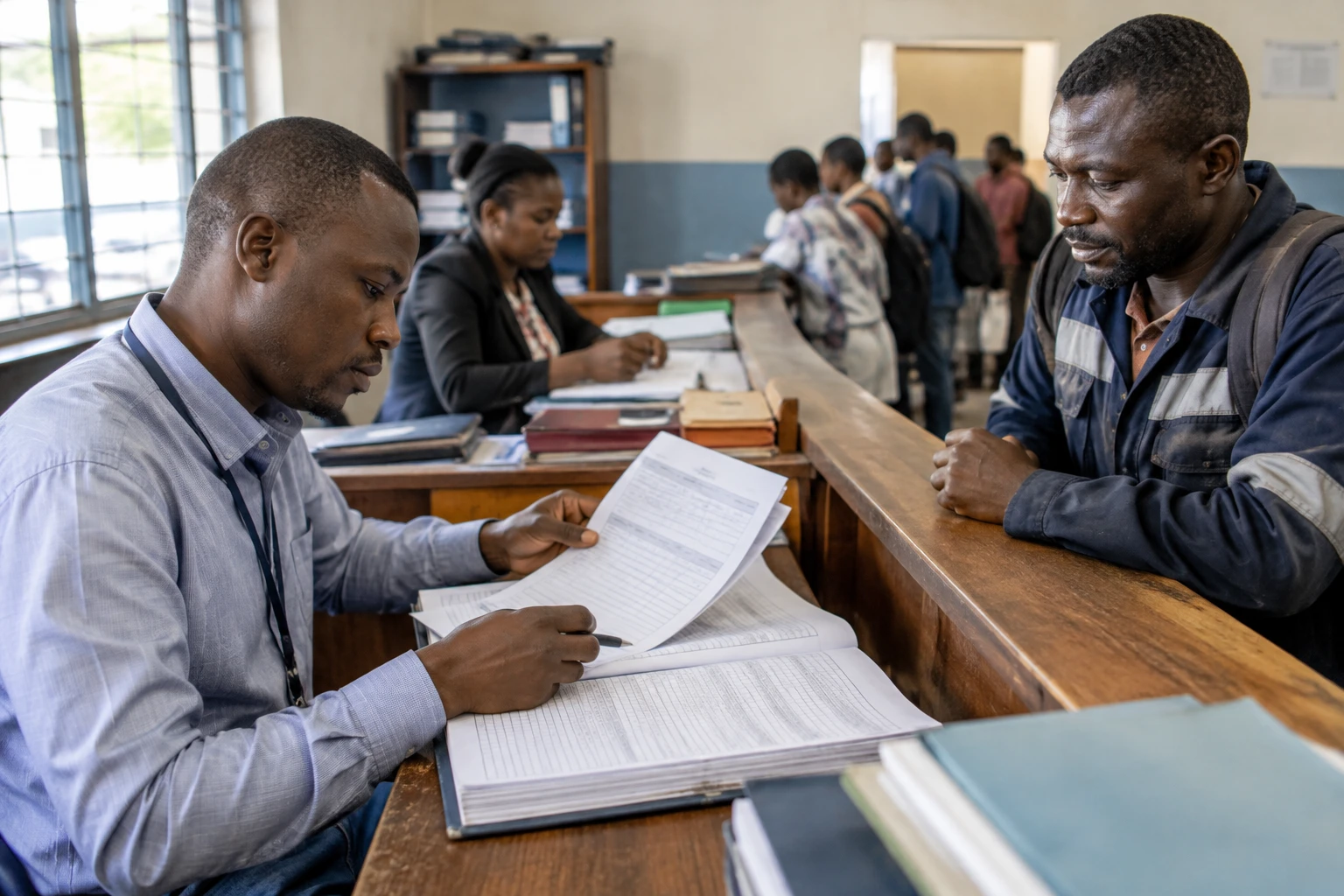
In the south-east of the Democratic Republic of the Congo, checking a shipment of copper or cobalt is not enough to establish its origin. It is also necessary to know who extracted it, which route it followed and whether the taxes owed to the state were paid. These are the questions that investigations ordered in Kinshasa will have to answer after several operations in the provinces of Lualaba and Haut-Katanga.
Significant seizures, responsibilities yet to be established
On 2 November 2026, Justice Minister Guillaume Ngefa Atondoko Andali asked the prosecutor general at the Court of Cassation to open judicial investigations. The decision follows a report by an inter-agency mission involving police officers, military personnel, military magistrates and experts from the Ministry of Mines, according to the statement reported by the Congolese Press Agency.
The reported tally lists more than 500 trucks and other vehicles seized, along with several thousand tonnes of copper and cobalt. These figures were also reported by Bankable. They describe seizures reported by the authorities, but do not yet amount to an established judicial tally. The ministry has not made public full details of the shipments, the companies potentially involved or the value of any possible loss.
Investigators will have to examine suspicions of mining fraud, illegal exploitation and smuggling. In particular, they will seek to establish the origin of the minerals, the circumstances of their extraction and transport, and any potential criminal responsibility. At this stage, those detained or the parties concerned have not been declared guilty.
Operations in Lualaba and Haut-Katanga
Several interventions preceded this instruction. On 19 October, trucks carrying copper and cobalt were intercepted on various routes in Lualaba, including near Samukinda, and then impounded at the Musompo trading centre in Kolwezi for checks. The centre is intended to help regulate transactions and make artisanal minerals more traceable. The ACP reported its reopening at the end of October.
On 27 October, more than 60 foreign nationals were detained at the Menda quarry, within the Boss Mining concession in Kakanda. They are suspected of having taken part in unauthorised artisanal mining activities and maintained illicit mineral stockpiles. Radio Okapi confirmed the date, location and reported number, while attributing the allegations to local sources. Congolese nationals were also reportedly detained, according to information reported in the material provided.
A separate operation on 31 October reportedly led to the seizure of more than 500 vehicles and machines at the Menda site, within the Boss Mining concession, a subsidiary of Eurasian Resources Group. However, the ministry has not published a detailed inventory that would distinguish the equipment seized in that operation from items included in the overall tally. It is for investigators to clarify the scope and circumstances of each seizure.
Traceability, a matter of sovereignty and revenue
Copper and cobalt occupy a central place in the Congolese economy and in global supply chains. When minerals move outside regulated channels, the state risks losing tax and other revenues. Buyers, transporters and operators also need clear rules: an impounded shipment can disrupt legitimate activity, even when no offence is ultimately established.
The challenge, therefore, is not limited to seizing vehicles. It is to link each batch to an authorised site, verifiable documents and identifiable operators. In artisanal mining, this oversight also concerns miners and co-operatives, whose incomes depend on access to sites and markets. At Musompo, the revival of a trading centre is specifically intended to organise some of these formal exchanges, although this alone will not resolve traceability problems.
The presence of security forces in mining areas also raises a question of governance. In July 2026, President Félix Tshisekedi called for the withdrawal of military personnel and police from sites, except when they are carrying out a mission provided for by law. On 2 November, the Congolese organisation Justicia said that thousands of uniformed agents remained at some sites in Lualaba and Haut-Katanga. This estimate is an allegation by the NGO, reported by Radio Okapi, and not an independently verified official count. It nevertheless highlights the need to distinguish the lawful protection of sites from any alleged involvement in mining activities.
A test for Congolese institutions and the region
The case puts to the test co-ordination between the civil justice system, military magistrates, police, armed forces and mining services. For the operations to produce lasting results, the seizures will have to be followed by documented proceedings, reasoned decisions and, where applicable, penalties established by the courts. Transparency about the shipments and their subsequent handling will also help prevent the fight against fraud from indiscriminately penalising legitimate operators and artisanal workers.
The issue extends beyond the two provinces. Minerals from the south-east of the Congo feed regional and international commercial supply chains; their traceability therefore affects the credibility of the DRC’s controls among buyers. But the stakes are first and foremost national: enforcing the law, protecting public revenue and ensuring that resources benefit the Congolese people. The next steps to watch are the effective opening of investigations, publication of their findings and clarification of the status of the people, minerals and equipment seized.