Algeria
 Egypt
 Libya
 Morocco
 Sudan
 Tunisia
 Benin
 Burkina Faso
 Cabo Verde
 Côte d'Ivoire
 Ghana
 Guinea
 Guinea-Bissau
 Liberia
 Mali
 Mauritania
 Niger
 Nigeria
 Senegal
 Sierra Leone
 The Gambia
 Togo
 Cameroon
 Central African Republic
 Chad
 DR Congo
 Equatorial Guinea
 Republic of the Congo
 São Tomé and Príncipe
 Burundi
 Comoros
 Djibouti
 Eritrea
 Ethiopia
 Kenya
 Madagascar
 Malawi
 Mauritius
 Mozambique
 Rwanda
 Seychelles
 Somalia
 South Sudan
 Tanzania
 Uganda
 Angola
 Botswana
 Eswatini
 Lesotho
 Namibia
 South Africa
 Zambia
 Zimbabwe
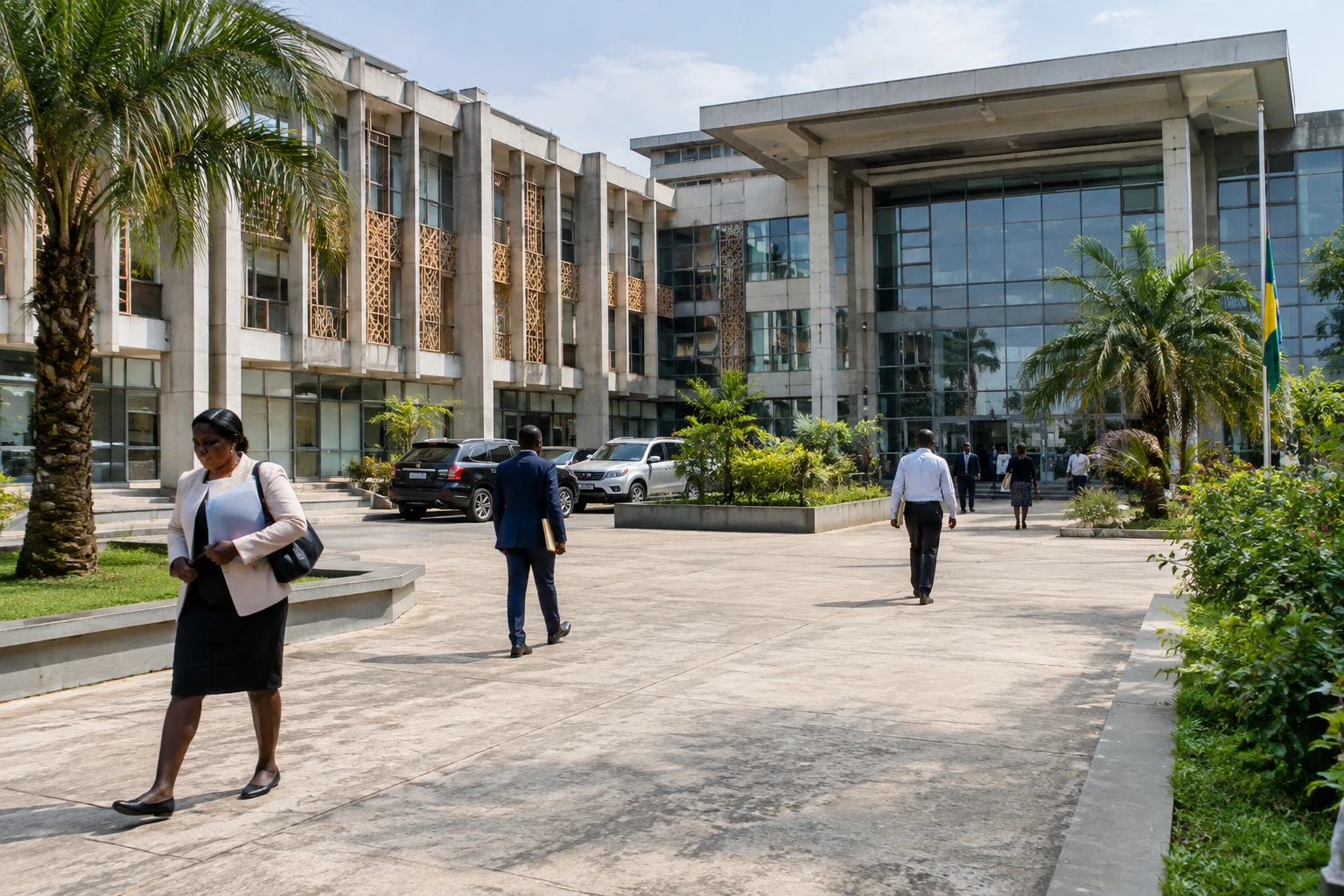
Rising trade with China does not in itself guarantee that more value will stay in Gabon. In Libreville, the challenge of Brice Clotaire Oligui Nguema’s visit is to turn an already significant trade relationship into industrial activity, jobs and local skills.
A partnership aligned with Gabon’s development path
Since the change of power on 30 August 2023, Gabon’s authorities have sought to redefine the country’s economic priorities and diversify its partnerships. Local processing of resources is among the stated goals. It is intended in particular to reduce dependence on exports of minimally processed raw materials.
Gabon is also pursuing its strategy within a regional framework. As a member of CEMAC, the Economic and Monetary Community of Central Africa, the country shares a currency and a regional market with its neighbours. Transport and energy infrastructure could therefore support trade beyond Gabon’s borders, provided projects are actually delivered and accessible.
China is already a major trading partner for Gabon. But the available figures do not match exactly. Gabon’s presidency puts trade at $3.94 billion in 2025, up 8.2% year on year. Gabonese news agency Agence Gabonaise de Presse, for its part, published a total of $3.19 billion and growth of 8.3%. Chinese customs data cited by a database based on UN Comtrade indicate about $3.92 billion. The scope or calculation methods may differ; the sources consulted do not make it possible to establish this. The $3.94 billion total should therefore be attributed to the presidency, rather than presented as a harmonised figure.
From Shanghai to productive investment
Arriving in Shanghai on 3 November 2026, Gabon’s president began a state visit to China scheduled to run until 7 November. The Gabonese presidency and China’s foreign ministry have confirmed the dates. In Shanghai, Oligui Nguema held talks with local authorities on investment and opportunities for economic co-operation.
The visit coincides with the ninth China International Import Expo, held from 5 to 10 November. Gabon is taking part for the first time with a national pavilion. For Libreville, the showcase could help the country’s businesses present their products and make contacts. It does not, however, guarantee orders or industrial investment: those outcomes will depend on contracts signed and their implementation.
The stated priorities include industrialisation, infrastructure, raw-material processing, technology transfers and job creation. China-Gabon co-operation already covers mining, timber, energy, agriculture and equipment. The Belinga iron-ore project, linked to rail, port and energy infrastructure, illustrates the scale of the investments under consideration. But announcements are not construction schedules: funding, permits, infrastructure needs and operating conditions remain decisive.
Timber processing in the Nkok special economic zone offers another point of comparison. Gabon chose to restrict log exports in order to develop processing activities locally. The experience shows that creating local value requires more than setting up factories: it also depends on supply, access to energy, training and commercial outlets.
The benefits will be measured beyond the announcements
For the authorities, attracting capital can support economic diversification and broaden revenues from productive activity. For workers and Gabonese businesses, the tangible impact will depend on the jobs created, purchases made from local suppliers and skills transferred. In areas near projects, the need for roads, electricity and services will also weigh in the assessment.
Trade figures alone do not show who captures the value. It is necessary to distinguish exports of raw resources from sales of processed products, while also examining how contracts are distributed and whether jobs are sustainable. Growth in bilateral trade can accompany industrialisation; it can also mainly reflect higher volumes of raw materials and equipment imports. Published figures are not enough to decide between these scenarios.
The continental context gives the visit broader significance. In 2024, at the Forum on China-Africa Cooperation, Beijing and African governments reaffirmed their desire to deepen economic ties. For Gabon, the challenge is to negotiate projects that fit its national priorities, while using CEMAC to improve regional links. Competition between external partners can create options, but it cannot replace the need for clear public rules.
Commitments to be monitored over time
The visit therefore puts a specific promise to the test: to shift a relationship structured around trade and resources towards co-operation that does more processing locally. The next steps to watch are the signing of agreements, their value and deadlines, and then the investments actually made. The share of local jobs, planned training and links established with Gabonese businesses will also need to be checked.
China’s presidency describes Gabon as a strategic partner and highlights the trust between the two countries. This diplomatic language describes the political ambition behind closer ties, not yet their economic results. For Gabonese people, the test will be concrete: completed projects, activities moving up the value chain and measurable benefits beyond major extraction sites.