Algeria
 Egypt
 Libya
 Morocco
 Sudan
 Tunisia
 Benin
 Burkina Faso
 Cabo Verde
 Côte d'Ivoire
 Ghana
 Guinea
 Guinea-Bissau
 Liberia
 Mali
 Mauritania
 Niger
 Nigeria
 Senegal
 Sierra Leone
 The Gambia
 Togo
 Cameroon
 Central African Republic
 Chad
 DR Congo
 Equatorial Guinea
 Gabon
 Republic of the Congo
 São Tomé and Príncipe
 Burundi
 Comoros
 Djibouti
 Eritrea
 Ethiopia
 Madagascar
 Malawi
 Mauritius
 Mozambique
 Rwanda
 Seychelles
 Somalia
 South Sudan
 Tanzania
 Uganda
 Angola
 Botswana
 Eswatini
 Lesotho
 Namibia
 South Africa
 Zambia
 Zimbabwe
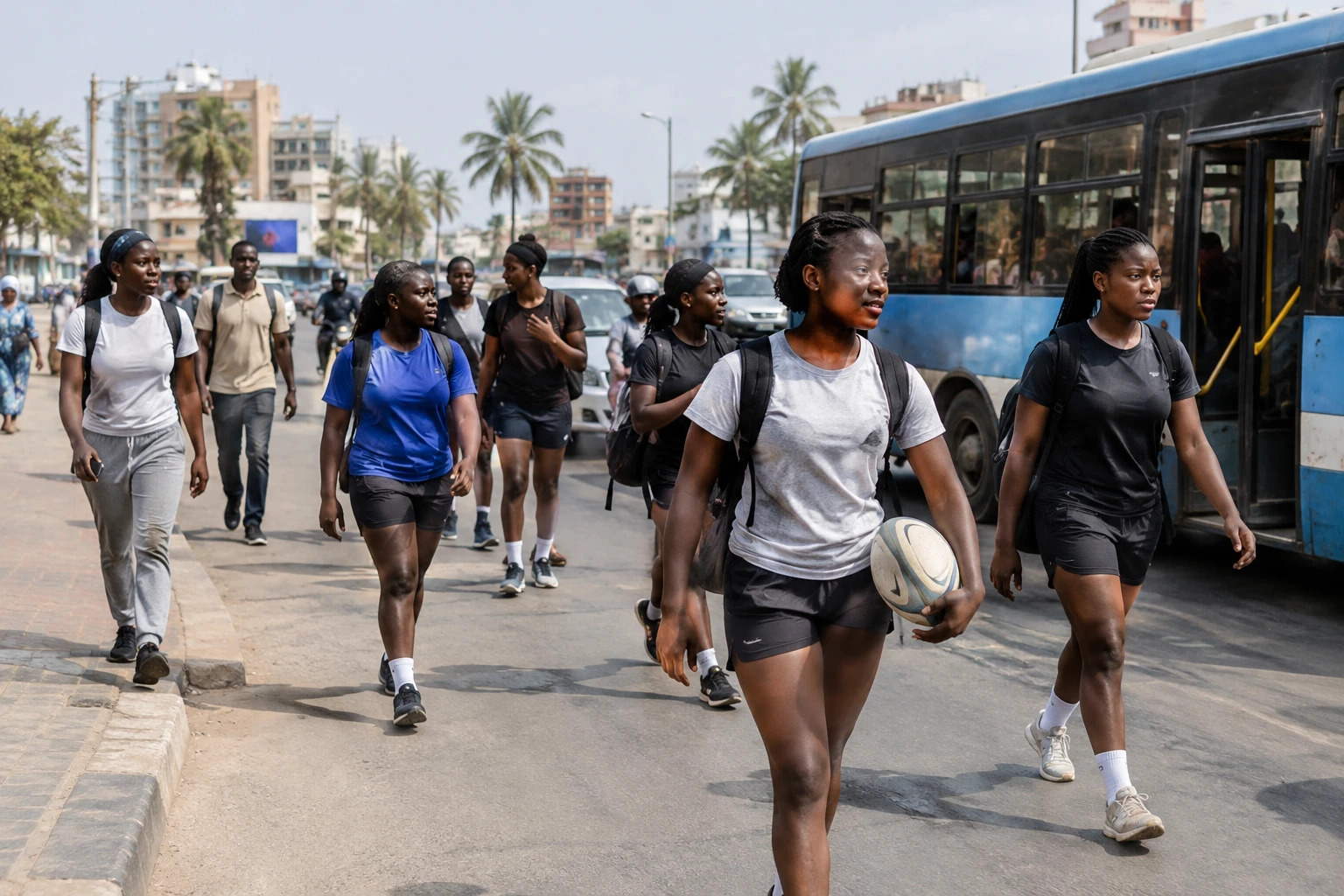
In Dakar, Kenyan women’s rugby turned a tight final into a landmark moment. On 3 November 2026, Kenya’s under-18s beat Australia 17-12 after extra time. Their gold medal puts an African team at the top of an Olympic rugby sevens event.
A final decided in extra time
The match was played at the Iba Mar Diop Complex as part of the Youth Olympic Games (YOG), a competition for athletes aged 14 to 17. Kenya beat Australia in a match that ended 17-12. Kenyan and Senegalese reports say the victory was decided in extra time.
The result gives the final particular significance. Dakar 2026 is the first Olympic event to be held on African soil. The rugby tournament ran from 1 to 3 November, while the Games take place from 31 October to 13 November. For host nation Senegal, the stakes therefore go beyond staging a competition: African performances are taking place before a continental audience, at an Olympic event hosted by West Africa.
Kenya confirms its place in sevens rugby
The final alone does not tell the full story of Kenya’s campaign. In the group stage, Australia beat Kenya 17-5, according to the results published for the tournament. The final victory shows that the young Kenyans were able to respond to that setback when the title was at stake. The narrow score and extra time underline how close the two teams were on the day, without diminishing Australia’s performance across the competition.
For Kenya, a recognised power in men’s sevens rugby, the medal shines a spotlight on the women’s pathway and the next generation. The Kenya Rugby Union had announced a national programme of age-group competitions, intended in particular to identify and prepare players for Dakar. The title gives this development work a visible result. On its own, it is not enough to measure the depth of the system or its resources, but it confirms that young Kenyan players can compete with nations established at the top level.
The victory is also a signal for women’s sport in Kenya. Medals won by a national team can attract greater attention from the media, federations and partners. What happens next will depend, however, on the ability to provide players with regular competitions, sustained coaching and pathways to the senior teams. The transition from youth age groups to elite level remains a decisive step: a title opens a door, but does not in itself guarantee a continuous professional or international career.
Dakar, an African stage for a global competition
The significance of this medal also becomes clear at regional level. The YOG brought together delegations from many countries, and the women’s tournament included Senegal, Madagascar, Kenya and South Africa. The competition therefore placed several African teams in the same draw, facing opponents from other regions. The Senegal Rugby Federation described the matches as an event held in Dakar from 1 to 3 November.
This presence matters in a sport where resources, calendars and media exposure remain unevenly distributed between countries. Hosting the Games on the continent brings African athletes, supporters and federations closer to a global competition. But visibility translates into a sporting legacy only if facilities, school programmes and national structures continue to serve young people after the closing ceremony. The benefits are not automatic and may differ between national teams, clubs and players in regions far from major centres.
Rugby sevens, a short and fast-paced version of 15-a-side rugby, pits seven players per team against each other on a field of comparable dimensions. Its pace lends itself to compact matches and tournaments held over a few days. For young athletes, the YOG therefore offer international experience in a format that allows several matches and teams to be followed at one venue.
A title to build on beyond the Games
Kenya leaves Dakar with women’s gold and a victory that resonates beyond the medal table. It gives the young players new visibility and is a reminder that African rugby is not limited to its best-known men’s teams. For Senegal, it helps make this first African Olympic event a stage where the continent’s athletes are not merely hosts: they are competing for titles too.
The next challenge will be less spectacular, but decisive: turning this success into opportunities to play and develop in Kenya. Following the Rising Lionesses generation, developing women’s competitions and ensuring continuity after the under-18 level will show whether the Dakar medal marks a lasting starting point. The gold has been won; the legacy will be built over the seasons to come.