Algeria
 Egypt
 Libya
 Morocco
 Sudan
 Tunisia
 Benin
 Burkina Faso
 Cabo Verde
 Côte d'Ivoire
 Ghana
 Guinea
 Guinea-Bissau
 Liberia
 Mali
 Mauritania
 Niger
 Nigeria
 Senegal
 Sierra Leone
 The Gambia
 Togo
 Cameroon
 Central African Republic
 Chad
 Equatorial Guinea
 Gabon
 Republic of the Congo
 São Tomé and Príncipe
 Burundi
 Comoros
 Djibouti
 Eritrea
 Ethiopia
 Kenya
 Madagascar
 Malawi
 Mauritius
 Mozambique
 Rwanda
 Seychelles
 Somalia
 South Sudan
 Tanzania
 Uganda
 Angola
 Botswana
 Eswatini
 Lesotho
 Namibia
 South Africa
 Zambia
 Zimbabwe

In Goma, the meeting between MONUSCO and the newly formed Front for the Refoundation of the Nation (FRN) raises an immediate question: how can civilians be protected and a ceasefire monitored when the armed interlocutor changes its name but claims continuity with the previous coalition? The meeting opens a channel for discussion. In itself, it is neither a peace agreement nor proof of de-escalation.
A new framework for a persistent conflict in eastern DR Congo
The Democratic Republic of the Congo is experiencing a prolonged security crisis in its eastern provinces. North Kivu, where Goma is located, is at the centre of fighting between Congolese forces and armed groups. The M23, which controls territory in the east, was part of the Congo River Alliance (AFC), a political-military coalition. The FRN says it succeeded that alliance after being formed in Goma on 12 October 2026.
This reshuffle comes as diplomatic initiatives continue, notably the Doha peace process between Kinshasa and the AFC/M23. The FRN says it is taking on the commitments of that process, as well as its disputes. This statement does not mean that previous agreements are being implemented: their implementation and the situation on the ground remain to be verified.
The crisis extends beyond Congo’s borders. It affects relations between DR Congo and Rwanda, which Kinshasa, the United States and UN experts accuse of supporting the M23. Kigali rejects these accusations. In the Great Lakes region, diplomatic tensions, population displacement and mediation efforts are intertwined. The African Union and the countries of the region therefore have a stake in the prospects for a ceasefire and dialogue.
James Swan meets Joseph Kabila and FRN officials
On Tuesday 3 November 2026, MONUSCO chief James Swan met former Congolese president Joseph Kabila in Goma. Kabila was presented as the leader of the FRN. Corneille Nangaa and Bertrand Bisimwa, vice-presidents of the movement, also took part in the discussions. The meeting is part of the UN mission’s continuing contacts with the actors in the conflict in the east of the country.
According to accounts published by Congolese media, the discussions focused in particular on civilian protection, humanitarian access and ceasefire monitoring. MONUSCO also supports the Expanded Joint Verification Mechanism Plus (MCVE+), a mechanism tasked with documenting alleged violations of the truce. Its role is to contribute to monitoring, not to guarantee an end to the fighting on its own.
After the meeting, Bertrand Bisimwa questioned the value of renewing MONUSCO’s mandate. He described the mission’s record as a “total failure” and said the FRN would have preferred it to continue its withdrawal. This is the movement’s assessment. It is not an independent evaluation of the mission’s work, whose mandate includes civilian protection and support for peace efforts.
Between criticism of the mission and the need for verification
This position puts the FRN in a two-sided relationship with the United Nations: its officials challenge MONUSCO’s presence and record while taking part in discussions on the ceasefire and UN-backed mechanisms. It remains to be seen whether these contacts lead to concrete commitments, and whether all parties honour them.
The AFC’s change of name to the FRN also raises questions of accountability. Bertrand Bisimwa said the new movement inherited the former coalition’s “assets and liabilities”. The phrase asserts political continuity. However, without verification, it does not establish whether the chain of command, obligations or practices on the ground have in fact changed or remained the same.
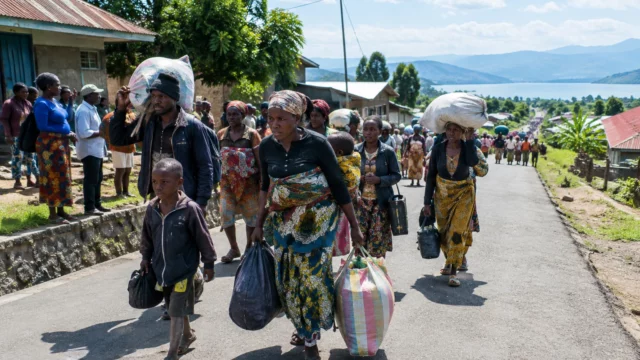
For residents of Goma and other affected areas, the stakes are measured first by access to healthcare, markets, services and humanitarian aid, as well as the safety of travel. People living outside urban centres may face other constraints on access and protection. A political meeting does not, in itself, indicate how these conditions are changing. Monitoring mechanisms and information from communities remain essential to establish what is actually changing.
The political context adds a sensitive dimension to the meeting. Joseph Kabila is a former head of state, now associated with a political-military structure based in Goma. His status and role in the FRN are among the country’s political questions. However, his meeting with James Swan amounts neither to UN political recognition of the movement nor to validation of its claims. It is an exchange with an actor whose influence could affect the security situation.
The next test: verifiable actions
The significance of these discussions will depend on whether they translate into action on the ground. Reports of alleged ceasefire violations, access for humanitarian organisations and the effective protection of civilians will need to be monitored. The Doha process is another point of focus: the FRN says it is committed to it, but the parties’ statements do not replace verification of their actions or compliance with commitments by Kinshasa and the movement.
For the Great Lakes region, the challenge is also to prevent a new name from obscuring responsibility or complicating mediation efforts. Congolese authorities, regional actors and the African Union will need to be able to draw on precise information about interlocutors, commitments and military developments. The Goma meeting opens a channel for dialogue. Its value will be judged by whether it reduces risks to the population and makes it possible to verify announced progress independently.