Algeria
 Egypt
 Libya
 Morocco
 Sudan
 Tunisia
 Benin
 Burkina Faso
 Cabo Verde
 Côte d'Ivoire
 Ghana
 Guinea
 Guinea-Bissau
 Liberia
 Mali
 Mauritania
 Niger
 Nigeria
 Senegal
 Sierra Leone
 The Gambia
 Togo
 Cameroon
 Central African Republic
 Chad
 DR Congo
 Equatorial Guinea
 Gabon
 Republic of the Congo
 São Tomé and Príncipe
 Burundi
 Comoros
 Djibouti
 Eritrea
 Ethiopia
 Madagascar
 Malawi
 Mauritius
 Mozambique
 Rwanda
 Seychelles
 Somalia
 South Sudan
 Tanzania
 Uganda
 Angola
 Botswana
 Eswatini
 Lesotho
 Namibia
 South Africa
 Zambia
 Zimbabwe
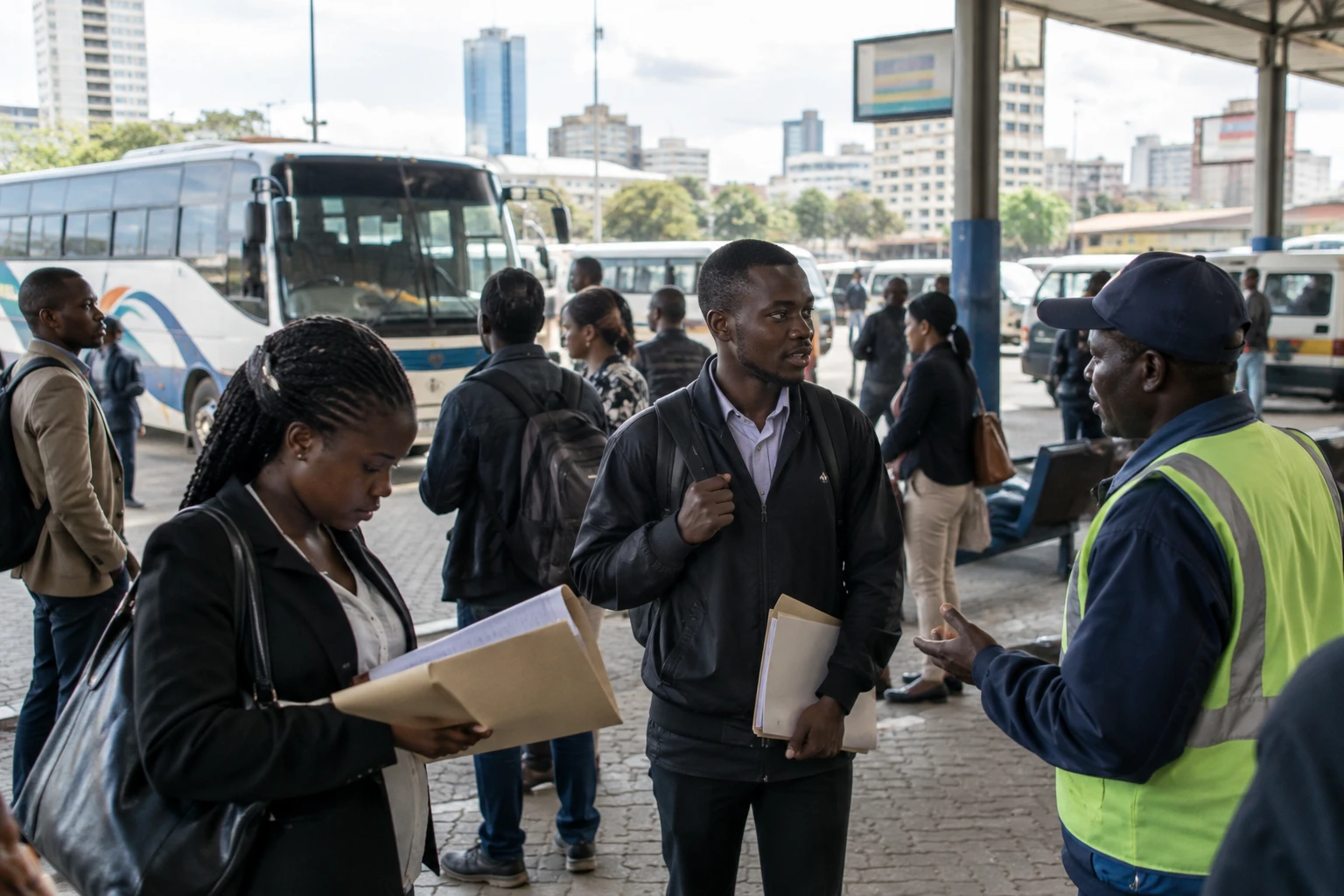
Vocational training can open a door to a job abroad. But for skilled refugees living in Kenya, that door also depends on a Canadian immigration rule that has just closed to new applications. An agreement signed in Nairobi promises pathways to Canada without yet clearly specifying which routes candidates will be able to use.
A recruitment partnership, not a visa
On 29 October 2026, the Kenyan government and Talent Beyond Boundaries (TBB) Canada signed a memorandum of understanding on labour mobility. The announcement was made in Nairobi at a ceremony attended by, among others, Shadrack Mwadime, Principal Secretary for Labour and Skills Development, and Lara Dyer, chief executive of TBB Canada. A Kenyan media outlet also reported on the signing and the goals set out by the authorities.
The agreement is intended to connect future Canadian employers with young Kenyans and refugees living in Kenya. It provides for recruitment-linked training, skills verification, matching with companies, support with immigration procedures and assistance with settling in. TBB cites pathways for personal support workers, welders, licensed practical nurses and automotive technicians.
For some care support roles, the scheme mentions Confederation College of Applied Arts and Technology and the Kenya Red Cross Training Institute. The aim, then, is to prepare candidates for targeted occupations and present them to employers. But an agreement between partners is neither an individual job offer nor permission to enter Canada: each candidate remains subject to the applicable immigration rules.
The sticking point: the route reserved for refugees
The agreement refers to the Economic Mobility Pathways Pilot, known by its English acronym EMPP, as well as other programmes for skilled workers. However, Canada stopped accepting new applications under the EMPP on 1 January 2026. This closure is confirmed by the Canadian authorities and by information published by UNHCR in Canada.
The EMPP allowed skilled refugees and other displaced people to apply for economic immigration with accommodations that took into account displacement-related barriers. Some candidates could, for example, provide substitute documents if they did not have access to the documents normally required. The programme’s closure does not eliminate ordinary professional recruitment routes for Kenyans. It does, however, raise a specific question for the refugees the partnership also aims to support.
In its assessment published in July 2026, Canada’s immigration ministry says that an increase in applications and a reduction in admission places have lengthened processing times. When the pilot closed, projected processing times for new applications had reached four to six years, while the programme aimed for expedited processing, generally within six months. Canada is considering options for managing pending cases, but the partnership announced in Nairobi does not yet detail how a possible new route for refugees would work.
Skills alone do not guarantee departure
This distinction will matter to candidates. Training can improve preparation for an occupation, and verification of qualifications can facilitate recruitment. But the outcome also depends on a genuine job offer, recognition of qualifications or experience, language requirements and visa rules. For refugees, documentary barriers and delays can add to these conditions, even when their skills meet an employer’s needs.
The Canadian assessment also notes that unpredictable processing times can put job offers at risk and complicate plans for both businesses and candidates. It also highlights the role of partner organisations in identifying candidates, supporting applications and preparing people to settle. Their involvement can make the process clearer, but does not replace a decision by the immigration authorities.
For young Kenyans, the issue also involves protection against abuses linked to international recruitment. Principal Secretary Shadrack Mwadime presented the partnership as a way to develop more orderly processes and limit the exploitation of workers seeking jobs abroad. The extent to which this ambition is realised will depend, in particular, on transparency about available jobs, selection criteria, any fees and avenues for redress if problems arise.
The training scheme mentioned covers specific occupations rather than offering open access to all candidates. It will therefore be important to see which profiles are actually selected, where the training will take place and whether successful candidates will be able to leave within a timeframe that meets employers’ needs. Information published about the agreement does not yet provide a timetable or number of places.
Mobility also needs to be viewed in an East African context
Kenya is placing this initiative within a broader policy on labour mobility. In East Africa, the Common Market of the East African Community (EAC) provides for the movement of workers between member states, subject to national rules. This regional mobility is distinct from moving to Canada: it is based on regional commitments and does not depend on the same immigration procedures.
The two levels nevertheless raise a common question: how can skills, available jobs and workers’ rights be brought into alignment? International recruitment can offer opportunities to professionals and meet employers’ needs. It can also leave candidates in uncertainty if training progresses faster than work authorisations. Follow-up after hiring, contract security and the ability to assert one’s rights will matter as much as initial selection.
The next step, then, will be less the signing itself than its implementation: publication of criteria, identification of employers, clarification of migration routes and the first departures. Until these elements are specified, refugees in Kenya cannot know whether the partnership will give them access to a process distinct from the now-closed EMPP. For other candidates, ordinary professional routes remain possible, but are not guaranteed by the agreement.