
 Algeria
 Egypt
 Libya
 Morocco
 Sudan
 Tunisia
 Benin
 Burkina Faso
 Cabo Verde
 Côte d'Ivoire
 Ghana
 Guinea
 Guinea-Bissau
 Liberia
 Mali
 Mauritania
 Niger
 Nigeria
 Senegal
 Sierra Leone
 The Gambia
 Togo
 Cameroon
 Central African Republic
 Chad
 DR Congo
 Equatorial Guinea
 Republic of the Congo
 São Tomé and Príncipe
 Burundi
 Comoros
 Djibouti
 Eritrea
 Ethiopia
 Kenya
 Madagascar
 Malawi
 Mauritius
 Mozambique
 Rwanda
 Seychelles
 Somalia
 South Sudan
 Tanzania
 Uganda
 Angola
 Botswana
 Eswatini
 Lesotho
 Namibia
 South Africa
 Zambia
 Zimbabwe
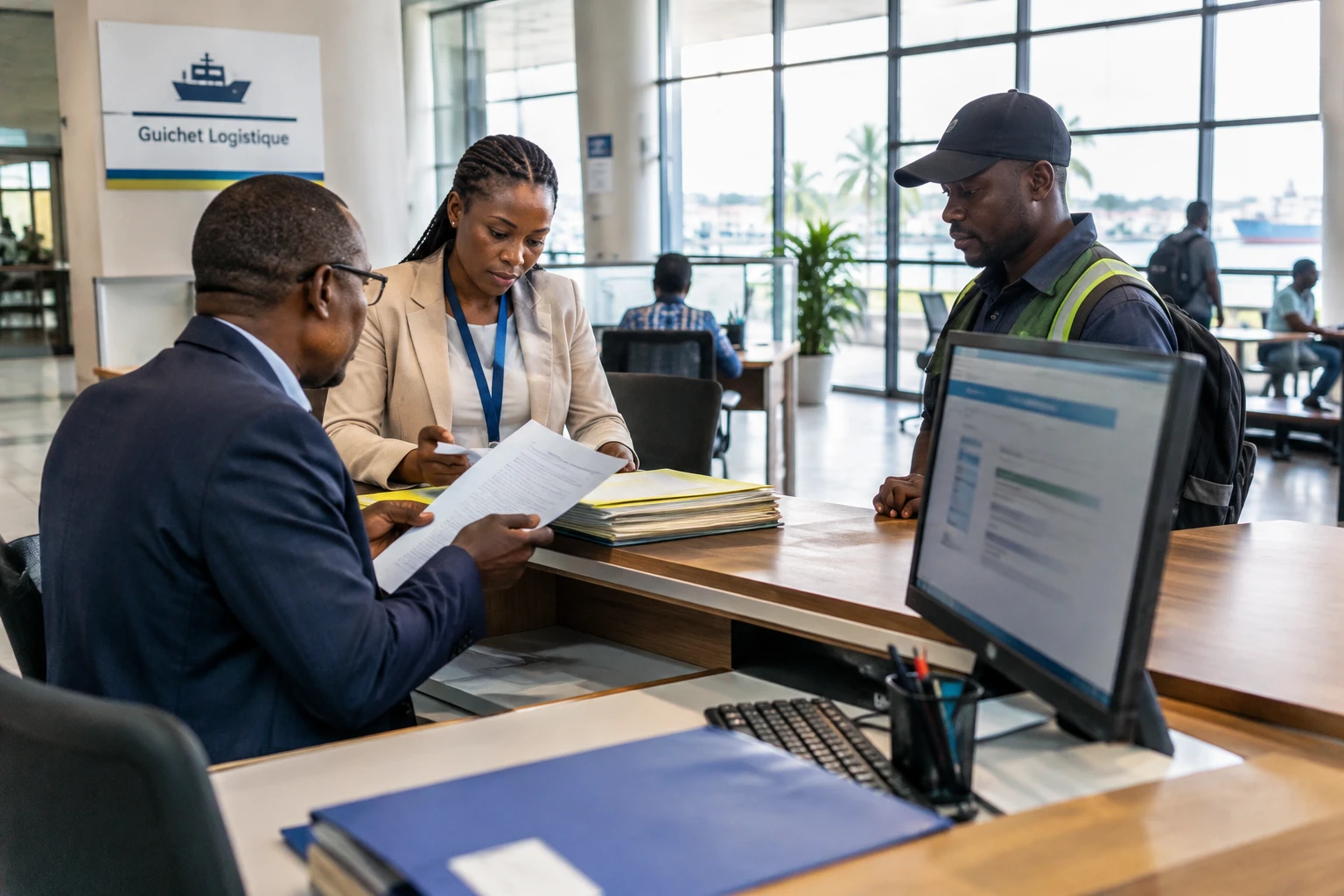
A transport document can hold up a cargo shipment as much as a crowded quay. For Gabonese businesses, simplifying paperwork and securing its recognition from one country to another is therefore a practical matter of time, costs and access to finance.
Common rules for several modes of transport
On 26 October 2026, in Accra, Gabon signed the United Nations Convention on Negotiable Cargo Documents. The Minister of State for Transport, Merchant Marine and Logistics, Ulrich Manfoumbi Manfoumbi, represented the country at the ceremony. Gabon’s signature is recorded in the UN depositary’s register.
Adopted by the United Nations General Assembly on 15 December 2025, the text establishes a common framework for documents representing goods in transit. It covers maritime, road, rail and air transport, and provides for documents in paper or electronic form. The convention notably recognises the legal validity of electronic documents on the same principles as their paper equivalents.
The so-called “negotiable” mechanism allows certain rights to goods to be transferred by passing on the document representing them, even before they arrive. This can make it easier to sell goods in transit or use them to support a trade-finance transaction. A single document can also accompany several stages of a multimodal journey, rather than requiring multiple documents at each change of transport mode.
However, signing does not mean that the convention already applies in Gabon. The treaty has not yet entered into force: it will do so 180 days after the tenth instrument of ratification, acceptance, approval or accession is deposited. Gabon will therefore have to complete its domestic procedures before operators can invoke these new rules within the national framework.
Reform must connect with Gabon’s systems
This international step comes on top of initiatives already announced in Libreville. On 21 January 2026, the minister held a working meeting with the Gabonese Shippers’ Council (CGC), an organisation involved in freight regulation and monitoring. The government says a reform is planned to digitise the Council’s administrative documents and improve the traceability of land freight, together with the Directorate-General for Land Transport.
The initiative addresses a daily challenge for importers, exporters, carriers and freight forwarders: sending the same information to several parties, sometimes in different formats. Validation delays, misplaced documents or inconsistencies can immobilise cargo and drive up costs. Coherent digital procedures could reduce these frictions, provided the relevant services can exchange reliable data.
Another project concerns the centralisation of formalities. In June 2026, the government discussed with Abu Dhabi Ports Group the establishment of a single window to simplify trade and port procedures. The talks form part of a broader partnership, which also includes the Mayumba deep-water port project. At this stage, it is a project to be delivered, not a service already in operation.
These tools serve distinct purposes. The CGC works on freight monitoring and its own documents; the single window aims to bring together procedures across several government agencies; and the Accra Convention sets common legal rules for cargo documents between countries. Their effectiveness will depend on how well they are connected, the security of the systems, and public- and private-sector actors’ recognition of electronic signatures and documents.
CEMAC, the next test of alignment
The challenge extends beyond Gabon’s borders. Gabon belongs to CEMAC, the Economic and Monetary Community of Central Africa, which brings six countries together in a regional market with a common currency. Goods can cross several borders and change modes of transport before reaching their destination. Harmonised documentary rules could therefore facilitate regional trade, if states and administrations implement them in a compatible way.
The continental dimension also ties in with the African Continental Free Trade Area (AfCFTA), which aims to develop trade between African countries. But reducing tariff barriers is not enough if documents, customs systems and transit procedures remain difficult to reconcile. The Accra ceremony brought together 26 signatory states, including Gabon, Côte d’Ivoire, Ghana, Nigeria, Rwanda and the Democratic Republic of the Congo.
For large companies, digitisation can speed up the preparation of files and make cargo tracking easier. Small businesses, freight forwarders and carriers must also be able to access the tools without disproportionate costs or additional procedures. In areas far from major ports and Libreville, the quality of internet connectivity and support for operators will affect adoption of the new services.
The next measure of progress will therefore be less the signing itself than its translation into Gabonese law and usable procedures. The ratification timetable, rules for accepting electronic documents and the links between the future single window, the CGC and customs systems will all need to be monitored. This is where the Accra Convention’s real impact on the cost and predictability of Gabon’s external trade will be measured.



