Algeria
 Egypt
 Libya
 Morocco
 Sudan
 Tunisia
 Benin
 Burkina Faso
 Cabo Verde
 Côte d'Ivoire
 Ghana
 Guinea
 Guinea-Bissau
 Liberia
 Mali
 Mauritania
 Niger
 Nigeria
 Senegal
 Sierra Leone
 The Gambia
 Togo
 Cameroon
 Central African Republic
 Chad
 DR Congo
 Equatorial Guinea
 Republic of the Congo
 São Tomé and Príncipe
 Burundi
 Comoros
 Djibouti
 Eritrea
 Ethiopia
 Kenya
 Madagascar
 Malawi
 Mauritius
 Mozambique
 Rwanda
 Seychelles
 Somalia
 South Sudan
 Tanzania
 Uganda
 Angola
 Botswana
 Eswatini
 Lesotho
 Namibia
 South Africa
 Zambia
 Zimbabwe
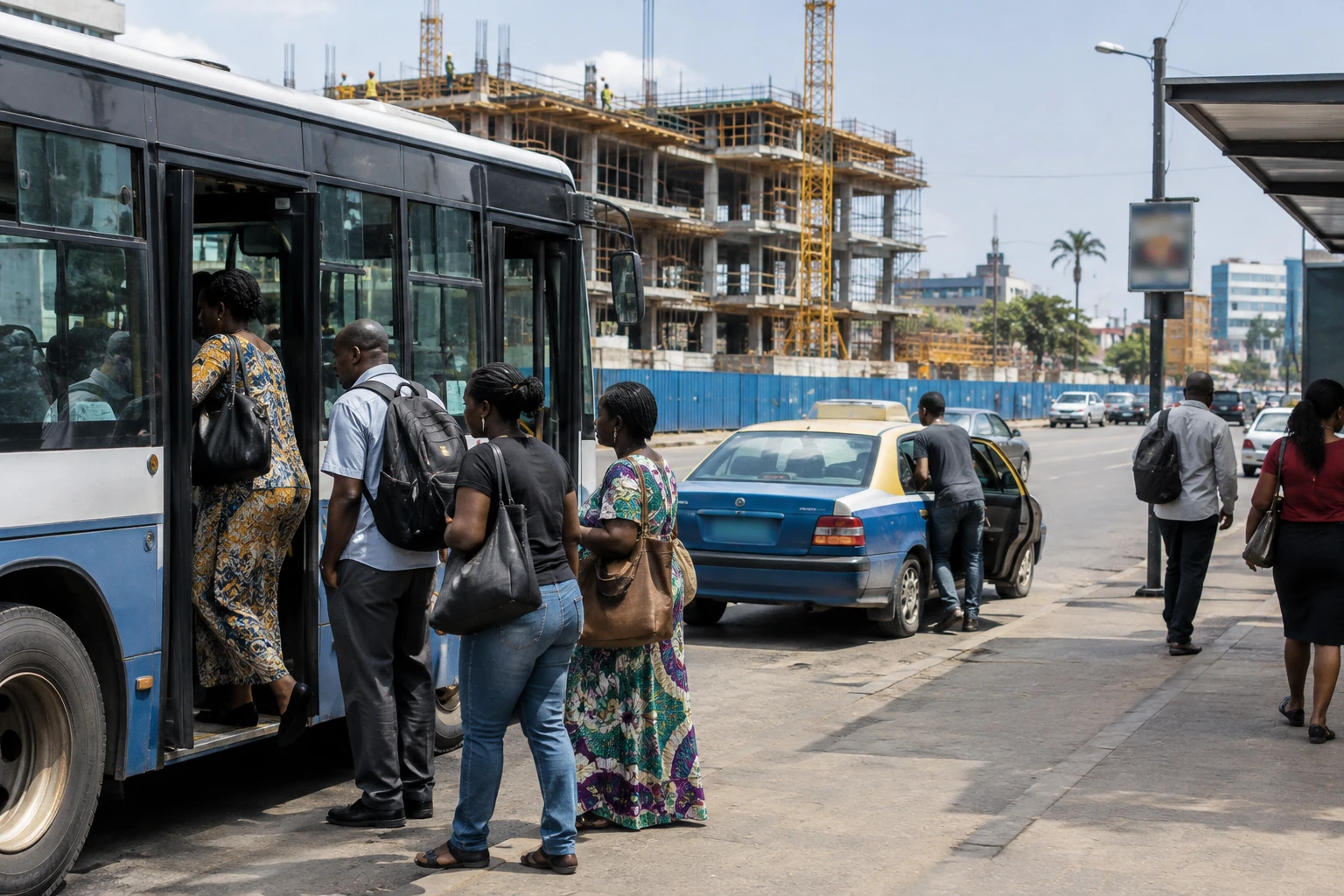
In Plaine-Orety, Libreville, the issue is not just a future building. It also concerns how the Gabonese state allocates its land and responds to residents evicted in the name of the public interest. Eleven civil society organisations are now seeking explanations from parliament over the plot intended for the headquarters of the Union démocratique des bâtisseurs (UDB), the party of President Brice Oligui Nguema.
A site marked by evictions
In June 2025, an eviction operation affected Plaine-Orety and the area behind the National Assembly. The Gabonese Press Agency reported at the time that proposals had been made to the government to address the situation created by the operation. The organisations now challenging the allocation say that displaced families have still not found a lasting solution.
Their spokesperson, Ella Engonga Lionel, says several people are still sleeping “under the stars”. This account expresses the coalition’s position. The information available does not make it possible to independently establish how many families remain without housing or their precise situation. This claim, which calls for a response from the authorities, should therefore be distinguished from a verified assessment.
The controversy intensified after the UDB announced its headquarters project. The planned building is described as an R+12 structure, meaning twelve floors above ground level. The construction site is on a plot in Plaine-Orety, an area whose public-interest status and the 2025 evictions are at the centre of the questions being raised.
On 30 October 2026, the Coalition of Gabonese Civil Society Organisations announced that it had petitioned the president of the National Assembly. It is calling for the vice-president of the government and the minister responsible for housing, urban planning and the land registry to be questioned. In particular, it wants to know which documents underpin the allocation, what criteria were applied and whether there are any other beneficiaries at the site. These details were reported by Gabonclic and Le Radar, two Gabonese media outlets.
Questions put to parliament
The coalition’s move draws on the National Assembly’s oversight role. The Gabonese Constitution of 19 December 2024 provides for parliament to scrutinise the government’s actions. It specifically provides for questioning ministers and oversight committees. The petition is therefore asking MPs to exercise an institutional power, without prejudging whether the allocation was lawful or what response the officials concerned will give.
Another issue raised concerns the housing minister, whom the coalition says is also the UDB’s secretary-general. This dual role has prompted calls for clarification on the safeguards applied during the land allocation process. In itself, it does not prove that any rule was broken. However, it makes the publication of the relevant decisions, criteria and administrative responsibilities particularly important.
The party, for its part, has defended the project in a statement reported by Gabonese media. The UDB says construction will be financed through membership fees, voluntary contributions and financial engineering mechanisms. This response addresses how the building will be financed. It does not resolve the separate question raised by the coalition: on what basis was the plot allocated, and how does its intended use fit with the site’s status?
For the displaced people, the immediate issue remains housing and follow-up on public commitments. For the authorities, the task is to make land decisions understandable and verifiable. For a party in power, transparency is also a matter of trust. Explaining the procedures matters as much as whether legal compliance is alleged or established.
A test of transparency in post-transition Gabon
The issue arises amid a period of political realignment. After the August 2023 coup, Gabon adopted a new constitution, then held a presidential election and legislative elections in 2025. The UDB, founded by Brice Oligui Nguema, has become a central force within the new institutions. In this context, parliament’s ability to demand answers about a decision affecting the president’s party is a concrete test of its oversight role.
The regional dimension also merits consideration, without conflating national responsibilities with regional frameworks. Gabon belongs to the Economic and Monetary Community of Central Africa (CEMAC), which brings together six countries for economic and monetary co-operation. The Plaine-Orety case primarily concerns Gabonese law and institutions. But clear land rules and confidence in the administration also matter to citizens, businesses and investors across the sub-region.
The next step will depend on the response to the petition: can the National Assembly obtain public answers, and will the government publish documents relating to the site’s status and its allocation? Measures intended for the evicted families will also need to be tracked. Until these points are answered with documentation, the controversy is less about one building versus another than a question of consistency: how can the stated public use of a site, population displacement and the allocation of a plot to a political party be reconciled?
Sources for cross-checking: Gabonclic, on the petition of 30 October 2026 ; Le Radar, on the coalition’s demands ; Gabonese Constitution, articles 79 to 81 ; Gabonese Press Agency, on the 2025 eviction operation ; Gabon Media Time, on the UDB’s response concerning financing.