Algeria
 Egypt
 Libya
 Morocco
 Sudan
 Tunisia
 Benin
 Burkina Faso
 Cabo Verde
 Côte d'Ivoire
 Ghana
 Guinea
 Guinea-Bissau
 Liberia
 Mali
 Mauritania
 Niger
 Nigeria
 Senegal
 Sierra Leone
 The Gambia
 Togo
 Cameroon
 Central African Republic
 Chad
 DR Congo
 Equatorial Guinea
 Gabon
 Republic of the Congo
 São Tomé and Príncipe
 Burundi
 Comoros
 Djibouti
 Eritrea
 Kenya
 Madagascar
 Malawi
 Mauritius
 Mozambique
 Rwanda
 Seychelles
 Somalia
 South Sudan
 Tanzania
 Uganda
 Angola
 Botswana
 Eswatini
 Lesotho
 Namibia
 South Africa
 Zambia
 Zimbabwe
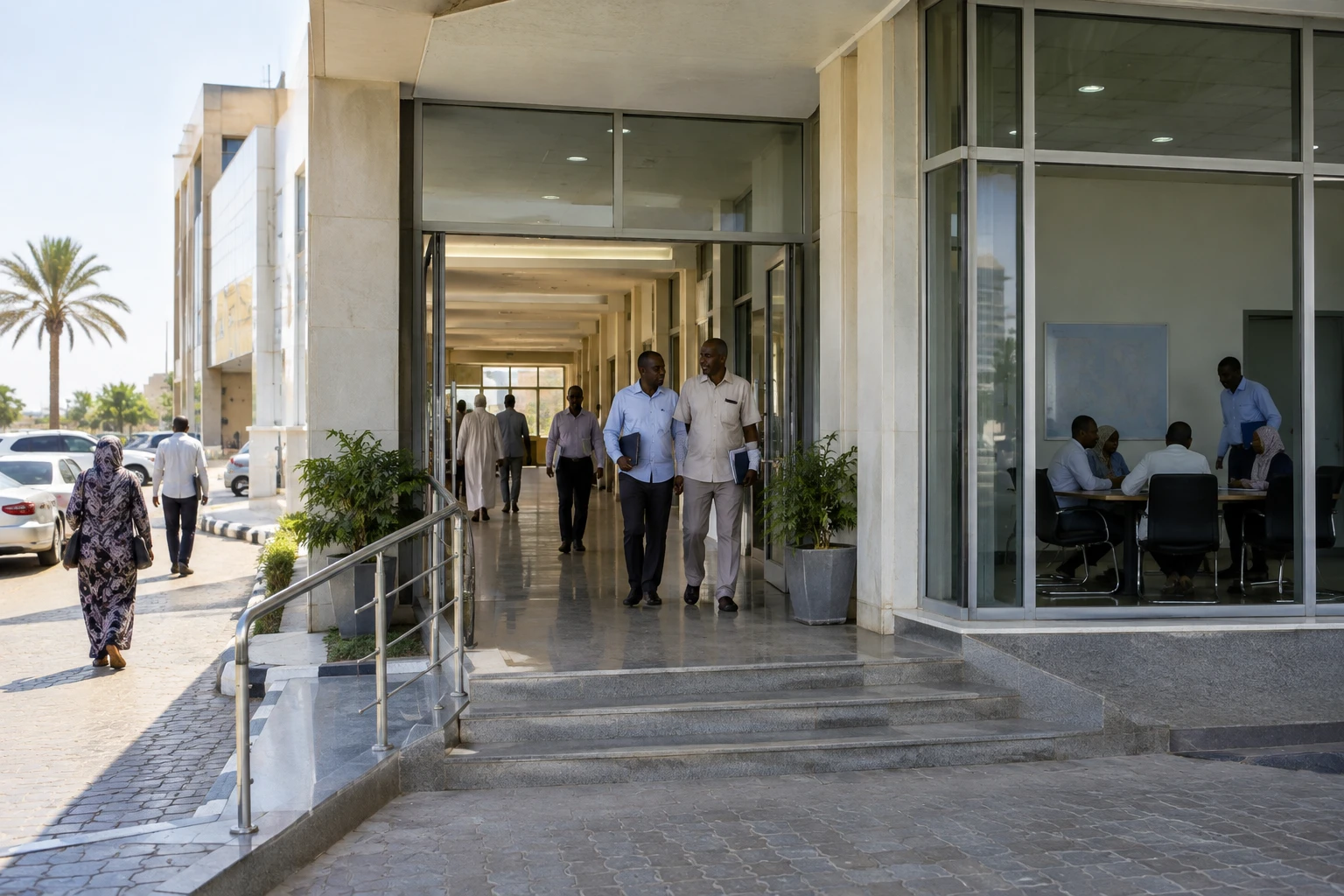
When a drone strike cuts the power, its effects extend far beyond the frontline. Hospitals, markets, irrigation pumps and water networks depend on facilities already weakened by the war. For Sudan, accusations against Ethiopia now add the risk of a confrontation between states to a conflict that has been raging since April 2023.
An internal war with regional repercussions
Since April 2023, the Sudanese army has been fighting the Rapid Support Forces (RSF), a paramilitary group led by Mohamed Hamdan Dagalo, known as “Hemedti”. The war began over a disagreement about integrating the RSF into the army. It has since divided the country and displaced millions of people.
The conflict is also playing out in a tense neighbourhood. Sudan and Ethiopia share a border, particularly around Blue Nile state. The two governments have previously accused each other of supporting opposing armed groups. Addis Ababa, for its part, has accused the Sudanese army of backing rebels linked to the Tigray People’s Liberation Front. Khartoum has rejected these accusations.
The region falls in particular under the remit of the Intergovernmental Authority on Development (IGAD), an East African organisation that includes both countries. The African Union is also monitoring tensions between several states in the Horn of Africa. On 1er October, it called on Ethiopia, Eritrea and Egypt to prioritise dialogue. This regional diplomacy faces conflicts spilling across borders and complicating mediation efforts.
Khartoum takes its accusations to the UN and African Union
On Sunday 1er November, Sudan’s Ministry of Foreign Affairs announced that it had petitioned the United Nations Security Council and the African Union’s Peace and Security Council. It accuses the RSF of using Ethiopian territory to launch drones against civilian sites and essential infrastructure.
A report presented by the Sudanese authorities records 70 attacks between 15 February and 27 October 2026. It says 187 one-way attack drones and 82 munition-carrying drones were involved. According to this official tally, the strikes allegedly killed or injured 484 civilians, as well as killing 176 soldiers and injuring 200 others. These figures come from the Sudanese authorities; they have not been independently verified in the information available.
The report identifies three suspected launch sites: Asosa Airport in western Ethiopia, the Kurmuk-Gizen border area and Bahir Dar airbase in Ethiopia’s Amhara region. Khartoum says it is relying on aircraft debris, flight data and satellite imagery. It cites, in particular, a flight controller recovered from a drone shot down near Ed Damazin on 20 September. These details have been presented by the Sudanese government; their interpretation has not been publicly confirmed by an independent investigation.
The ministry describes the alleged use of Ethiopian territory as a hostile act and says Sudan reserves the right to defend itself. At the time of the first reported statements, Ethiopia had not responded to the new complaint. It has previously denied supporting the RSF and said it respects Sudanese sovereignty. The accusations alone therefore do not constitute independent proof of Ethiopian state involvement.
Power grids, an immediate concern for civilians
Electricity has become one of the most visible points of vulnerability. On 1er November, fresh strikes cut power to cities in northern Sudan. The Associated Press reports that attacks on electricity substations have increased since the beginning of October. The Sudanese government and a local human rights group blame the RSF.
The outage affects more than households plunged into darkness. It disrupts water supplies, businesses and health services. Hospitals need electricity for medical care, dialysis centres and the storage of blood and medicines. In farming areas, irrigation pumps also depend on the grid. Small businesses and households unable to afford a generator or fuel have fewer alternatives.
These consequences affect territories controlled by the army, but it is the residents who bear the impact first, regardless of which side administers their area. A prolonged outage also slows the return of displaced people and the revival of local economic activity. In this way, attacks on infrastructure can extend the effects of war far beyond direct fighting.
Risk of escalation beyond Sudan’s frontlines
Khartoum’s complaint turns a military accusation into a diplomatic case. A petition to the UN or African Union does not settle the question of responsibility. It does, however, require the bodies concerned to examine allegations which, if substantiated, would implicate a neighbouring state’s territory in a civil war.
The technical evidence cited by Sudan, any response from Ethiopia and any independent verification will therefore be crucial. The immediate priority is also to preserve lines of communication between the two capitals. An escalation between neighbouring countries could further complicate mediation efforts and destabilise a region already riven by several rivalries.
For residents, the next tangible sign will be how the strikes and power cuts develop, and whether the authorities can protect civilian infrastructure. At regional level, attention will turn to how the UN and African Union respond to the complaints. For now, the origin of the drones and the Ethiopian state’s possible role remain accusations by Khartoum, not facts established by an independent investigation.
Sudan’s accusations and the evidence presented in Khartoum · The petition to the Security Council and African Union · The effects of strikes on Sudan’s power grid · The African Union’s call for regional de-escalation