Algeria
 Egypt
 Libya
 Morocco
 Sudan
 Tunisia
 Benin
 Burkina Faso
 Cabo Verde
 Côte d'Ivoire
 Ghana
 Guinea
 Guinea-Bissau
 Liberia
 Mali
 Mauritania
 Niger
 Nigeria
 Senegal
 Sierra Leone
 The Gambia
 Togo
 Cameroon
 Central African Republic
 Chad
 DR Congo
 Equatorial Guinea
 Gabon
 Republic of the Congo
 São Tomé and Príncipe
 Burundi
 Comoros
 Djibouti
 Eritrea
 Ethiopia
 Kenya
 Madagascar
 Malawi
 Mauritius
 Mozambique
 Rwanda
 Seychelles
 Somalia
 South Sudan
 Tanzania
 Uganda
 Angola
 Botswana
 Eswatini
 Lesotho
 Namibia
 Zambia
 Zimbabwe
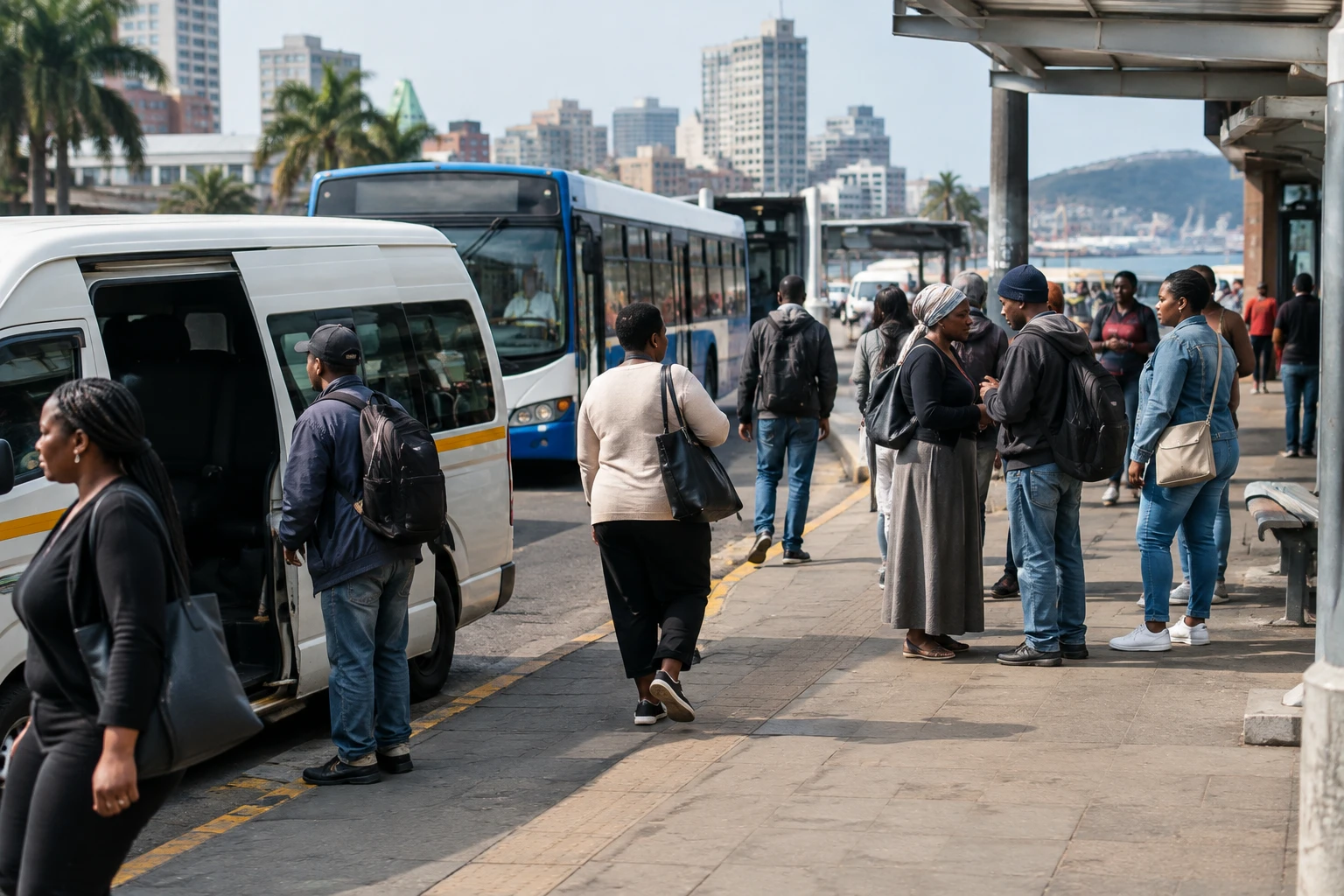
In Durban, a march can now find itself at the heart of an immediate dilemma: how to protect the right to protest without allowing fear of foreigners to escalate into violence? Following the death of a foreign national, South Africa’s courts have imposed a temporary pause on March and March movement gatherings in the eThekwini municipality.
Temporary order after violence in Durban
On 28 October 2026, the KwaZulu-Natal High Court granted a temporary ban on March and March protests in eThekwini, the metropolitan municipality of which Durban is the main urban centre. The measure follows an urgent application by the Ministry of Police and provincial police officials. The court is due to review the case on Friday 30 October to decide whether the ban becomes permanent. eNCA’s report on the interim order in Durban and the Associated Press report both confirm its temporary nature and the announced hearing.
Police cite assaults, property damage, businesses forced to close and alleged threats, including against a refugee reception centre in Berea. These threats have been reported by the authorities; they do not, on their own, prove that an arson plan was carried out. The order restricts the movement’s activities pending a court decision, but it is not a final ruling on the alleged events.
The case is part of a series of tensions surrounding the reception of asylum seekers. In July 2026, the Constitutional Court ruled on access to the asylum procedure, which allows a person to seek the protection of the state. The government subsequently said it needed to adapt its system. In October, protests against the implementation of this ruling escalated in Durban and Soweto, with shops looted and vehicles set alight, according to several reports. SAnews, the South African government’s news agency, sets out the measures announced for the asylum system.
A murder adds to pressure on the authorities
On 22 October, a foreign national was assaulted in central Durban. Police said he had been attacked by a group of about 50 people and pronounced dead at the scene. The authorities did not disclose his nationality at the time and said the motive for the murder remained unknown. The South African Broadcasting Corporation, the national South African Police Service and Reuters have each reported that investigations were opened. Police also said five people had been taken in for questioning in connection with several assaults linked to the protests; this does not mean they have been found guilty.
The African Commission on Human and Peoples’ Rights has condemned the murder and called on Pretoria to investigate swiftly and impartially. It stresses that the state must protect everyone on its territory. This continental statement does not replace the criminal investigation, but it serves as a reminder that protecting foreigners is also part of South Africa’s commitments under the African Charter on Human and Peoples’ Rights. The African Commission’s statement on the murder in Durban places this call within the framework of these obligations.
March and March, a movement campaigning against irregular immigration, is challenging the police action. Its leader, Jacinta Ngobese-Zuma, denounced what she called an attempt to silence protests, according to the Associated Press. The dispute raises a concrete legal question: authorities may regulate or suspend a gathering in the face of a documented risk, but any restriction must remain justified and subject to review by the courts. Protecting freedom of assembly does not mean tolerating violence; preventing violence does not deprive organisers of the opportunity to challenge the measure in court.
Longstanding tensions, immediate effects
Foreign nationals, refugees and asylum seekers do not form a single group. Yet these statuses are sometimes conflated in protests, even though each is governed by different rules. The South African Human Rights Commission and Human Rights Watch have documented repeated episodes of xenophobic violence since the attacks of 2008, and again in 2015 and 2019. This history sheds light on the current climate without establishing the motive for every assault. Human Rights Watch looks back at new waves of violence and their precedents.
The consequences extend beyond those directly targeted. Threats and enforced closures disrupt the income of business owners, both South African and foreign, and residents’ access to services in the neighbourhoods concerned. People who fear being targeted may hesitate to go to a reception centre or report an assault. The police’s ability to ensure security, investigate and protect witnesses is therefore as important as the policing of protests.
At regional level, instability in Durban affects families and communities with ties to neighbouring countries in southern Africa. African governments have previously organised the return of some of their nationals after violence, the Associated Press reports. For the Southern African Development Community (SADC), which brings regional states together for economic and political co-operation, people’s safety and regional movement remain practical concerns. Decisions taken in Pretoria do not stop at South Africa’s borders.
Friday’s decision, the next institutional test
The hearing scheduled for 30 October is expected to clarify what happens next with the interim ban. The court will have to examine the evidence presented by police and the organisers’ arguments. Meanwhile, investigations into the murder and other assaults will need to establish individual responsibility, without turning allegations into verdicts.
The test for the South African state is twofold: prevent further violence and uphold constitutional guarantees, including for foreign nationals. A court ban may contain a short-term risk. It does not resolve tensions around the asylum system or the spread of hostile rhetoric. A lasting response will also be measured by the quality of investigations, the safety of reception centres and the ability of institutions to distinguish between immigration control, seeking protection and incitement to violence.