Algeria
 Egypt
 Libya
 Morocco
 Sudan
 Tunisia
 Benin
 Burkina Faso
 Cabo Verde
 Côte d'Ivoire
 Ghana
 Guinea
 Guinea-Bissau
 Liberia
 Mali
 Mauritania
 Niger
 Nigeria
 Sierra Leone
 The Gambia
 Togo
 Cameroon
 Central African Republic
 Chad
 DR Congo
 Equatorial Guinea
 Gabon
 Republic of the Congo
 São Tomé and Príncipe
 Burundi
 Comoros
 Djibouti
 Eritrea
 Ethiopia
 Kenya
 Madagascar
 Malawi
 Mauritius
 Mozambique
 Rwanda
 Seychelles
 Somalia
 South Sudan
 Tanzania
 Uganda
 Angola
 Botswana
 Eswatini
 Lesotho
 Namibia
 South Africa
 Zambia
 Zimbabwe
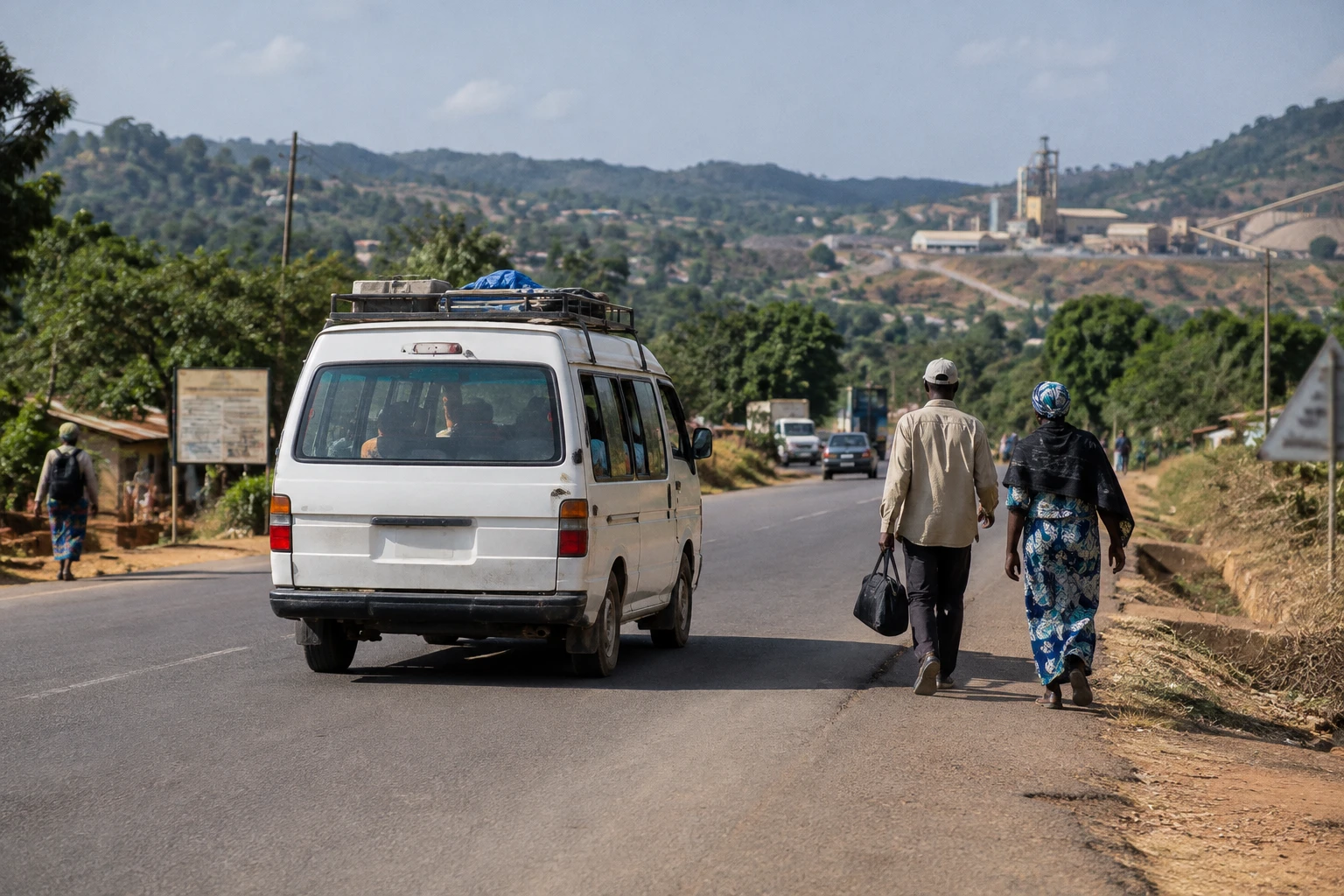
At Mako, in the Kédougou region, the question is no longer simply how much gold the plant can produce. It is also necessary to determine whether two nearby deposits can extend operations without leaving local communities to bear the cost of change alone.
The mine, operated by the Senegalese subsidiary of Australia’s Resolute Mining, ceased open-pit extraction in June 2025. Since then, the plant has processed stockpiles already extracted. The expansion project is banking on Tomboronkoto and Bantaco, about 20 kilometres from the site, but its timeline still depends on permits, studies and agreements with residents.
A transition from stockpiles to new deposits
Senegal frames mining development within a broader debate about economic sovereignty, local processing and the distribution of benefits. This direction is set out in Vision Senegal 2050, presented by the authorities. It gives particular significance to decisions concerning sites in Kédougou, where gold mining contributes to the regional economy but also transforms the areas concerned.
The country is a member of ECOWAS, the economic community that brings together West African states. In the region, gold moves through value chains that cross borders. However, permits, taxation and resettlement conditions are primarily matters for national authorities and the communities directly concerned.
In its third-quarter 2026 report, published on 29 October, Resolute says it spent $2.1 million on the Mako expansion project during the quarter. The spending covers, among other things, approvals, environmental and social studies, drilling at Bantaco and technical studies. The group maintains a budget of $10 million to $15 million for the project as a whole in 2026.
The timeline has nevertheless changed and remains conditional. Resolute now plans to start mining at Bantaco in July 2027, subject to an update to the mining schedule, and then continue until the end of 2028. Tomboronkoto could take over from January 2029. The company is awaiting transfers of exploration permits, announced for the fourth quarter of 2026, followed by mining permits for the two deposits, targeted for the first half of 2027.
Future volumes, but steps remain open
The two satellite deposits could supply the existing plant. Their combined announced mineral resources exceed 800,000 ounces of gold, while Tomboronkoto has an initial reserve estimate of 348,000 ounces. A mineral resource is a concentration estimated from geological work; a reserve is the portion considered economically and technically recoverable.
Resolute estimates that the expansion could support average annual production of 75,000 to 85,000 ounces for about seven years. This projection remains a company estimate, not guaranteed output. In the short term, the company expects Mako to produce between 55,000 and 65,000 ounces in 2026, after 100,895 ounces in 2025. The expected decline reflects the shift to processing stockpiles, with no new open-pit extraction.
The pre-production cost cited in the available information is $125 million to $150 million. A substantial share of the spending is expected in the second half of 2027. These figures and forecasts depend on the continuation of studies, approvals and financing. The quarterly report confirms spending already incurred and the main regulatory steps, but does not turn production targets into certainties.
The timeline also has a direct impact on Tomboronkoto. The Senegalese Press Agency reports that the project envisages relocating the village to allow the deposit to be mined. It describes discussions on compensation, housing and community facilities. In its quarterly report, Resolute says a preliminary agreement has been reached with the local committee on compensation principles; plans for homes and public facilities are still under final review. These statements do not establish that all those affected have given their definitive consent.
Jobs and benefits: the figures do not tell the whole story
At the end of 2025, Resolute counted about 250 direct employees and 289 contract workers linked to its Senegalese operations. The company said that 96% of its direct workforce at Mako was Senegalese. These figures describe the company’s workforce; on their own, they do not measure indirect employment, job quality or the share of contracts awarded to local businesses.
The stakes differ for each group. For the state, operations can generate tax revenue and exports. For employees and contractors, they support incomes and skills. For neighbouring villages, they can create economic opportunities, but may also involve relocation, changes in access to land and pressure on local services. The tangible effects will depend on compensation measures, their implementation and follow-up after resettlement.
Data from Senegal’s Extractive Industries Transparency Initiative help put the mine in the context of the national sector. Its 2024 report puts the mining sector’s contribution to recorded extractive revenues that year at 369.68 billion CFA francs. This total covers the entire mining sector: it cannot be attributed to Mako or used as a direct measure of its local benefits.
The next test will be social as well as regulatory
For the announced timeline to hold, several processes must advance in tandem: permit transfers, environmental and social approvals, mining permits and resettlement agreements. The quarterly report places mining permits in the first half of 2027; it also says work on resettlement plans is continuing. Tenders for mining work, ore transport and an access road complete the operational preparations.
The question goes beyond the life of a single mine. It concerns how Senegal regulates gold projects in a region where industrial mining coexists with other uses of land and resources. The next steps to watch are therefore twofold: the granting of the expected approvals in 2027 and the conclusion of resettlement agreements that are accepted and implemented. Mako’s extension will be measured as much by the tonnes of gold produced as by how its costs and benefits are distributed.
Resolute Mining’s 2026 quarterly report on Mako · APS investigation into resettlement in Tomboronkoto · Senegal EITI data on extractive revenues · Senegal’s vision for mining and economic sovereignty · ECOWAS member states