Algeria
 Egypt
 Libya
 Morocco
 Sudan
 Tunisia
 Benin
 Burkina Faso
 Cabo Verde
 Côte d'Ivoire
 Ghana
 Guinea
 Guinea-Bissau
 Liberia
 Mali
 Mauritania
 Niger
 Nigeria
 Senegal
 Sierra Leone
 The Gambia
 Togo
 Cameroon
 Central African Republic
 Chad
 DR Congo
 Equatorial Guinea
 Gabon
 Republic of the Congo
 São Tomé and Príncipe
 Burundi
 Comoros
 Djibouti
 Eritrea
 Ethiopia
 Kenya
 Madagascar
 Malawi
 Mauritius
 Mozambique
 Rwanda
 Seychelles
 Somalia
 South Sudan
 Uganda
 Angola
 Botswana
 Eswatini
 Lesotho
 Namibia
 South Africa
 Zambia
 Zimbabwe
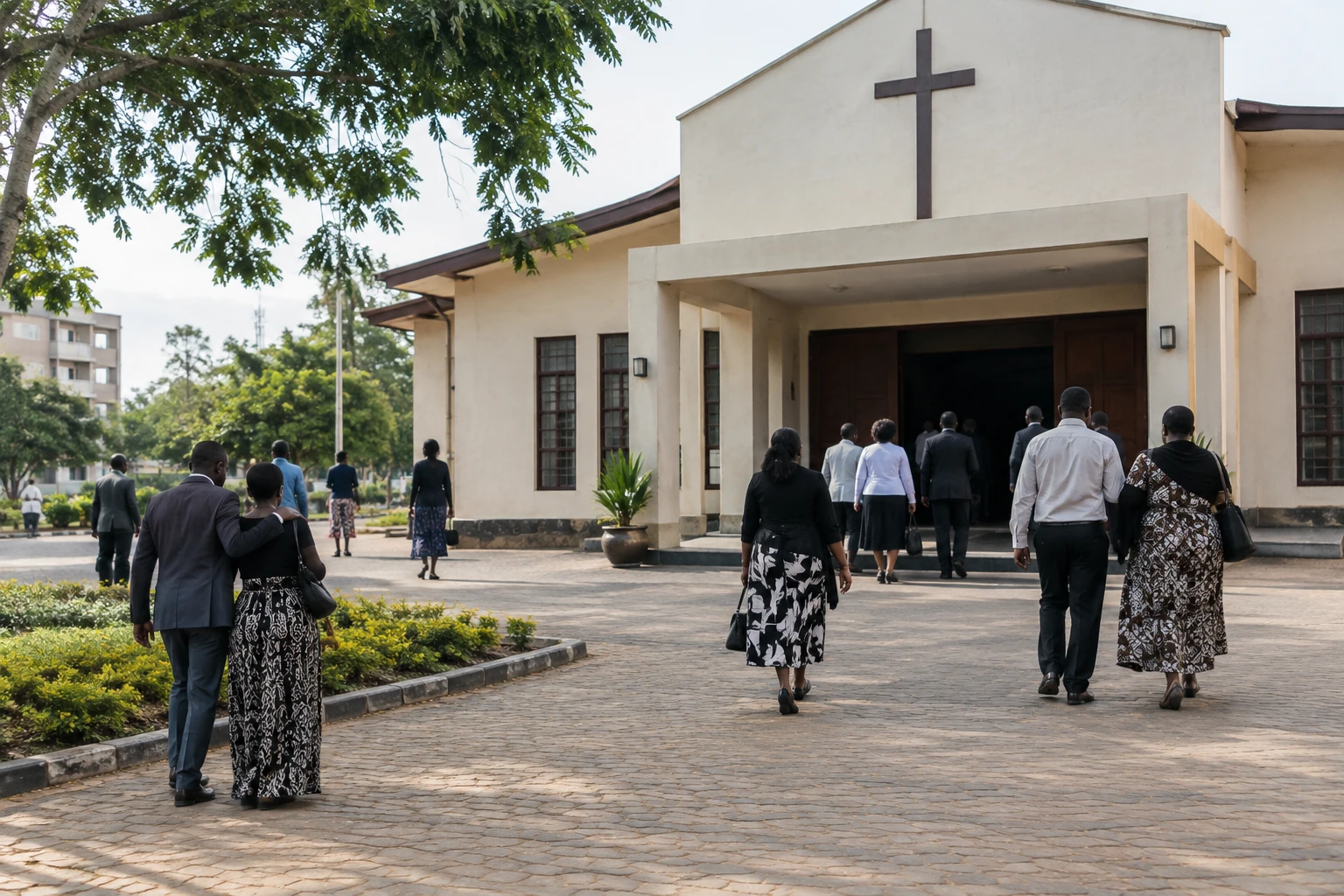
In Tanzanian parishes, the first anniversary of the election violence took the form of a time for prayer rather than a national ceremony. For bereaved families, remembrance has not replaced the answers they are waiting for: who died, in what circumstances, and who will be held to account?
A commemoration led by churches and families
On Thursday 29 October 2026, worshippers gathered in churches to pray for those killed, injured or missing during the unrest of October 2025. Religious leaders had called for services and prayers for peace, repentance and reconciliation. The day continued without an official national ceremony, as Tanzanians went back to their usual activities.
As the date approached, the authorities had warned religious leaders, opposition figures and activists against any mobilisation that, they said, could provoke unrest. Interior Minister Patrobas Katambi had called for dialogue and stability. In this climate, religious gatherings provided a space for remembrance, but not for public debate about responsibility.
The US Embassy in Dar es Salaam paid tribute to the victims and their loved ones, saying it wanted to prevent the violence from being forgotten. This diplomatic statement adds to an older demand from families and Tanzanian organisations: to learn the fate of those missing and secure recognition, care and reparations.
An official death toll, questions still unanswered
A presidential commission of inquiry, chaired by former Chief Justice Mohamed Chande Othman, recorded at least 518 deaths linked to the election violence. Its report, submitted in April 2026, counted 490 men and 28 women. It also reported more than 2,000 people injured. These figures represent the toll established by the commission; they do not close the debate over the true scale of the losses.
Human rights organisations believe some deaths may not have been documented, particularly when families buried their loved ones without officially reporting their deaths. Human Rights Watch also says the commission did not examine the role of the security forces in sufficient depth. The government subsequently set up a second commission to investigate possible criminal responsibility. As of 29 October, that inquiry was still gathering evidence in Dar es Salaam.
The differences of opinion concern both the number of victims and how the facts should be established. The official report describes the events as organised riots and presents evidence about their planning. Human rights advocates, for their part, are calling for allegations of excessive force and disappearances to be investigated independently. At this stage, neither account replaces judicial proceedings to establish individual responsibility.
The commission also linked the violence to longstanding political and social grievances, including demands for democratic reform, the cost of living and distrust of institutions. This context does not by itself explain the acts committed, but it sheds light on the fragile relationship between some sections of the population and those in power. The toll and the next steps in the Tanzania inquiry remain at the heart of the controversy.
Justice and reparations at the heart of expectations
For families, the consequences are felt every day. Some still have no news of a missing relative. Others have to pay for the care of injured people, some of whom have been left permanently disabled. Anna Henga, executive director of the Tanzanian Legal and Human Rights Centre, is calling for a special fund for bereaved families and survivors. She also supports the creation of a national day of remembrance, so that recognition of the victims does not depend solely on religious or family initiatives.
The issue goes beyond financial compensation. Reparations can also mean access to case files, the identification of missing people, credible investigations and public recognition of the suffering endured. Until the findings of the investigations are made public and followed by concrete measures, trust between citizens and institutions will remain under strain.
Concerns also extend to civic space. Amnesty International says at least 64 people have been prosecuted under anti-terrorism legislation, which it considers to have been used to target opponents and critical voices. This is the organisation’s reported tally, and it is calling for the charges and proceedings to be assessed against judicial safeguards. The police, for their part, had justified their warnings around the anniversary as a way of preventing further unrest.
An issue for Tanzania and East Africa
The crisis comes amid the political trajectory of a country where electoral competition and the role of the opposition had been contested even before the October 2025 election. Candidates from major opposition parties were unable to stand, while CHADEMA leader Tundu Lissu was detained and charged with treason. These developments fuel questions about political inclusivity and the ability of institutions to arbitrate disagreements without violence.
Tanzania is a member of the East African Community (EAC), a regional organisation bringing together several neighbouring countries around economic and political cooperation. Stability in Tanzania therefore matters for trade and movement across the region. But it also depends on confidence in national justice mechanisms and electoral processes. For African partners, the issue is not only how to prevent another outbreak of violence: it is whether investigations can establish the facts without overlooking the possible responsibility of state or non-state actors.
The next stage lies in the commissions’ work and the publication of verifiable findings. The criminal inquiry commission has said it has completed the collection of evidence in the districts of Dar es Salaam and is continuing its investigations. For families, however, the anniversary chiefly highlights the gap between an official toll now established and a judicial truth that remains to be uncovered.