Algeria
 Egypt
 Libya
 Morocco
 Sudan
 Tunisia
 Benin
 Burkina Faso
 Cabo Verde
 Côte d'Ivoire
 Ghana
 Guinea
 Guinea-Bissau
 Liberia
 Mali
 Mauritania
 Niger
 Senegal
 Sierra Leone
 The Gambia
 Togo
 Cameroon
 Central African Republic
 Chad
 DR Congo
 Equatorial Guinea
 Gabon
 Republic of the Congo
 São Tomé and Príncipe
 Burundi
 Comoros
 Djibouti
 Eritrea
 Ethiopia
 Kenya
 Madagascar
 Malawi
 Mauritius
 Mozambique
 Rwanda
 Seychelles
 Somalia
 South Sudan
 Tanzania
 Uganda
 Angola
 Botswana
 Eswatini
 Lesotho
 Namibia
 South Africa
 Zambia
 Zimbabwe
In Nigeria, an economic rule can change the cost of an investment, transport or a product sold at market. The federal government now wants to subject its major decisions to common principles and prior assessment. The aim is to make public policy more predictable, without reducing economic policy to yet another document.
A proposed framework designed to outlast governments
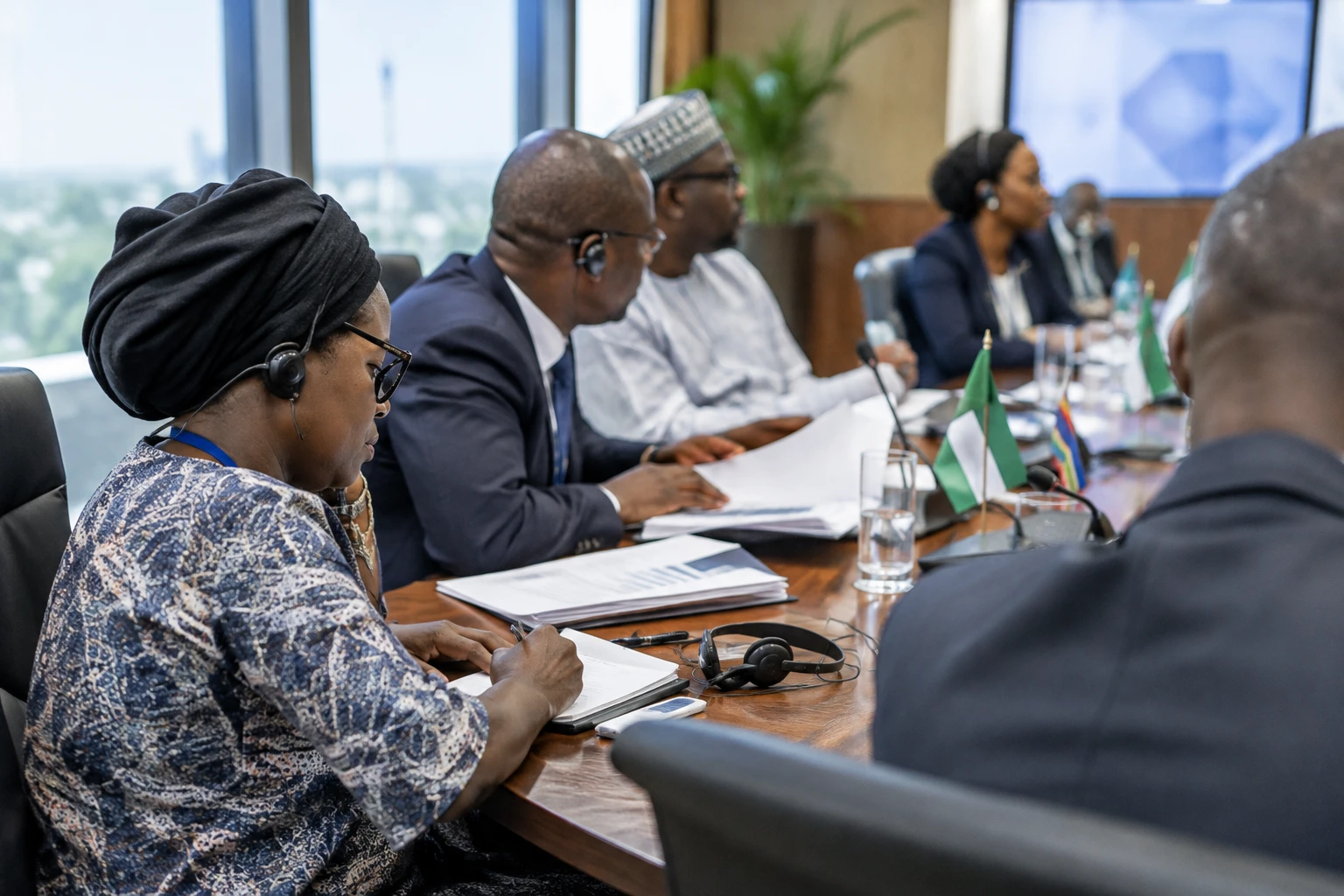
Presented on 26 October in Abuja at the 32nd Nigerian Economic Summit, the draft Nigeria Economic Policy Framework is open for public consultation until 27 November 2026. The Federal Ministry of Finance describes it as a set of principles, decision-making rules and indicators intended to guide economic policy, regardless of the administration in office. It is a draft, not yet an approved policy. The Nigerian Ministry of Finance’s consultation document sets out the proposals on which the public is invited to comment.
Finance and Economy Coordinating Minister Taiwo Oyedele presented the proposal at the summit, held on 26 and 27 October in the capital. According to the government, the framework is neither a development plan nor a list of infrastructure projects. Rather, it aims to set out how economic decisions are made and assessed. The official account of the summit confirms the draft’s presentation and the call for contributions from economic stakeholders.
The text is organised around seven interconnected areas: stability, productivity, enterprise, capital, population, markets and institutions. The idea is to address the conditions for growth as a whole. A business, for example, depends on clear rules, infrastructure, accessible finance and trained workers.
Assessing the effects of decisions before and after they are made
The draft provides for major economic interventions to be accompanied by an impact assessment. A tax change, customs tariff or new regulatory restriction should specify the problem it is intended to address, the data used, the beneficiaries and those who will bear the costs. The text also proposes setting out the circumstances in which a measure could end.
This requirement responds to a practical concern for businesses: the risk of a rule being announced without time to adapt, sufficient consultation or an assessment of its consequences. Unpredictable changes can complicate raw material purchases, hiring decisions and investment. But an impact assessment procedure does not, in itself, guarantee better decisions. Its usefulness will depend on the quality of the data, the transparency of the analysis and whether businesses, workers and consumers can make their experience heard.
The framework also advocates open but fair markets, and co-ordination between ministries and public agencies. It proposes not maintaining tariff protections indefinitely if they do not strengthen local competitiveness. This approach raises a question of implementation: how can nascent sectors be supported while avoiding protection costs being passed on to households and businesses reliant on imported inputs?
Another proposal is to publish a national dashboard every year, no later than Independence Day. It would track real wages, productive jobs and changes in poverty, among other indicators. These measures could help distinguish overall growth from a perceptible improvement in incomes. Comparable data, broken down by region and population group, will need to be published, and results explained rather than presented only as a national average.
Growth alone is not enough to measure everyday life
The debate is taking place in an economy where recovery and social hardship coexist. The World Bank estimates that Nigeria’s real GDP grew by 4.2% in the first half of 2026, up from 3.9% a year earlier. Yet this increase is not creating enough productive jobs to reduce poverty significantly. For 2025, the institution estimates that 69.6% of Nigerians lived below the poverty line of $4.20 a day at purchasing power parity, while 123 million people were in extreme poverty according to its measure. Recent World Bank data on Nigeria’s economy thus juxtapose rising economic activity with weak income gains.
Annual inflation slowed to 14.63% in September 2026, from 15.39% in August, according to National Bureau of Statistics data reported by several Nigerian media outlets. But a slowdown does not mean prices are returning to their previous levels. Food inflation was still 19.59% year on year in September. Premium Times reports these figures and highlights the continuing burden of food and energy costs on households. Low-income families are particularly exposed; businesses, meanwhile, must contend with transport and input costs.
Geography matters, too. Formal jobs and financial services are more concentrated in major urban centres, while rural producers depend heavily on roads, storage, irrigation and access to markets. A useful national dashboard will therefore need to make these disparities visible, rather than let an average improvement obscure very different trajectories.
A test of consistency for Abuja and the region
Since 2023, Nigerian reforms have included changes to fuel subsidies and the foreign exchange market. They have altered public finances and operating conditions, while their effects on prices and incomes remain a major concern. The new framework aims to give decisions continuity. Its credibility, however, will depend on its ability to apply to federal authorities, regulators and state administrations, which play a direct role in public services and spending.
Across West Africa, Nigeria carries considerable weight in trade, investment and the economic discussions of ECOWAS, the Economic Community of West African States. A more predictable national policy could facilitate decisions by businesses operating in several countries. Conversely, rules that change without co-ordination can complicate regional supply chains. The proposed framework nevertheless remains national: it does not replace regional commitments or decisions made by other member states.
The next step is institutional. Following the consultation and validation announced, the text is to be submitted to the Federal Executive Council for approval, then to the National Economic Council for endorsement. The feedback received, publication of impact assessments and monitoring of indicators will show whether the draft becomes a tool for public accountability or remains a statement of intent. For Nigerians, the key test will be less the number of pillars than whether decisions translate into jobs, real incomes and stable rules.