Algeria
 Egypt
 Libya
 Morocco
 Sudan
 Tunisia
 Benin
 Burkina Faso
 Cabo Verde
 Côte d'Ivoire
 Ghana
 Guinea
 Guinea-Bissau
 Liberia
 Mali
 Mauritania
 Niger
 Nigeria
 Senegal
 Sierra Leone
 The Gambia
 Cameroon
 Central African Republic
 Chad
 DR Congo
 Equatorial Guinea
 Gabon
 Republic of the Congo
 São Tomé and Príncipe
 Burundi
 Comoros
 Djibouti
 Eritrea
 Ethiopia
 Kenya
 Madagascar
 Malawi
 Mauritius
 Mozambique
 Rwanda
 Seychelles
 Somalia
 South Sudan
 Tanzania
 Uganda
 Angola
 Botswana
 Eswatini
 Lesotho
 Namibia
 South Africa
 Zambia
 Zimbabwe
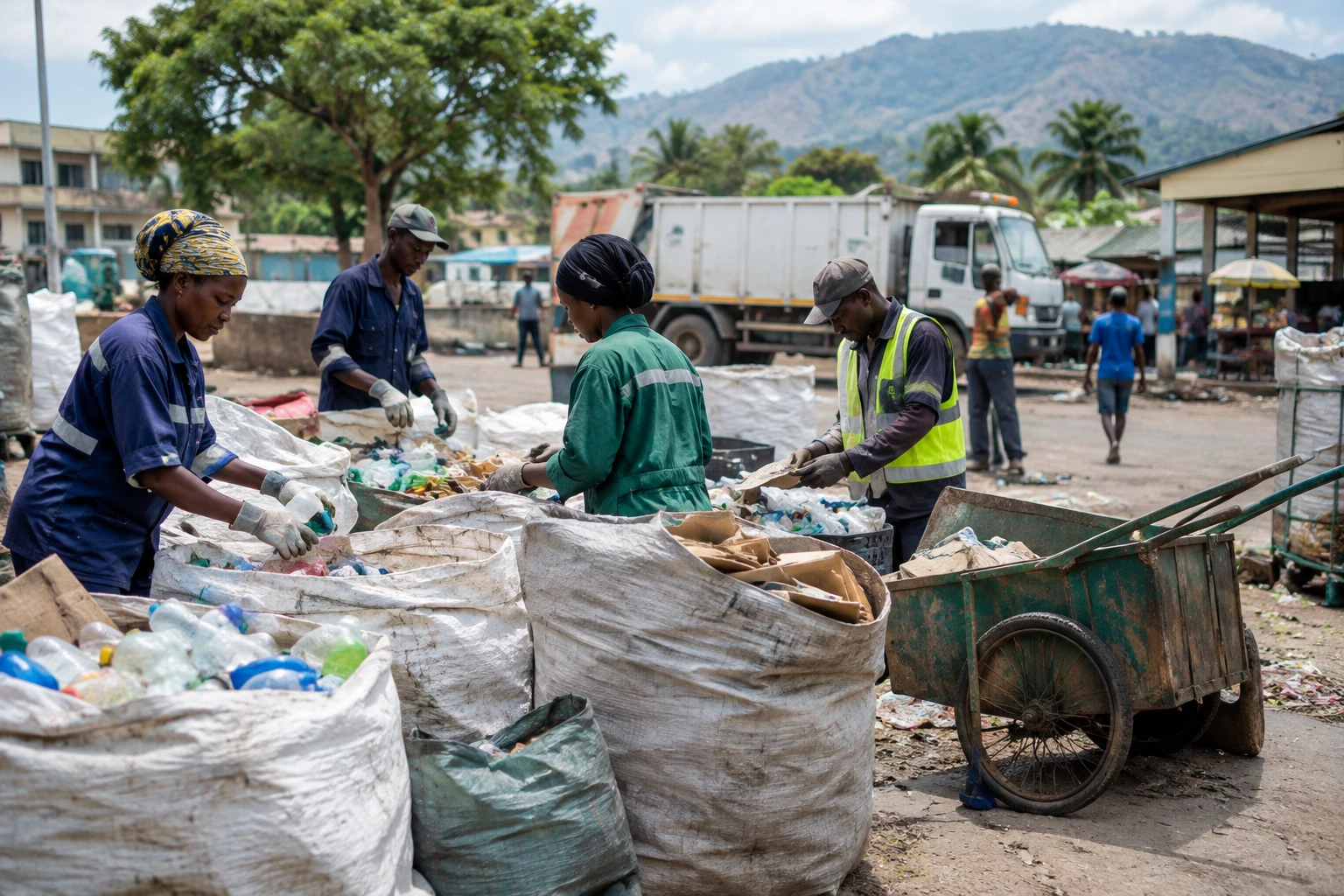
In Togo’s municipalities, waste management is as much a matter of municipal budgets as it is of what happens in the streets. Days before COP31, stakeholders gathered in Kpalimé to focus on a practical question: how can waste become an issue of public services, health and resources without leaving local authorities to shoulder the task alone?
Cities with unequal resources face waste challenges
The challenge affects very different places. Lomé, Togo’s capital and main urban centre, faces different constraints from Tsévié, Atakpamé, Sokodé, Kara or Dapaong. Yet everywhere, collection, treatment and recovery depend on local organisations, infrastructure and funding that vary from one municipality to another.
Waste management is therefore about more than urban cleanliness. It also affects public health, the organisation of municipal services and the use of recyclable materials. When collection is irregular or facilities are lacking, residents and small businesses feel the consequences directly. Waste pickers, who are often part of the informal economy, are also affected by decisions on how the sector is organised.
In Togo, decentralisation gives municipalities a central role in managing local services. But local responsibility alone does not guarantee that councils have the equipment, revenue and expertise they need. Cooperation between the state, municipalities, businesses and civil society organisations therefore becomes crucial.
Kpalimé, a preparatory step before Antalya
On 26 October 2026, more than 300 participants from Togo and other African countries met in Kpalimé, a town about 120 kilometres north-west of Lomé. Togo’s environment minister, Dodzi Komla Kokoroko, chaired the meeting, which focused on sustainable waste management solutions. Participants included elected officials, MPs, traditional authorities, academics, businesses, associations and young people.
Discussions focused on ways to improve collection and treatment systems in cities and other areas. Participants also discussed practices suited to local realities. One stated aim was to help shape a common African position on waste management ahead of international climate discussions.
The timetable is tight. COP31, the United Nations’ annual climate conference, is due to take place in Antalya, Türkiye, from 9 to 20 November 2026. The Kpalimé meeting therefore comes less than two weeks before it opens. It aims to align priorities, but the available information does not specify whether a joint declaration was adopted or what concrete proposals would be put forward in Antalya.
This distinction matters. Bringing stakeholders together around a shared goal does not necessarily mean governments have agreed on a common negotiating position. The political weight of a pan-African initiative will depend on what follows: coordination between states, the mandate given to representatives and the inclusion of specific proposals in COP discussions.
The circular economy: ambition meets local capacity
The forum put the circular economy at the centre of its discussions. The principle is to limit waste by reducing it, reusing objects and recycling materials. For municipalities, this means more than installing sorting bins. It requires reliable collection networks, treatment facilities, markets for materials and rules that include the people already working in waste recovery.
The impact of decisions will not be the same for everyone. Municipalities will have to fund services and organise their operation. Businesses could be involved in collecting or processing materials, while households will need access to regular services. In neighbourhoods far from city centres, distance and transport costs can make collection more difficult. Informal activities, meanwhile, risk being undermined if new systems exclude them instead of integrating them.
Togo’s experience offers a foundation, but also a reminder that projects take time. The GEDEC programme, focused on waste management and decentralisation, was launched in 2023 with €4.2 million in European funding and was set to run for three years. It targeted five municipalities: Zio 1 in Tsévié, Ogou 1 in Atakpamé, Tchaoudjo 1 in Sokodé, Kozah 1 in Kara and Tône 1 in Dapaong.
The initiative aimed to strengthen local sanitation and waste management services. The programme’s stated timeframe, from February 2023 to January 2026, has now passed. The information reviewed does not make it possible to establish what results were achieved or which activities were extended. To measure progress, it will therefore be necessary to distinguish initial objectives from verified results and from municipalities’ capacity to continue providing services after funding ends.
Turning a regional voice into commitments
The discussion extends beyond Togo’s borders, but solutions cannot be one-size-fits-all. African cities differ in size, resources, infrastructure and waste recovery systems. A useful continent-wide position will therefore need to combine shared priorities — funding, skills transfer, access to technology and recognition of local needs — with responses tailored to national contexts.
In Antalya, the challenge will be to connect climate statements with municipal services that directly shape daily life. Waste management can help reduce pollution and make better use of resources, but it requires sustainable funding and clearly allocated responsibilities. Municipalities, which are on the front line, will need support that lasts beyond the life of a project.
The next step, then, will be less about the number of participants than about turning the Kpalimé discussions into proposals that African countries follow through on and defend. COP31 will show whether waste management earns a concrete place among the priorities put forward by delegations, and whether the needs of local authorities are reflected in international commitments.