
 Algeria
 Egypt
 Libya
 Morocco
 Sudan
 Tunisia
 Benin
 Burkina Faso
 Cabo Verde
 Côte d'Ivoire
 Ghana
 Guinea
 Guinea-Bissau
 Liberia
 Mali
 Mauritania
 Niger
 Nigeria
 Senegal
 Sierra Leone
 The Gambia
 Togo
 Cameroon
 Central African Republic
 Chad
 DR Congo
 Equatorial Guinea
 Gabon
 Republic of the Congo
 São Tomé and Príncipe
 Burundi
 Comoros
 Djibouti
 Eritrea
 Kenya
 Madagascar
 Malawi
 Mauritius
 Mozambique
 Rwanda
 Seychelles
 Somalia
 South Sudan
 Tanzania
 Uganda
 Angola
 Botswana
 Eswatini
 Lesotho
 Namibia
 South Africa
 Zambia
 Zimbabwe
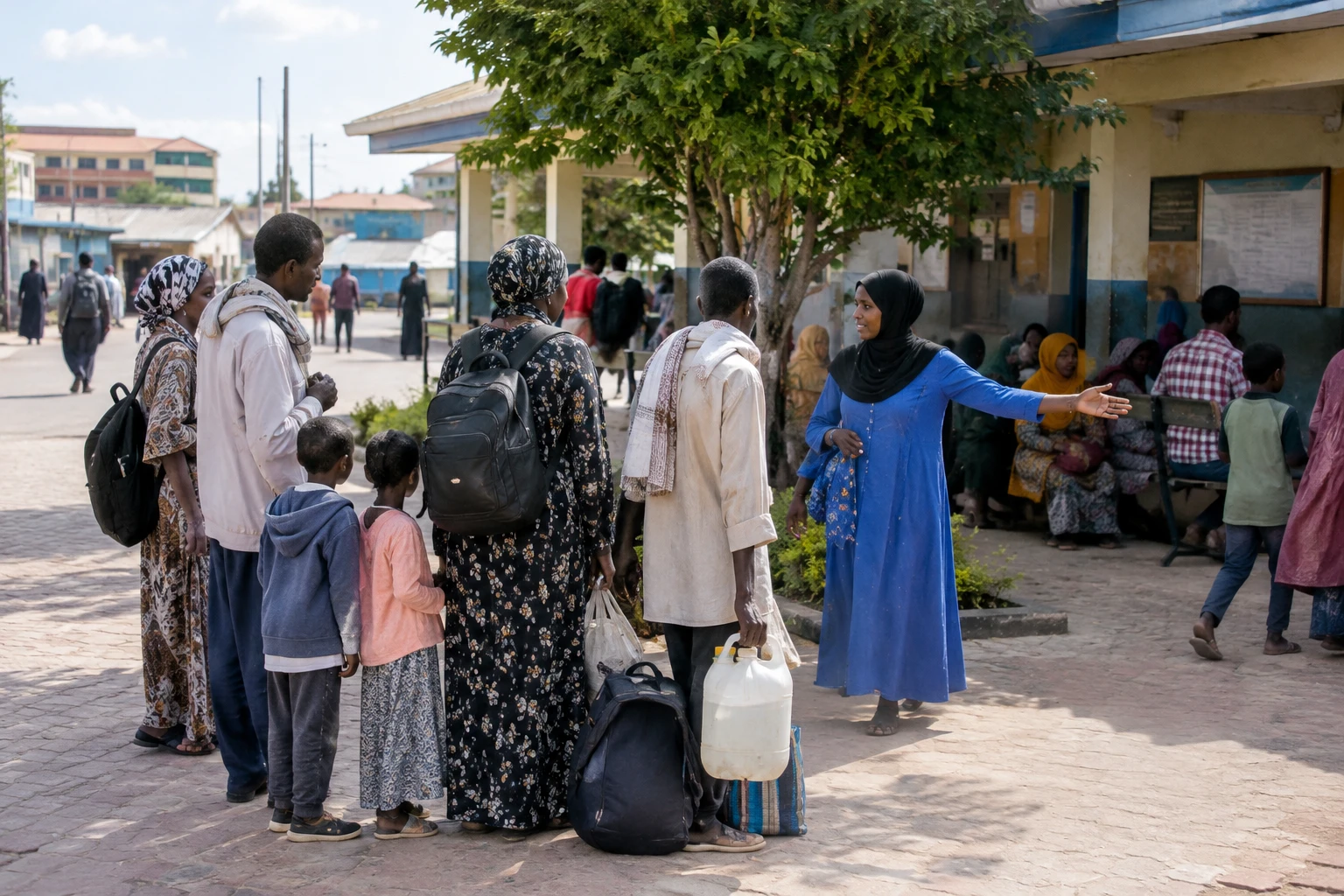
In Moyale, a dispute over the administration of the same area quickly spilled onto escape routes. By 28 October, up to 50,000 people were reported to have crossed the border between Ethiopia and Kenya. For families arriving in Kenya’s Marsabit County, the urgent task is now to find water, food and safe shelter.
A border crossed by residents and trade
Moyale is a border town divided between Ethiopia and Kenya. On the Ethiopian side, it lies in an area where the Oromia and Somali regions meet. These regions have their own administrations within Ethiopia’s federal state. However, their boundaries and local powers are the subject of recurring tensions.
The border separates more than two states. It also cuts across areas where people live and travel, and where families and economic activities maintain links on both sides. The Moyale crossing is one of the trade routes between the two countries. When movement and trade are disrupted, the consequences also affect traders, transporters and residents of northern Kenya.
The area also falls within the remit of the Intergovernmental Authority on Development (IGAD), a regional organisation in the Horn of Africa. Its members include Ethiopia and Kenya. Local tensions are taking place as other conflicts affect the country, particularly in the north. But the available information does not establish a direct link between these areas of violence.
Figures remain provisional
The United Nations High Commissioner for Refugees (UNHCR) said on 28 October that significant arrivals had been reported since 22 October. According to local authorities, up to 50,000 people are reported to have crossed the border. The figure remains provisional: registration and verification are continuing, while further crossings are still being reported.
The previous day, UNHCR reported that 36,000 people had arrived in Kenya. This rapid increase illustrates the difficulty of tracking movements in an area where people may cross at several points along the border. It does not, in itself, represent a final count of people registered as refugees. UNHCR says a significant proportion of those arriving are women and children.
The first clashes between forces associated with the Oromia and Somali regional administrations were reported around 20 October. African media, including the APA news agency and Ethiopia’s Capital newspaper, place the escalation of tensions around a dispute over the flag of the Somali region, which was raised in an area with contested administration. The Associated Press also reports a territorial dispute, aggravated by the death of a teenage girl. The precise circumstances and responsibility have not been independently established by the available information and should therefore remain attributed.
This caution matters. A flag or the opening of an administrative office can become a visible marker of an older rivalry over boundaries and local authority. But reducing the clashes to a symbol would overlook governance issues and the immediate consequences for civilians.
In Kenya, local communities also shoulder the burden of hosting
Those who have arrived are spread among host families, local communities and temporary sites, including schools and churches. UNHCR reports needs for food, drinking water, shelter, sanitation and healthcare. The agency says it is mobilising household goods and shelter materials for nearly 12,000 people, while preparing to scale up aid.
This response does not yet cover the full provisional figure cited by local authorities. The gap between the number of people who may have arrived and those covered by the announced aid highlights the pressure on local services. Families hosting displaced relatives or neighbours are sharing their resources, while humanitarian teams need to identify reception sites further from the border.
The effects extend beyond the humanitarian emergency. The Kenya News Agency had already reported disruption to commercial activity at the border, with trucks prevented from travelling in either direction. Restrictions on crossings can complicate supplies and cut the incomes of traders and transporters. The needs of displaced people are thus adding to those of Marsabit residents, who are shouldering part of the hosting effort.
A test for authorities and regional cooperation
In Kenya, the government and county authorities are working with UNHCR, the International Organization for Migration, other UN agencies and the Kenya Red Cross. Beyond distributing essential goods, the challenge is to protect those arriving and preserve the security of people on both sides of the border.
In Ethiopia, the episode is a reminder that a local administrative dispute can take on a security dimension when regional authorities disagree over their jurisdiction. The immediate priority is to protect civilians and de-escalate tensions. The public information consulted does not detail any mediation mechanism initiated by IGAD or the African Union in relation to this specific episode. Their possible role therefore cannot be presented as established.
For neighbouring countries, Moyale highlights the dual function of borders: they organise state sovereignty, but also connect populations and local economies. The final number of arrivals, humanitarian access and the resumption of trade will be essential indicators in the coming days. While verification continues, the figure of 50,000 people must remain attributed to local authorities and described as provisional.



