
 Algeria
 Egypt
 Libya
 Morocco
 Sudan
 Tunisia
 Benin
 Cabo Verde
 Côte d'Ivoire
 Ghana
 Guinea
 Guinea-Bissau
 Liberia
 Mali
 Mauritania
 Niger
 Nigeria
 Senegal
 Sierra Leone
 The Gambia
 Togo
 Cameroon
 Central African Republic
 Chad
 DR Congo
 Equatorial Guinea
 Gabon
 Republic of the Congo
 São Tomé and Príncipe
 Burundi
 Comoros
 Djibouti
 Eritrea
 Ethiopia
 Kenya
 Madagascar
 Malawi
 Mauritius
 Mozambique
 Rwanda
 Seychelles
 Somalia
 South Sudan
 Tanzania
 Uganda
 Angola
 Botswana
 Eswatini
 Lesotho
 Namibia
 South Africa
 Zambia
 Zimbabwe
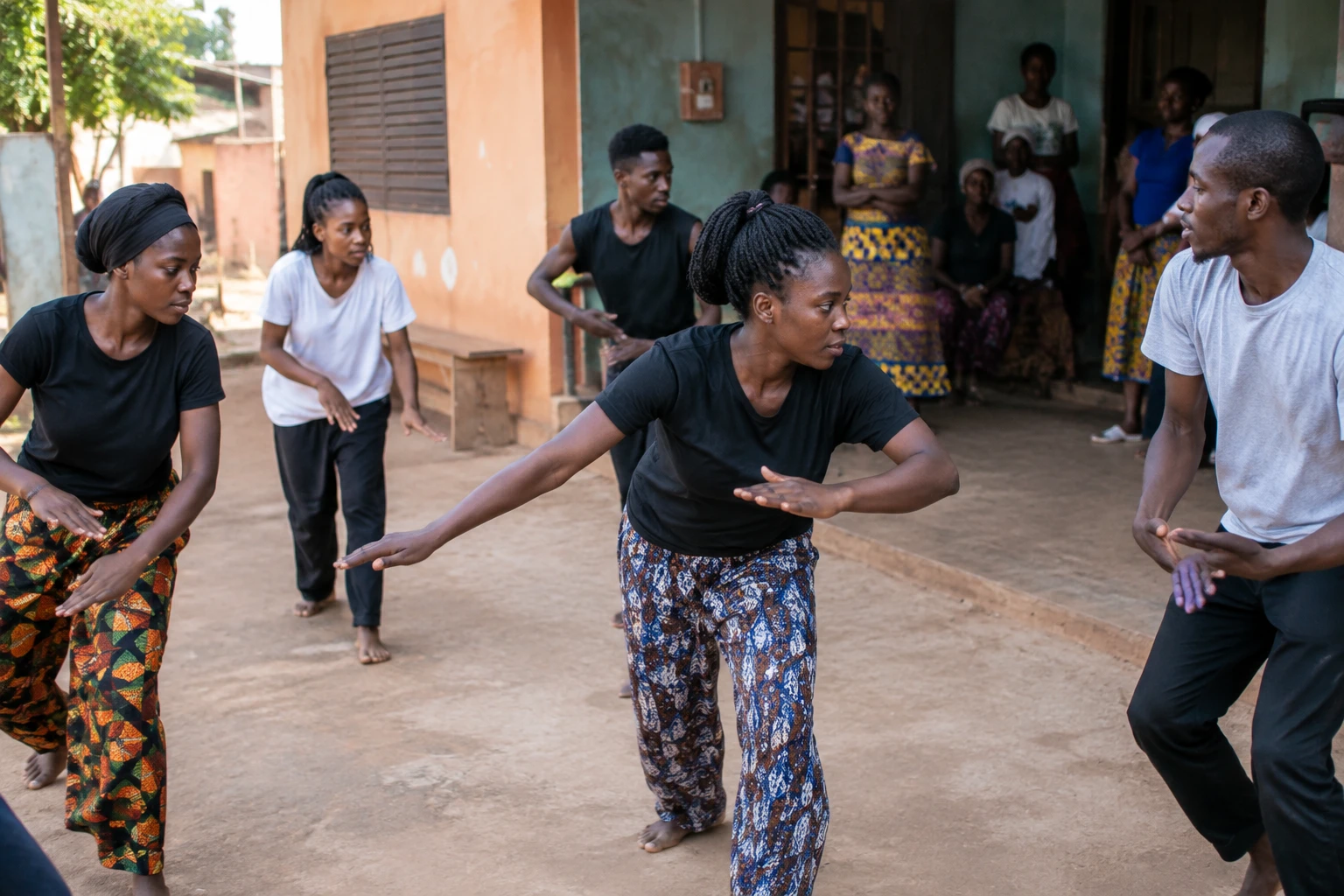
In Bougsemtenga, theatre does not take place behind the walls of a venue. It enters courtyards, runs alongside houses and takes to the street. In Ouagadougou, the Récréâtrales thus turns the neighbourhood into a space for shared creation among artists, residents and audiences.
This way of producing culture matters as much as the performances themselves. Residents are not merely spectators: some act, dance, welcome the teams or help with preparations. The festival highlights another way of bringing the arts to life, close to where people live.
A stage built with residents
The 14th edition takes place from 24 to 31 October 2026 in Ouagadougou. It is being held in Bougsemtenga, in the Gounghin district, among other locations. The event, held every two years, is part of a process of theatrical research, training, creation and dissemination launched in 2002, according to the official Récréâtrales website.
The opening performance, “Les Mouches”, brings together choreographer Djibril Ouattara, artists, and women and young people from the neighbourhood. The piece was presented on 24 October. Around 40 performers combine contemporary dance, creative movement and traditional dance, among other forms, report the Burkinabè media outlets Burkina24 and Mousso News.
The collective work extends beyond this production. Agathe Serré, a member of the Bougsemtenga women’s association, has performed at the Récréâtrales since 2006. She helped prepare this edition and describes the effort required by rehearsals. Her experience illustrates the enduring bond between the festival and local women, beyond a one-off presence in the audience.
The journey of Claude Ilboudo, known as “Gohou”, also bears witness to this transmission. He discovered the performances as a child before becoming a professional actor. Around the performances, young people also contribute through volunteering, dance, theatre and technical work. This participation offers opportunities to learn and gain experience, without erasing the need to pay and professionalise cultural work.
Proximity as an artistic choice
The festival takes theatre out of conventional venues. For eight days, readings, performances for young audiences, discussions, music and plays fill family courtyards and street spaces. The programme runs from morning until late at night, according to the event description published by Burkina24.
This proximity changes the way people encounter the works. Residents can attend performances in their everyday surroundings, while artists work with practices and gestures that do not necessarily come from professional stages. For Djibril Ouattara, this approach means creating from participants’ ideas rather than imposing a form that has already been decided.
The street also becomes a space for collective work. Organisers describe a 550-metre set, created with 68 technicians and artists from 12 countries. These figures are reported in coverage of the edition, but have not been confirmed by a second independent publication consulted. They nevertheless give an indication of the logistical scale claimed for transforming the neighbourhood into a performance venue.
A Burkinabè event open to the continent
The Récréâtrales are rooted in Burkina Faso, but their ambitions extend beyond the national stage. The festival website presents the project as a pan-African space for creation and dissemination. For this edition, the festival director announced the participation of artists from 16 nationalities, according to Burkina24. The event thus brings together teams and audiences from a range of backgrounds, while keeping the productions rooted in their local context.
This regional dimension resonates in West Africa, where artists travel between countries, festivals and creative spaces despite differing institutional realities. Burkina Faso is a member of ECOWAS, the Economic Community of West African States, which organises regional co-operation. Here, it is first and foremost artistic exchanges and practical collaborations that demonstrate this openness.
For residents, the immediate challenge is also practical: hosting performances, helping to produce them and making the festival coexist with everyday life. For artists, the experience allows them to test their methods against other forms of expertise. And for young people, it can provide a first contact with stage and production work.
The festival is due to close on 31 October 2026. Beyond this week, the question will be one of continuity: how to preserve the ties between artistic teams and the neighbourhood, and maintain spaces for training and creation between editions. It is over this longer term, as much as through a festival’s attendance, that the place of culture in the life of Bougsemtenga and Ouagadougou can be measured.



