Algeria
 Egypt
 Libya
 Morocco
 Sudan
 Tunisia
 Benin
 Burkina Faso
 Cabo Verde
 Côte d'Ivoire
 Ghana
 Guinea
 Guinea-Bissau
 Liberia
 Mali
 Mauritania
 Niger
 Nigeria
 Senegal
 Sierra Leone
 The Gambia
 Togo
 Cameroon
 Central African Republic
 Chad
 DR Congo
 Equatorial Guinea
 Gabon
 Republic of the Congo
 São Tomé and Príncipe
 Burundi
 Comoros
 Djibouti
 Eritrea
 Ethiopia
 Kenya
 Madagascar
 Malawi
 Mauritius
 Mozambique
 Rwanda
 Seychelles
 Somalia
 South Sudan
 Uganda
 Angola
 Botswana
 Eswatini
 Lesotho
 Namibia
 South Africa
 Zambia
 Zimbabwe
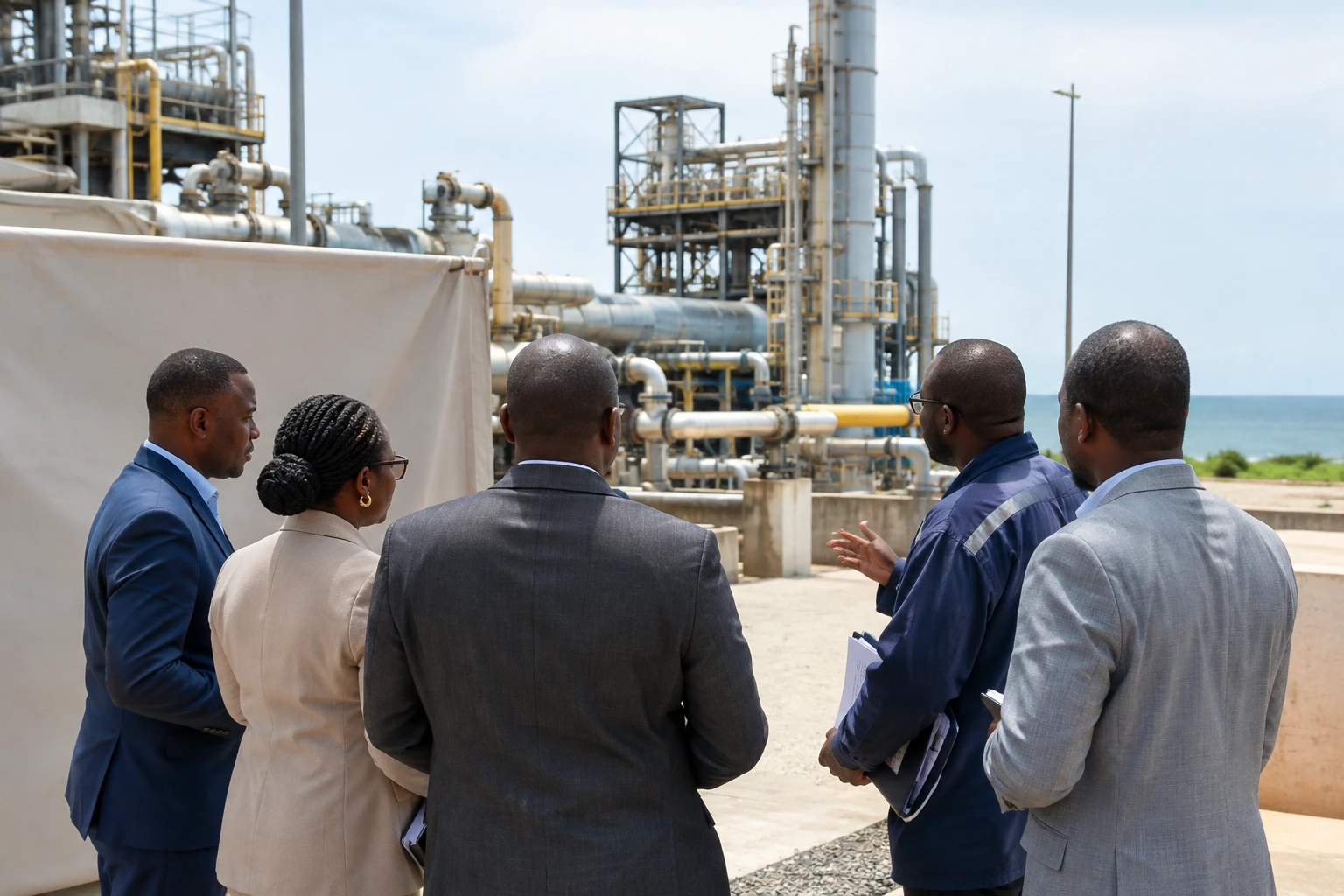
In southern Tanzania, the question is not only how to find gas. It must also be turned into electricity, economic activity and revenue that benefits residents of the Mtwara region as well as the rest of the country.
A discovery near infrastructure already in operation
On 27 October 2026, Energy Minister Juma Zuberi Homera announced a gas discovery at the Kasa-1X ST2 exploration well, in the Mnazi Bay block off Mtwara. The state-owned Tanzania Petroleum Development Corporation (TPDC) is carrying out the project with the Maurel & Prom group.
The government estimates the volume at 223 billion cubic feet, or about 6.3 billion cubic metres. But this figure should be treated with caution: the operator cited a preliminary estimate of around 200 billion cubic feet gross and did not specify that these were certified recoverable reserves. The two assessments are therefore not yet directly comparable.
Maurel & Prom confirmed the presence of a gas reservoir with characteristics it described as encouraging. The group says the well could enter production as early as November 2026. The minister, meanwhile, expects around 30 million cubic feet per day for at least ten years. These timelines and volumes remain forecasts, not production already secured.
A possible boost for the domestic grid
Mnazi Bay is not an isolated site: the block already has processing facilities and a gas pipeline linking the south to Dar es Salaam. This proximity could make it easier to integrate the new production than in a project requiring entirely new infrastructure. Gas is already used to generate electricity, as well as to supply industries, households and vehicles.
The announced potential adds to an already substantial sector. Tanzania estimates that around 57.54 trillion cubic feet of gas resources have been discovered in the country. This geological estimate does not, however, mean that all of this volume can be extracted profitably. The Kasa well represents a fraction of the total, but its location could matter as much as its size.
The discovery follows a three-well drilling campaign. Two other wells, MB-5 and MS-2, are development wells: they are intended to increase production from an existing field, not to confirm a new discovery. According to Maurel & Prom, they helped bring current production at Mnazi Bay to around 130 million cubic feet per day.
The promise of benefits, and the conditions attached
Gas can strengthen supplies to power stations and support industrial activity. It can also reduce reliance on some imported fuels, whose prices depend on international markets. But increased production alone does not guarantee lower bills or wider access to energy. The outcome will depend on contracts, infrastructure, distribution choices and the ability to turn revenue into services and investment.
The stakes are particularly tangible for Mtwara, a producing region where residents expect jobs, opportunities for local businesses and visible benefits. The minister said Tanzanian companies were taking part in the work and that jobs had been created. These government statements describe the benefits claimed by the authorities; their impact will depend on follow-up and how they are distributed over time.
State participation is another lever. TPDC holds 40% of the block, compared with 60% for Maurel & Prom. The public share increased in 2024, strengthening the national company’s presence in the project’s decisions and revenues. It remains to be seen how this position will translate into technical capabilities, revenue transparency and benefits for the communities concerned.
The energy challenge extends beyond gas alone
Gas plays an important role in Tanzania’s electricity system, but this should not be confused with the idea that it provides most of the country’s electricity on its own. According to the national economic survey for 2024, gas accounted for 46.4% of electricity generation that year, compared with 50.5% for hydropower. This split highlights the importance of diversifying sources and strengthening the reliability of supply.
In Dodoma, the country’s political capital, the authorities present the resource as a boost to growth and industrialisation. At regional level, supply and infrastructure are also of interest to partners in the East African Community (EAC), which brings several neighbouring countries together for economic cooperation. Tanzania is also a member of the Southern African Development Community (SADC), where energy projects and cross-border trade are important to long-term planning.
The next step will be to confirm the recoverable volume, clarify the production start-up schedule and check whether the facilities can handle the volumes. For now, Kasa is a promising discovery, not yet a guarantee of gas delivered. It is this difference between a stated resource and a tangible benefit that will determine its significance for Tanzania and its regional partners.