Algeria
 Egypt
 Libya
 Morocco
 Sudan
 Tunisia
 Benin
 Burkina Faso
 Cabo Verde
 Côte d'Ivoire
 Ghana
 Guinea
 Guinea-Bissau
 Liberia
 Mali
 Mauritania
 Niger
 Nigeria
 Senegal
 Sierra Leone
 The Gambia
 Togo
 Cameroon
 Central African Republic
 Chad
 DR Congo
 Equatorial Guinea
 Gabon
 Republic of the Congo
 São Tomé and Príncipe
 Burundi
 Comoros
 Djibouti
 Eritrea
 Ethiopia
 Kenya
 Madagascar
 Malawi
 Mauritius
 Mozambique
 Rwanda
 Seychelles
 Somalia
 Tanzania
 Uganda
 Angola
 Botswana
 Eswatini
 Lesotho
 Namibia
 South Africa
 Zambia
 Zimbabwe
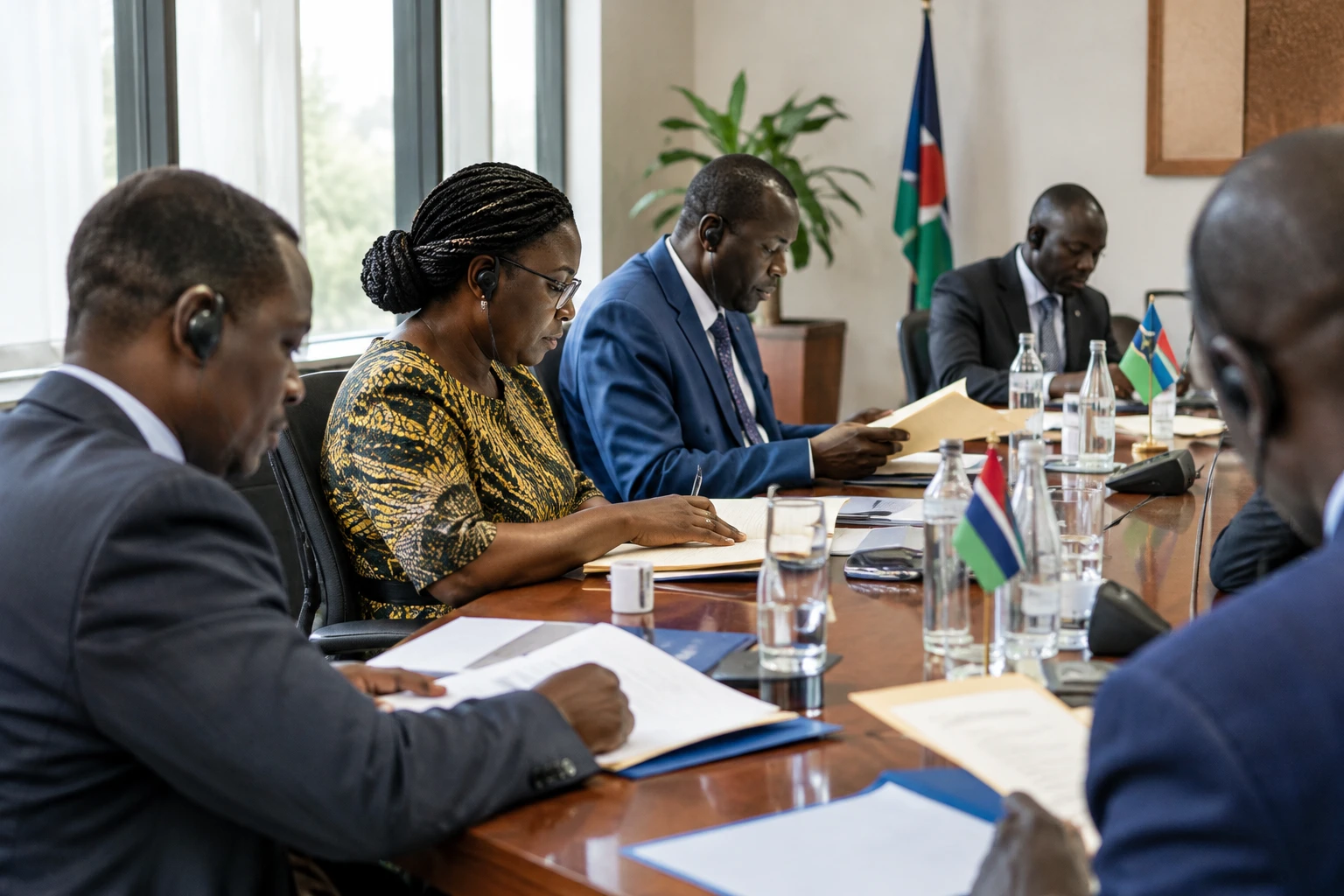
In Juba, memories of the struggle for autonomy intersect with a question that remains open: how can lasting peace be built after independence? The death of Joseph Lagu on 27 October 2026 has reignited this debate in South Sudan, as the country prepares for a long-delayed election.
From rebellion to peace agreement
Joseph Lagu was one of the leaders of the Anyanya movement, which fought the Sudanese authorities during the first civil war. The movement took shape in the early 1960s. Lagu became one of its central figures and led the armed struggle in southern Sudan.
The war ended in 1972 with the Addis Ababa Agreement, negotiated between Gaafar Nimeiry’s government and the southern movement led by Lagu. The agreement granted regional autonomy to the south, without ending the region’s membership of Sudan. South Sudan’s Ministry of Foreign Affairs says the agreement marked a turning point in the country’s political history.
Lagu then moved from military struggle into political and diplomatic roles. He led the autonomous region’s executive, became vice-president of Sudan, and later represented the country at the United Nations. His trajectory links two periods often recounted separately: the demand for autonomy and the building of regional institutions.
Death confirmed, age reported differently
Joseph Lagu died in Juba on Tuesday 27 October, aged 94 according to Radio Tamazuj and several news agencies. Eye Radio, however, reported that he was 95. Available accounts do not make it possible to resolve this discrepancy with certainty; the exact age therefore remains subject to attribution.
President Salva Kiir declared a period of national mourning until the funeral, the date of which had not yet been announced when the first reports were published. He also ordered flags to be flown at half-mast. In his message, he invited the public to mourn the deceased, but also to celebrate a life devoted, in his words, to the birth of the country.
The relationship between the two men gives this tribute a particular political dimension. Kiir had served in the ranks of Anyanya under Lagu’s command. The president is therefore honouring both a former military leader and a figure in national history whose path crossed his own.
In an interview in 2011, Lagu recalled the rebellion’s difficult beginnings: “I myself had no weapon other than a machete”. The memory of limited resources reflects his personal account. It does not, however, in itself sum up the causes of the war or the diversity of those involved.
The autonomy of 1972, then independence in 2011
The Addis Ababa Agreement ushered in a period of autonomy, but this did not withstand the political tensions that followed. In 1983, Khartoum abolished the south’s autonomous institutions. The resumption of war led to a new peace process and then to the 2005 Comprehensive Peace Agreement. This set out a transitional period and a referendum on self-determination.
South Sudan became independent on 9 July 2011. Secession fulfilled a long-standing political aspiration, but did not resolve all conflicts or automatically strengthen institutions. The civil war that broke out in 2013, followed by difficulties implementing the 2018 revitalised peace agreement, shows how much stability also depends on power-sharing and trust between the parties.
This history explains why Lagu’s legacy is not limited to celebrating a liberation hero. The 1972 agreement shows that a way out of war can be based on an autonomy compromise rather than immediate independence. But South Sudan’s experience also shows that political arrangements remain fragile when they are not backed by strong institutions and lasting agreement between the parties.
National memory put to the test in the present
The current context gives this tribute immediate significance. The authorities have set 22 December 2026 as the date for the first general elections since independence. In September, Salva Kiir dissolved the transitional government and appointed an interim administration. The vote is still expected amid political tensions, after several delays to the electoral timetable.
For leaders, the memory of the national struggle can help foster a shared narrative. For residents, the practical question is also whether promised institutions can function, whether the vote will be held, and whether political competition can take place without a new escalation. Official mourning does not answer these questions, but it puts them at the heart of a decisive period.
South Sudan is a member of the Intergovernmental Authority on Development (IGAD), an East African regional organisation involved in its peace processes. The African Union and its neighbours are also monitoring implementation of the 2018 agreement and preparations for the vote. Repeated delays to the transition and continued tensions make these milestones important beyond South Sudan’s borders.
Joseph Lagu leaves a legacy with several facets: the struggle against central authority, the Addis Ababa compromise, and later participation in Sudanese political and diplomatic life. As the vote announced for December approaches, the question is not only how the country will commemorate one of its former leaders. It is also whether political mechanisms can turn hard-won independence into shared stability.