Algeria
 Egypt
 Libya
 Morocco
 Sudan
 Tunisia
 Benin
 Burkina Faso
 Cabo Verde
 Côte d'Ivoire
 Ghana
 Guinea
 Guinea-Bissau
 Liberia
 Mali
 Mauritania
 Niger
 Nigeria
 Senegal
 Sierra Leone
 The Gambia
 Togo
 Cameroon
 Central African Republic
 Chad
 DR Congo
 Equatorial Guinea
 Gabon
 Republic of the Congo
 São Tomé and Príncipe
 Burundi
 Djibouti
 Eritrea
 Ethiopia
 Kenya
 Madagascar
 Malawi
 Mauritius
 Mozambique
 Rwanda
 Seychelles
 Somalia
 South Sudan
 Tanzania
 Uganda
 Angola
 Botswana
 Eswatini
 Lesotho
 Namibia
 South Africa
 Zambia
 Zimbabwe
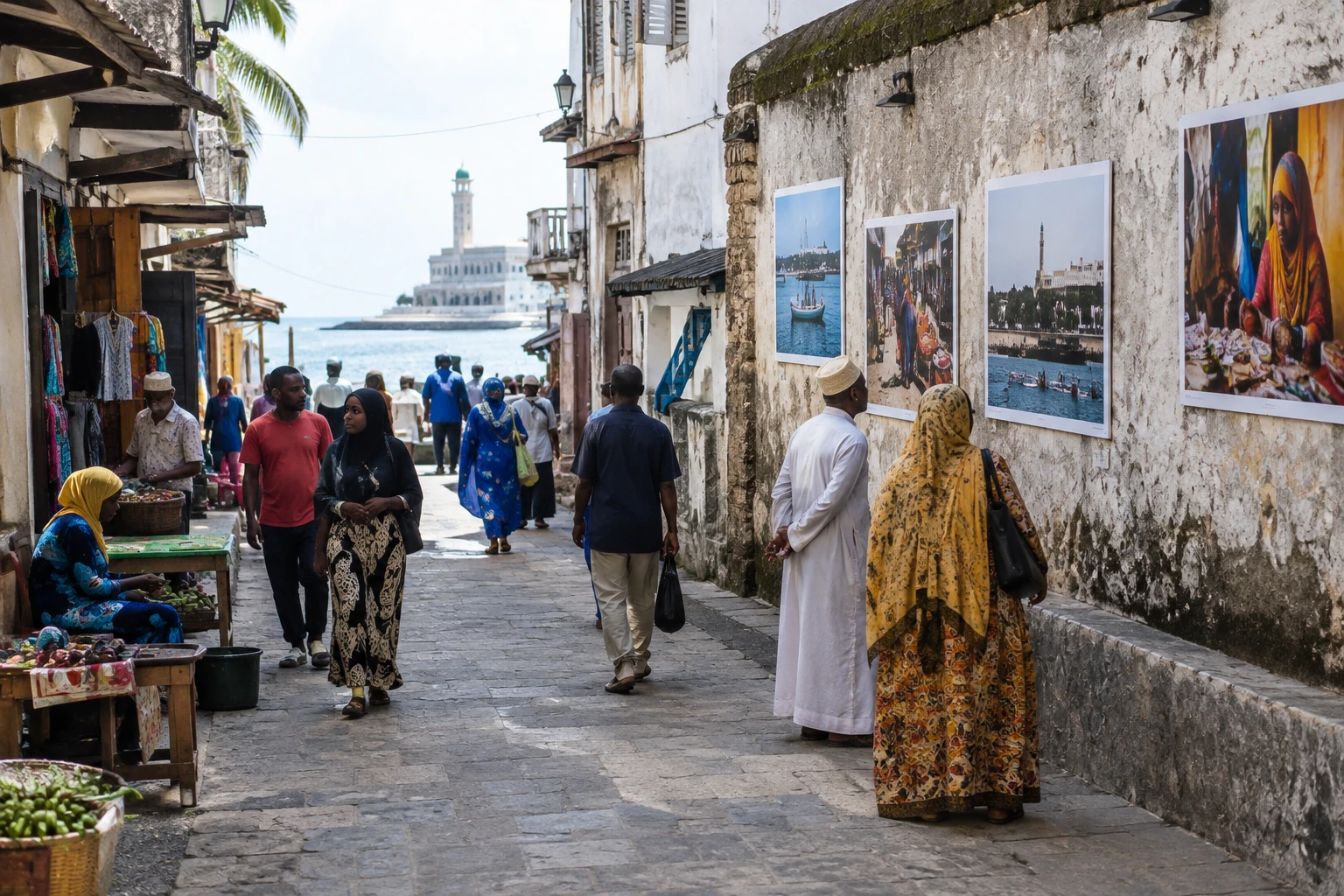
In Moroni’s medina, the images are not hung apart from everyday life: they take their place on walls and along the narrow streets. This choice turns the visit into an encounter between photographers, residents and the memory of the Comoros. It also raises a practical question: how can photography become a sustainable profession in the archipelago?
An exhibition at the heart of the city
The second edition of the PICA Festival is taking place in Moroni from 26 to 30 October 2026. Organised by the Seaview Artwork association, the event is devoted to cultural practices. Fifteen photographers, six of them from other countries, are presenting around a hundred works, according to information published at the festival’s opening.
The scenes on display range from everyday life to religious celebrations. A black-and-white photograph by René Paul Savignan, showing a baby during a bath, caught the attention of one visitor. She saw an ordinary scene made distinctive by the photographer’s perspective. The image is a reminder that cultural heritage is not limited to monuments or ceremonies: it also includes familiar gestures and bonds between generations.
Another series follows the maoulida of the fishermen in Anjouan. This celebration of the birth of the Prophet Mohammed brings together songs, dances and residents for a shared event. Photographer Farouk Djamily describes an open celebration that lasted several hours and brought the streets to life. Shown side by side, these images depict practices rooted in specific places and communities, rather than a uniform Comorian culture.
The medina thus becomes an open-air exhibition space. Residents and visitors encounter the works as they go about their daily lives, without having to step inside a gallery. The initiative comes in a new context: in July 2026, UNESCO added the medinas of the historic sultanates of the Comoros, including Moroni’s, to the World Heritage List. International recognition brings greater attention to these places; it also makes the question of their preservation and everyday life more visible. UNESCO’s decision on the Comorian medinas sets out the terms of this inscription.
Securing recognition for a profession that remains poorly structured
Beyond the exhibitions, the organisers want to strengthen the position of Comorian photographers. The sector has talent, but opportunities for training, showing work and documenting it remain limited. In the print media, explains festival co-founder Ali Ahmed Mahamoud, images are often used to illustrate events. Photojournalism and dedicated spaces for photography are rare.
This lack of opportunities weighs on professional careers. Without regular exhibition venues, accessible archives or a diverse range of commissions, photographers find it harder to make their work known and earn a stable income from it. The difficulties therefore affect more than artists: they also touch on collective memory, given the lack of structures able to preserve and pass on images produced in the country.
Ali Ahmed Mahamoud also points to a shortage of cultural funding. The festival is championing a project for a museum of contemporary and historical photography of the Comoros. In the short term, the team hopes to create at least a virtual museum, bringing together reference material and making works available for consultation. This ambition builds on the efforts made during the first edition, in 2024, which notably brought the work of Comorian photographer Mbaraka Sidi back into the spotlight. Comorian coverage of that first edition already documented the link between photography, identity and memory.
Seaview Artwork is also working with partners in Réunion and the University of the Comoros to develop training. The project has yet to be put into practice, but it addresses a need identified by professionals: to acquire technical skills, develop a documentary practice and draw on local references. The aim is also to enable young photographers to build their careers in the archipelago, rather than relying solely on occasional opportunities.
A dialogue across the Indian Ocean
The presence of foreign photographers places the festival within the artistic exchanges of the Indian Ocean. The Comoros shares human movements, histories and cultural practices with its neighbours, although these are not identical from one island or country to another. By bringing different perspectives into dialogue, PICA can help foster a regional scene in which Comorian artists take part in shaping narratives about their society.
This ambition is set in a region where cultural cooperation is pursued, among other ways, through the Indian Ocean Commission, an intergovernmental organisation bringing together the Comoros, Madagascar, Mauritius, Seychelles and France in respect of Réunion. The festival is not an initiative of this organisation, but its artistic exchanges echo the idea of cooperation built from within island societies themselves.
For Moroni’s residents, the exhibition brings works closer to everyday life and showcases the medina as more than a heritage backdrop. For photographers, it offers a platform and strengthens calls for training, archives and funding. What happens next will depend on whether this annual gathering can be turned into lasting resources: a training programme, accessible collections and places where Comorian images can be viewed, studied and preserved.