Algeria
 Egypt
 Libya
 Morocco
 Sudan
 Tunisia
 Benin
 Burkina Faso
 Cabo Verde
 Côte d'Ivoire
 Ghana
 Guinea
 Guinea-Bissau
 Liberia
 Mauritania
 Niger
 Nigeria
 Senegal
 Sierra Leone
 The Gambia
 Togo
 Cameroon
 Central African Republic
 Chad
 DR Congo
 Equatorial Guinea
 Gabon
 Republic of the Congo
 São Tomé and Príncipe
 Burundi
 Comoros
 Djibouti
 Eritrea
 Ethiopia
 Kenya
 Madagascar
 Malawi
 Mauritius
 Mozambique
 Rwanda
 Seychelles
 Somalia
 South Sudan
 Tanzania
 Uganda
 Angola
 Botswana
 Eswatini
 Lesotho
 Namibia
 South Africa
 Zambia
 Zimbabwe
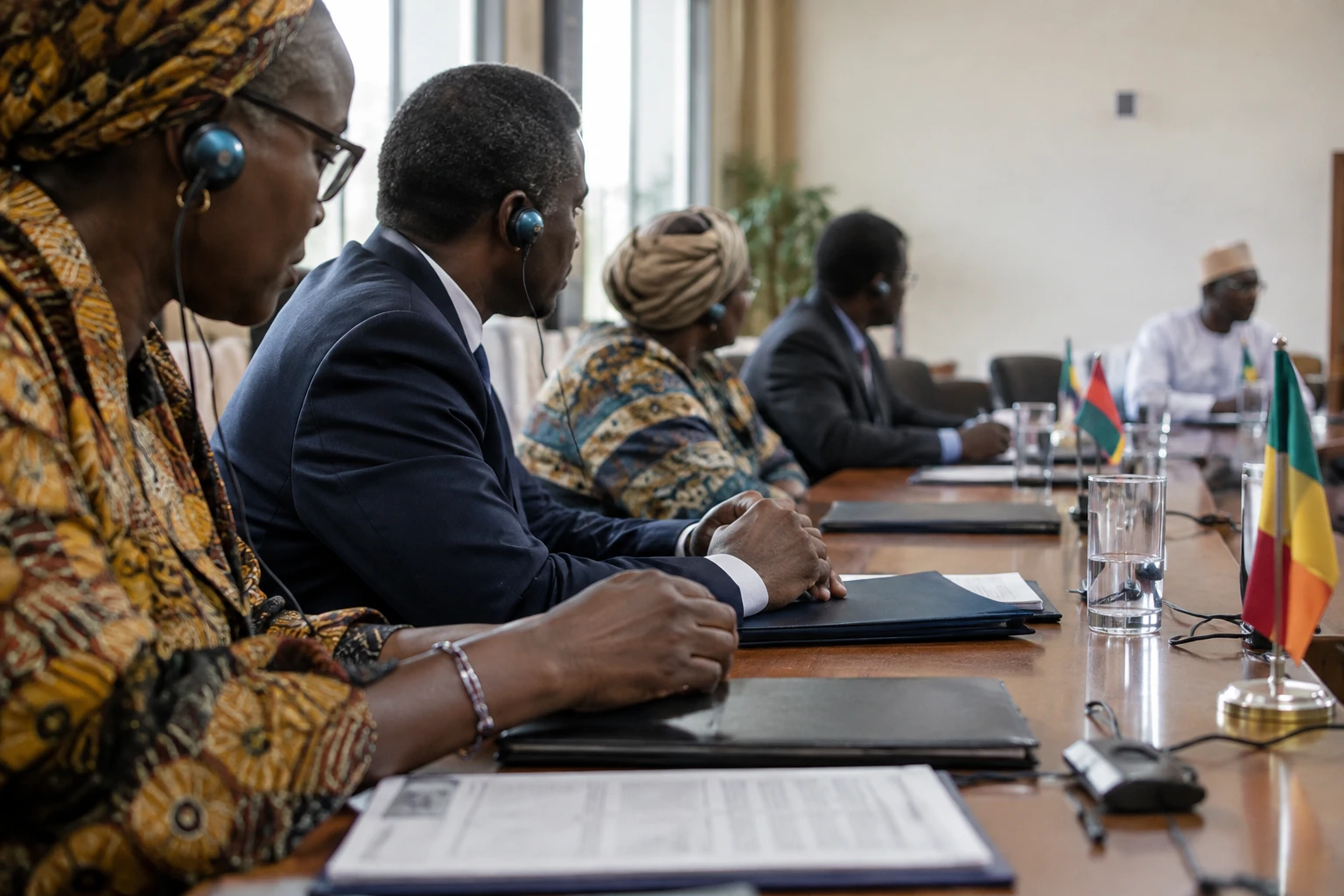
In Bamako, the question is not only where opposition figures are being held. It is also how an arrest outside any known procedure can lead to imprisonment months later, without lawyers having received the case documents.
On Tuesday 20 October 2025, four Malian activists reappeared before the National Cybercrime Centre. After appearing before the court, they were placed in detention at Bamako prison, according to information reported at the time. This judicial step ends several months of uncertainty over where they were being held, but does not answer all the questions about the circumstances of their arrest and their lawyers’ access to the proceedings.
Detention amid a shrinking political space
Since the coups of 2020 and 2021, Mali has been governed by transitional authorities led by General Assimi Goïta. In May 2025, a decree dissolved political parties and organisations of a political nature. The decision followed national consultations and demonstrations in Bamako against extending the transition without an election. The Malian Press and Publicity Agency reported the publication of the decree.
This context sheds light on the four men’s demands, without prejudging the accusations they may face. According to information provided by their relatives and reported when they appeared before the court, they were calling for the Constitution to be respected and elections to be held. They include Youssouf Daba Diawara, associated with the Coordination of Movements, Associations and Supporters of Imam Mahmoud Dicko, as well as Aboubacar Soumaré and Moussa Abba Djiré, who was involved in the Yiriwa 223 movement, dissolved along with other political organisations.
The fourth, Ibrahima Tamega, had been arrested as part of an investigation into anti-Russian graffiti that appeared in Bamako, according to reports. His case therefore differs from that of the other three, who were reportedly arrested in early May. The precise circumstances and judicial documents have not been established by documents available here. It is therefore necessary to distinguish reported facts from details that remain to be confirmed.
Appearing before a judge does not resolve procedural questions
Security authorities reportedly handed the four men over to the specialist centre about eight days before their transfer to Bamako prison. Malian media reported charges of “undermining the credibility of the state”, “criminal conspiracy” and “attempted destabilisation”. In the absence of accessible charging documents and independent confirmation from the prosecutor’s office, these allegations must remain attributed to those media reports. They do not constitute a declaration of guilt.
Their lawyers had not received official documents by the time the men were imprisoned, according to information available then. If confirmed, this absence makes it impossible to know precisely what acts are alleged, what evidence is in the file and what the appeal deadlines are. Appearing before a judge marks an important formal step. However, on its own, it is not enough to establish that the right to a defence was respected in the preceding months.
Relatives described the detainees as very weak and emaciated, while saying that they were alive and could now be located. These statements have not been confirmed by an accessible independent medical assessment. They nevertheless highlight the immediate importance of access to healthcare and family visits. In the information consulted, the authorities had not made public a medical assessment or a detailed response on the conditions of detention.
The case of Mountaga Tall remains separate and more uncertain. The lawyer and former minister, along with his son, were reportedly abducted in May. At the time of the events reported in October, no verifiable information about their fate was available. Amnesty International has documented other arrests and alleged disappearances of critical voices in Mali in 2025, including the case of journalist El Béchir Thiam, who was found in September after several months without any public news. These cases do not prove that they were part of the same operation, but show why official clarification of places of detention matters.
An issue of rights and institutional trust
For the transitional authorities, tackling threats to state security and illegal digital content is a matter of national security. For defenders of civil liberties, the use of the cybercrime centre in cases involving political critics raises the question of a possible conflation of public expression with criminal offences. Human Rights Watch also warned in October 2025 of pressure on critical voices, citing in particular the prosecution of former prime minister Moussa Mara. These concerns do not determine the guilt of those being prosecuted: they make a transparent procedure all the more necessary.
The uncertainty affects different groups in different ways. Families are seeking to find out where their relatives are being held and what their state of health is. Lawyers need to be able to consult the case files and meet their clients. For citizens in Bamako and across the regions, access to reliable information about arrests is essential to trust in the justice system. Dissolved political organisations, meanwhile, no longer have their usual legal structures through which to defend their members or pursue their demands.
The regional landscape has also changed. Mali, Burkina Faso and Niger have left ECOWAS, the Economic Community of West African States, and strengthened their cooperation within the Alliance of Sahel States. This realignment does not remove Mali’s obligations regarding justice and fundamental rights. It does, however, change the regional political mechanisms that could support debate on transitions and civil liberties.
What happens next will depend on verifiable facts: the release of judicial documents, lawyers’ access to the detainees, developments in the prosecutions and any official information about Mountaga Tall and his son. Until those details emerge, the four activists’ court appearance is a step forward in establishing where they are, but not a complete account of what has happened to them since May.