Algeria
 Egypt
 Libya
 Morocco
 Sudan
 Tunisia
 Benin
 Burkina Faso
 Cabo Verde
 Ghana
 Guinea
 Guinea-Bissau
 Liberia
 Mali
 Mauritania
 Niger
 Nigeria
 Senegal
 Sierra Leone
 The Gambia
 Togo
 Cameroon
 Central African Republic
 Chad
 DR Congo
 Equatorial Guinea
 Gabon
 Republic of the Congo
 São Tomé and Príncipe
 Burundi
 Comoros
 Djibouti
 Eritrea
 Ethiopia
 Kenya
 Madagascar
 Malawi
 Mauritius
 Mozambique
 Rwanda
 Seychelles
 Somalia
 South Sudan
 Tanzania
 Uganda
 Angola
 Botswana
 Eswatini
 Lesotho
 Namibia
 South Africa
 Zambia
 Zimbabwe
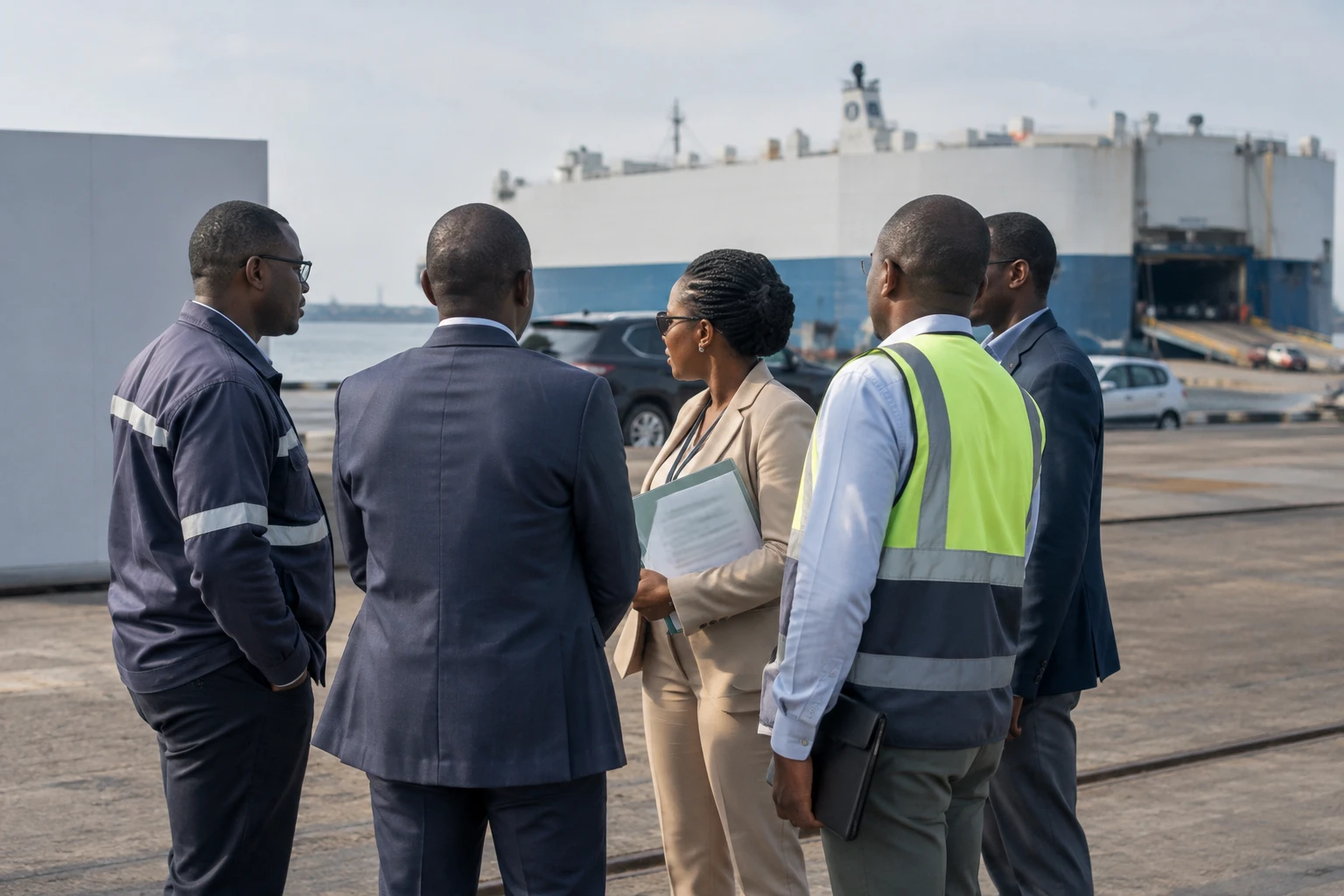
Could a specialist vessel’s call signal a new role for Abidjan in West African car transport? On 24 October 2026, the Ivorian port welcomed the Neptune Leader for an operation presented as the launch of a NYK Line service in West Africa.
A port at the heart of Ivorian and regional trade
The Port of Abidjan is one of Côte d’Ivoire’s main maritime gateways. It also serves hinterland countries, notably Burkina Faso and Mali, which are linked to the coast by road corridors. This role gives port operations a reach that extends beyond the quays of the economic capital.
The port handled 46.9 million tonnes in 2025, up from 40.1 million in 2024, an increase of 17%, according to figures published by the port authority. This growth comes amid competition between regional ports for cargo flows and logistics investment. The Port of Abidjan’s 2025 report illustrates the scale of this activity, although the available information does not specify the share accounted for by vehicle traffic.
Côte d’Ivoire is a member of ECOWAS, the Economic Community of West African States, which aims, among other things, to facilitate trade between its members. In practice, the efficiency of a corridor also depends on customs formalities, road infrastructure and border-crossing times. An additional port call therefore does not, on its own, guarantee lower costs for businesses or motorists.
139 vehicles unloaded in less than 24 hours
The Neptune Leader is a roll-on/roll-off vessel, or RoRo: vehicles and machinery drive on and off rather than being loaded individually by crane. The vessel is 183 metres long, according to information provided about the operation. On its arrival at Abidjan’s RoRo terminal, 139 vehicles were reportedly unloaded.
AGL Côte d’Ivoire says it acted as NYK Line’s shipping agent. In this capacity, its teams handled port and administrative procedures, assisted the vessel and co-ordinated with other parties involved. The unloading, carried out with TERRA teams, reportedly took less than 24 hours. These operational details and the figure of 139 vehicles were reported by the companies involved; the independent public sources consulted do not provide separate confirmation of this first call.
Asta-Rosa Cissé, regional director of AGL Côte d’Ivoire-Burkina Faso, describes the operation as a test of co-ordination and safety. Kentaro Shimizu, NYK Line’s representative for sub-Saharan Africa, describes it as the launch of a new service in the region. These statements set out the two partners’ aims, but do not specify the planned frequency of calls, targeted annual volumes or destinations served beyond Abidjan.
Impact will depend on what follows
For the port, receiving specialised vessels diversifies the services available to shipping companies. For logistics operators, a regular service could make the transport of vehicles and rolling equipment more predictable. But an inaugural call is a starting point, not yet proof of a lasting service or a measurable increase in vehicle traffic.
The potential effects vary for different groups. Importers and dealers could benefit from a more regular maritime service if sailings are repeated. Road hauliers and transit businesses could also be affected, particularly on routes linking Abidjan to landlocked countries. For Ivorian consumers, however, the effect on prices will depend on many factors: freight costs, duties and taxes, port charges, vehicle availability and distribution conditions.
The announced speed of unloading also says nothing about the total time between a vehicle’s arrival at the port and its delivery to the buyer. Inspections, customs clearance, storage and inland transport are further stages. The efficiency of a logistics chain must therefore be assessed across the entire journey, not just at the quay.
Regularity will be the next measure
Across West Africa, the initiative is part of a contest between port hubs to attract shipping lines and serve neighbouring markets. Abidjan already handles significant overall volumes and has access to hinterland corridors. However, the role this service will play depends on its frequency, its ability to attract additional flows and its links with land transport networks.
The next indicators to watch are therefore concrete: the sailing schedule, the tonnage or number of vehicles carried, any calls at other regional ports and transit times to inland markets. Without these figures, the Neptune Leader’s first arrival chiefly marks an announced commercial opening. It is not yet possible to measure the new service’s effect on trade in Côte d’Ivoire and the sub-region.