Algeria
 Egypt
 Libya
 Morocco
 Sudan
 Tunisia
 Benin
 Burkina Faso
 Cabo Verde
 Côte d'Ivoire
 Ghana
 Guinea
 Guinea-Bissau
 Liberia
 Mali
 Mauritania
 Niger
 Nigeria
 Senegal
 Sierra Leone
 The Gambia
 Togo
 Cameroon
 Central African Republic
 Chad
 Equatorial Guinea
 Gabon
 Republic of the Congo
 São Tomé and Príncipe
 Burundi
 Comoros
 Djibouti
 Eritrea
 Ethiopia
 Kenya
 Madagascar
 Malawi
 Mauritius
 Mozambique
 Rwanda
 Seychelles
 Somalia
 South Sudan
 Tanzania
 Uganda
 Angola
 Botswana
 Eswatini
 Lesotho
 Namibia
 South Africa
 Zambia
 Zimbabwe
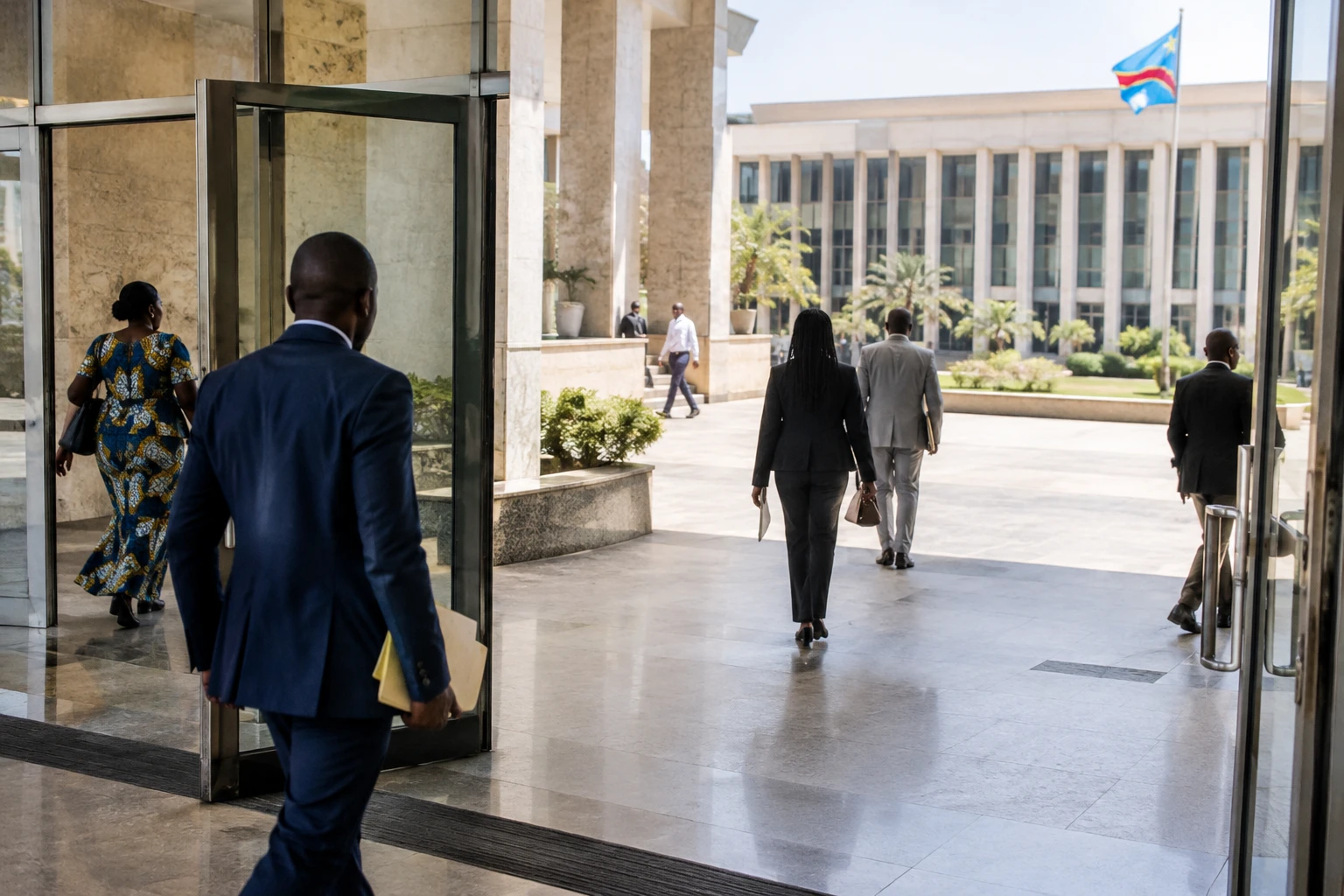
In the Democratic Republic of the Congo, the creation of a new politico-military movement led by Joseph Kabila is turning a rivalry between former and current leaders into a national security issue. In Kinshasa, Félix Tshisekedi has questioned the role of his predecessor and Rwanda. In the east, the new coalition has openly claimed the possibility of fighting the government by force.
A realignment that goes beyond political rivalry
On 12 October 2026, in Goma, Joseph Kabila took the helm of the Front for the Refoundation of the Nation (FRN). The new structure succeeds the Congo River Alliance (AFC), a political coalition associated with the March 23 Movement (M23), according to announcements made at its creation. Corneille Nangaa and Bertrand Bisimwa hold vice-presidential positions. Radio Okapi reported on the formation of the FRN and its initial organisation.
The movement’s political declaration describes Félix Tshisekedi’s government as a “tyranny” and says it intends to fight it “by all means, including force”. It also invokes Article 64 of the Congolese constitution, which recognises citizens’ duty to thwart an unconstitutional seizure or exercise of power. This is the FRN’s justification; it does not, in itself, constitute legal validation of its use of arms. The text and its main provisions have been examined by Actualite.cd.
The chronology of presidential statements warrants clarification. On 24 October, addressing MPs and senators from his majority gathered in Kinshasa, Félix Tshisekedi described the emergence of the FRN as “no surprise”, according to Radio Okapi, which cited parliamentary sources. The available report does not confirm that he used the phrase “Rwanda’s proxy” at that meeting, as some summaries have reported. The accusation should therefore be attributed to the president and placed in the context of his statements, rather than presented as an established fact.
Rwanda at the centre of accusations contested by each side
Kinshasa has accused Kigali for several years of supporting the M23. Rwanda rejects these accusations and points to its own security concerns, including the presence of the Democratic Forces for the Liberation of Rwanda (FDLR) in eastern Congo. This armed group, formed in part by former officials and fighters linked to the 1994 genocide, is regularly cited in tensions between the two countries. Allegations of external support should be reported with attribution, even when international reports document evidence related to them.
In June 2026, a report by the United Nations Group of Experts had already referred to a possible reorganisation of the AFC/M23 and a leading role for Kabila. It also described differences between the political ambitions of some leaders and the priorities of part of the movement, which was more focused on the provinces of North Kivu and South Kivu. This context raises questions about the former president’s actual place in the coalition, but does not, on its own, allow the conclusion that he is acting on Kigali’s orders.
The conflict’s shift towards an alliance presenting itself as Congolese-led also has political significance. It gives the opposition a figure who led the country from 2001 to 2019 and may strengthen its roots among some opponents. In turn, Kabila’s association with a politico-military organisation puts his former allies in a difficult position. Radio Okapi reports that several members of his political entourage distanced themselves after the FRN was announced.
Effects felt first in the east
In Kinshasa, the confrontation has revived debate over the legitimacy of the government, pluralism and the limits of armed opposition. But its most immediate consequences concern people in areas where fighting and changes in control are already disrupting movement, access to services and economic activity. Political announcements made in the capital or in Goma do not, on their own, show how residents of the territories concerned view them.
The Congolese state faces a dual challenge: defending territorial integrity while preventing the security response from further shrinking political space. For armed groups, the existence of a renewed leadership structure guarantees neither cohesion nor joint operational capacity. For civilians, any escalation in fighting risks adding uncertainty above all to an already unstable situation. No new human toll can be inferred from the announcements establishing the FRN.
The crisis extends beyond national borders. The DRC belongs to the East African Community (EAC) and the Southern African Development Community (SADC), two regional blocs whose diplomatic and security initiatives intersect in the search for a solution. It also challenges the African Union on state sovereignty, the movement of armed groups and the credibility of African mediation mechanisms. Peace negotiations and ceasefire arrangements remain essential benchmarks for assessing whether this realignment opens a political path or widens the conflict.
What to watch next
Three factors will help determine the FRN’s significance: the effective establishment of its bodies, the evolution of its relations with the components of the former AFC/M23, and its conduct on the ground. It will also be important to watch whether peace talks continue and whether accusations between Kinshasa and Kigali are accompanied by verifiable evidence or concrete diplomatic measures.
Félix Tshisekedi’s statements shed light on the Congolese government’s view, while the FRN’s texts set out the objectives its leaders claim to pursue. Neither is sufficient on its own to establish responsibility for the conflict. For people in eastern Congo and for regional institutions, the central question remains how to restore security without erasing the demands for political representation and sovereignty.