Algeria
 Libya
 Morocco
 Sudan
 Tunisia
 Benin
 Burkina Faso
 Cabo Verde
 Côte d'Ivoire
 Ghana
 Guinea
 Guinea-Bissau
 Liberia
 Mali
 Mauritania
 Niger
 Nigeria
 Senegal
 Sierra Leone
 The Gambia
 Togo
 Cameroon
 Central African Republic
 Chad
 DR Congo
 Equatorial Guinea
 Gabon
 Republic of the Congo
 São Tomé and Príncipe
 Burundi
 Comoros
 Djibouti
 Eritrea
 Ethiopia
 Kenya
 Madagascar
 Malawi
 Mauritius
 Mozambique
 Rwanda
 Seychelles
 Somalia
 South Sudan
 Tanzania
 Uganda
 Angola
 Botswana
 Eswatini
 Lesotho
 Namibia
 South Africa
 Zambia
 Zimbabwe
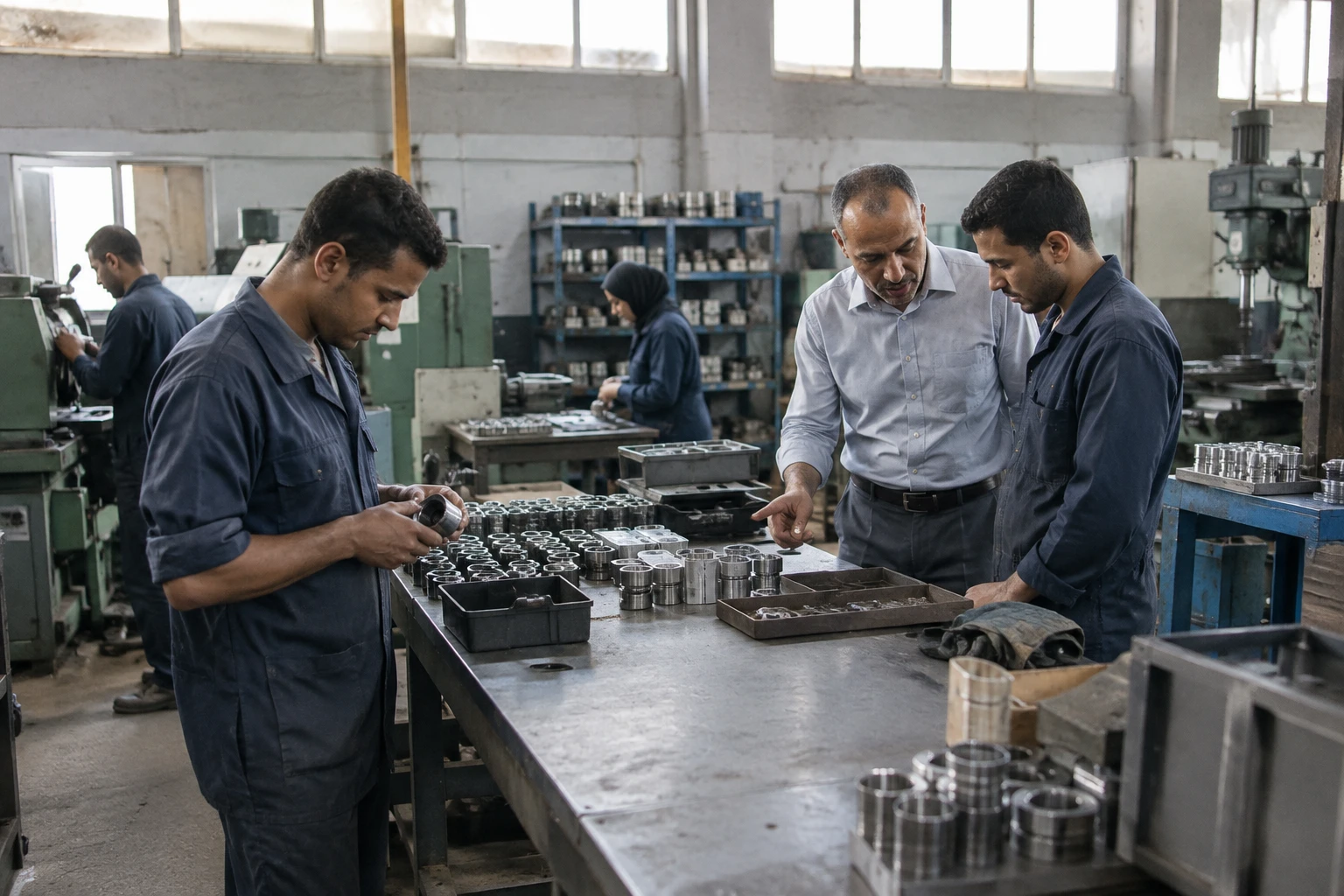
For an Egyptian business already up and running, growth depends on more than finding customers. It also needs to finance new equipment, open sites or professionalise its management. Yet small businesses often remain too small or too risky in the eyes of traditional lenders.
A private equity fund can address some of this need, but not all financing difficulties. In Egypt, Tanmiya Capital Fund II aims to provide capital to established businesses. Its bet is to support their expansion over several years, rather than give them a loan to repay on a fixed schedule.
An Egyptian fund in a constrained credit market
Micro, small and medium-sized enterprises occupy a major place in the Egyptian economy. According to census data cited by the OECD, they account for nearly 98% of registered businesses and contribute around 43% of gross domestic product. These figures describe their weight, but do not mean that all have access to the same financing. Informality, uneven accounting standards and collateral requirements make it particularly difficult for smaller businesses to apply.
Equity financing works differently from a bank loan: an investor takes a stake in a business and supports its growth, hoping for a return over time. This approach may suit companies that are already well structured, but it does not replace working-capital loans or tools suited to very small businesses. Companies able to present a growth strategy and strong governance are therefore the most likely to attract this type of fund.
The scheme is also part of the national business support ecosystem. The Egyptian Micro, Small and Medium Enterprise Development Agency, MSMEDA, provides financing and support to the sector. It also takes part in mechanisms designed to channel private capital to businesses with growth potential.
$37.5m to support six to eight companies
On 26 October 2026, the European Investment Bank (EIB), through its development finance arm EIB Global, announced a commitment of $37.5m to Tanmiya Capital Fund II. The announcement was reported by the EIB and by Egyptian media outlet Ahram Online, which confirmed the amount and date.
The fund reached a final size of $130m, above its initial target of $120m. It brings together local and international investors, including MSMEDA, the Egyptian-American Enterprise Fund, the European Bank for Reconstruction and Development and the International Finance Corporation. The EIB’s contribution is therefore part of a wider funding round; it does not, on its own, account for all the fund’s resources.
Managed by Tanmiya Capital Ventures, an Egyptian investment firm, the fund is targeting a portfolio of six to eight companies. It focuses on established businesses seeking to expand their operations, strengthen management or improve their competitiveness. The sectors announced include healthcare, training and education, financial technology, consumer goods, logistics and transport.
The EIB says the fund will combine capital with strategic and management support. Its stated aim is to help businesses grow, improve their governance and create or sustain jobs. The institution also says that at least 30% of portfolio companies are expected to meet one or more of its financing criteria promoting gender equality. This is a target, not a result already measured.
A targeted lever, not a general answer to the credit shortfall
For companies selected, an equity injection can finance expansion that would be difficult to fund through debt. It can also strengthen management practices and facilitate access to other investors. The impact, however, will depend on which companies are selected, how the fund deploys its capital and its ability to support their operations over time.
The direct reach will remain limited by the planned number of investments. Six to eight companies represent only a small share of Egypt’s business landscape. Informal businesses, very young companies and those unable to demonstrate growth potential may not fit the profile sought. The fund therefore does not, by itself, resolve small businesses’ credit difficulties, particularly those needing modest or rapid financing.
The geography of investments will also matter. Businesses based in Cairo or major economic centres may be more visible to fund managers and investors. To assess the fund’s national reach, it will be necessary to see whether investments also benefit companies located outside the capital and whether the announced jobs materialise across different sectors and regions.
The attention given to gender equality is another indicator to watch. The 30% threshold concerns the EIB’s financing criteria. It does not automatically guarantee equivalent representation of women in management teams, jobs created or business ownership. Results will need to be assessed using published data on the companies funded and their practices.
Implications for North African capital too
At regional level, the operation illustrates the growing role of investment funds in financing North African businesses. Egypt is a member of the Arab Maghreb Union (AMU), whose ambitions for economic integration remain hampered by political divisions and limited co-operation. The fund itself targets Egyptian companies: its announcement does not mean it will finance businesses in other AMU countries.
The issue nevertheless goes beyond national borders. Regional and continental investors are seeking ways to finance businesses capable of growing, while public institutions and development banks are trying to mobilise more private capital. The EBRD’s earlier announcement of a $20m investment in Tanmiya Capital Ventures Fund II shows that several institutions are interested in this financial vehicle.
The next step will be less about announcing new commitments than translating them into investments and verifiable results: the number of companies financed, sectoral and geographical distribution, jobs created or sustained, and women’s effective participation. These are the measures by which it will be possible to judge whether this capital is durably strengthening Egyptian businesses or mainly benefiting a handful of companies that are already well positioned.
Sources consulted: EIB announcement on its investment in Tanmiya Capital Fund II ; confirmation by Ahram Online ; OECD data and analysis on SMEs in Egypt ; EBRD project summary on its investment in Tanmiya Capital Ventures II.