Algeria
 Egypt
 Libya
 Morocco
 Sudan
 Tunisia
 Benin
 Burkina Faso
 Cabo Verde
 Côte d'Ivoire
 Ghana
 Guinea
 Guinea-Bissau
 Liberia
 Mali
 Mauritania
 Niger
 Nigeria
 Senegal
 Sierra Leone
 The Gambia
 Togo
 Central African Republic
 Chad
 DR Congo
 Equatorial Guinea
 Gabon
 Republic of the Congo
 São Tomé and Príncipe
 Burundi
 Comoros
 Djibouti
 Eritrea
 Ethiopia
 Kenya
 Madagascar
 Malawi
 Mauritius
 Mozambique
 Rwanda
 Seychelles
 Somalia
 South Sudan
 Tanzania
 Uganda
 Angola
 Botswana
 Eswatini
 Lesotho
 Namibia
 South Africa
 Zambia
 Zimbabwe
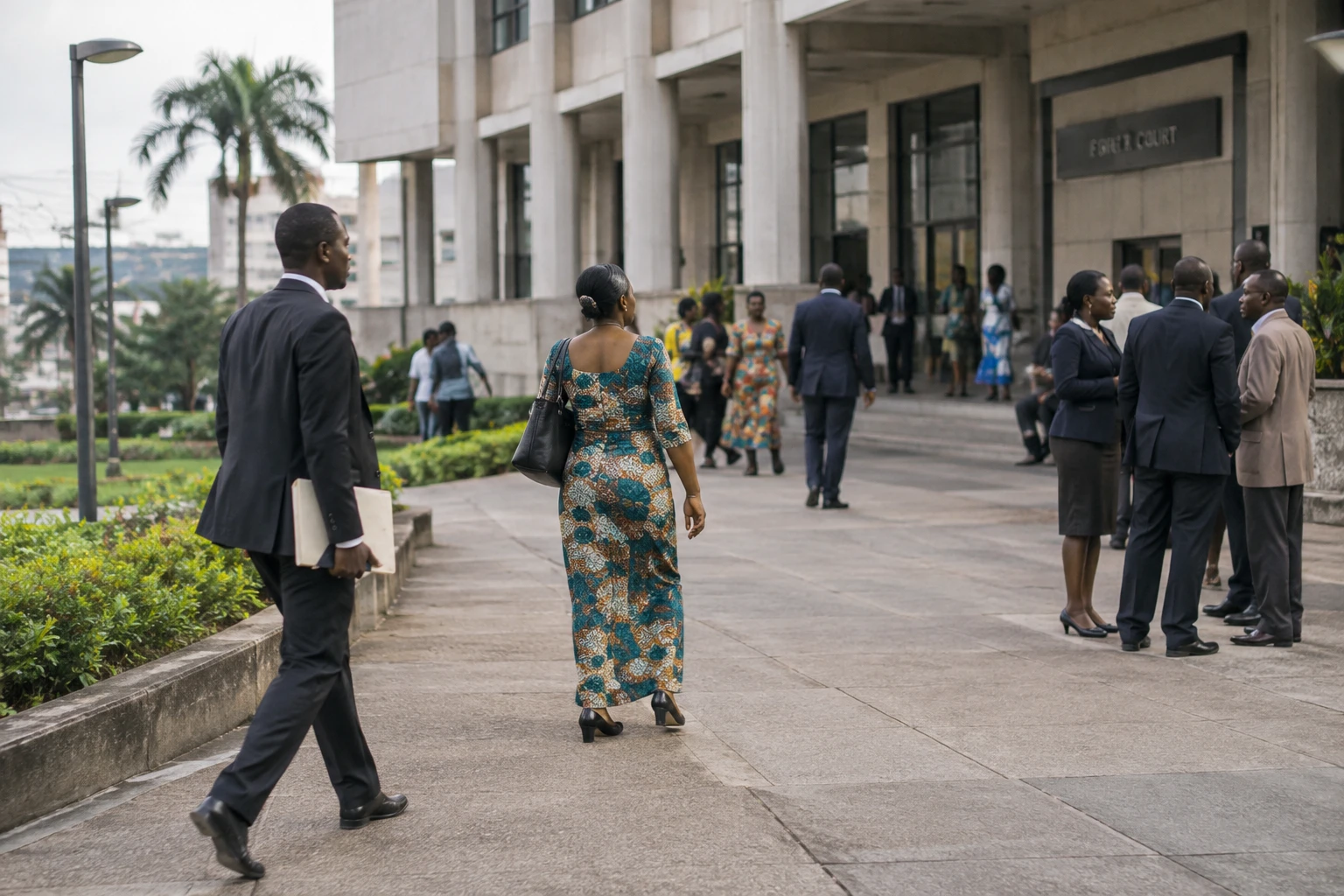
In the Martinez Zogo case, testimony concerns more than the death of a journalist. It is also testing the strength of the investigation and the ability of the Yaoundé military court to weigh accounts that are now in conflict.
At the hearing on Monday 26 October 2026, Justin Danwe, a former head of operations at the General Directorate for External Research (DGRE), challenged the circumstances in which he implicated businessman Jean-Pierre Amougou Belinga. This remains an account given by a defendant. On its own, it is not a fact established by the court.
A legal case followed beyond Yaoundé
Martinez Zogo hosted the programme “Embouteillages” on Amplitude FM in Yaoundé. In January 2023, he was abducted. His body was found a few days later. The proceedings concern allegations including abduction, torture and murder. Those facing prosecution remain presumed innocent until a final ruling.
The trial opened in March 2024 before the Yaoundé military court. Hearings on the merits began in September 2025, after a long period marked by procedural questions. Seventeen people were sent for trial, including Justin Danwe, former DGRE director Maxime Eko Eko and Jean-Pierre Amougou Belinga. These procedural details do not prejudge their guilt.
The case touches on sensitive institutions. The DGRE is Cameroon’s external intelligence service. Questions raised at the trial also concern investigative methods, relations between public officials and the safeguards afforded to witnesses. They therefore concern Cameroon’s justice system as well as the individual responsibilities being examined by the court.
Conflicting accounts in court
On 26 October, Lieutenant-Colonel Dieudonné Bialo, a member of the commission of inquiry, completed his testimony after answering questions from the defendants. Danwe asked him why, according to him, Amougou Belinga’s name did not appear in his first statements. The defendant said that “certain men” had visited him before he implicated the businessman.
His lawyer, Me Jacques Mbuny, argued that his client had not named Amougou Belinga during his first interrogations. Lieutenant-Colonel Bialo rejected this account, describing Danwe’s claims as “the fruit of your imagination”. Both accounts have been reported by Cameroonian media covering the hearing, but only the court record and the court’s decisions will establish their significance.
The civil parties also challenged Danwe’s credibility. Me Calvin Job, lawyer for Martinez Zogo’s heirs, referred to successive accounts that he considers incompatible. This is the assessment of the victim’s family’s lawyer, not a judicial finding. For readers, the issue is concrete: whether testimony was obtained freely and whether the evidence presented can be verified.
At the end of the day, Lieutenant-Colonel Parfait Ayissi Nanga began testifying. A member of the commission of inquiry, he said he feared for his safety and accused officials and a defendant of threatening him. He also referred to an alleged attempted murder. These are serious allegations and must remain attributed to their source unless and until they are established by the courts. Cameroon Tribune’s report on the 26 October hearing confirms that his testimony began late in the evening. Cameroonian media also reported the officer’s statements and the allegations against Martin Savom.
The question of evidence and witness protection
In court, three levels must be distinguished: documented facts, witness statements and allegations made by the parties. A changing account can be challenged at trial; on its own, it is not enough to prove pressure or manipulation. Likewise, an allegation of a threat is not a judicial finding. Cross-examination and comparison with other evidence in the case file are crucial.
The risks raised by a witness may also affect the quality of proceedings. If an officer called to testify believes his safety is under threat, the court must be able to examine these allegations and the protection measures available. This does not decide the merits of the case, but it is essential to hearing witnesses without pressure. The next step announced is the continuation of Ayissi Nanga’s testimony at the hearings on 26 and 27 October.
For Cameroonians, the implications extend beyond the courtroom. The case concerns trust in institutions, as well as the safety of journalists investigating public affairs. Cameroon’s entire press should not be reduced to this case; the trial nevertheless highlights the risks associated with journalistic work and the importance of effective judicial safeguards.
A national issue with regional significance
Cameroon is a member of the Central African Economic and Monetary Community (CEMAC), which brings six countries together around shared economic institutions. The trial falls under Cameroon’s justice system, not a regional court. But the handling of a case involving a journalist, intelligence services and influential figures will be watched beyond the country’s borders.
The case’s regional significance lies not in any conclusion already reached, but in a question of method: can institutions establish responsibility on the basis of conflicting evidence while protecting witnesses and the rights of the defence? The answer will depend on future hearings, reasoned court decisions and the ability to distinguish verified evidence from allegations that remain disputed.
At this stage, the 26 October hearing has added another episode to a trial that is still under way. Danwe’s statements about alleged visits, Bialo’s denial and Ayissi Nanga’s allegations will need to be examined in context and weighed against the other evidence. Public understanding of the case will depend on this process more than on sensational statements.