Algeria
 Egypt
 Libya
 Morocco
 Sudan
 Tunisia
 Benin
 Burkina Faso
 Cabo Verde
 Côte d'Ivoire
 Ghana
 Guinea
 Guinea-Bissau
 Liberia
 Mali
 Mauritania
 Niger
 Nigeria
 Senegal
 Sierra Leone
 The Gambia
 Togo
 Cameroon
 Central African Republic
 Chad
 DR Congo
 Equatorial Guinea
 Gabon
 Republic of the Congo
 São Tomé and Príncipe
 Burundi
 Comoros
 Djibouti
 Eritrea
 Kenya
 Madagascar
 Malawi
 Mauritius
 Mozambique
 Rwanda
 Seychelles
 Somalia
 South Sudan
 Tanzania
 Uganda
 Angola
 Botswana
 Eswatini
 Lesotho
 Namibia
 South Africa
 Zambia
 Zimbabwe
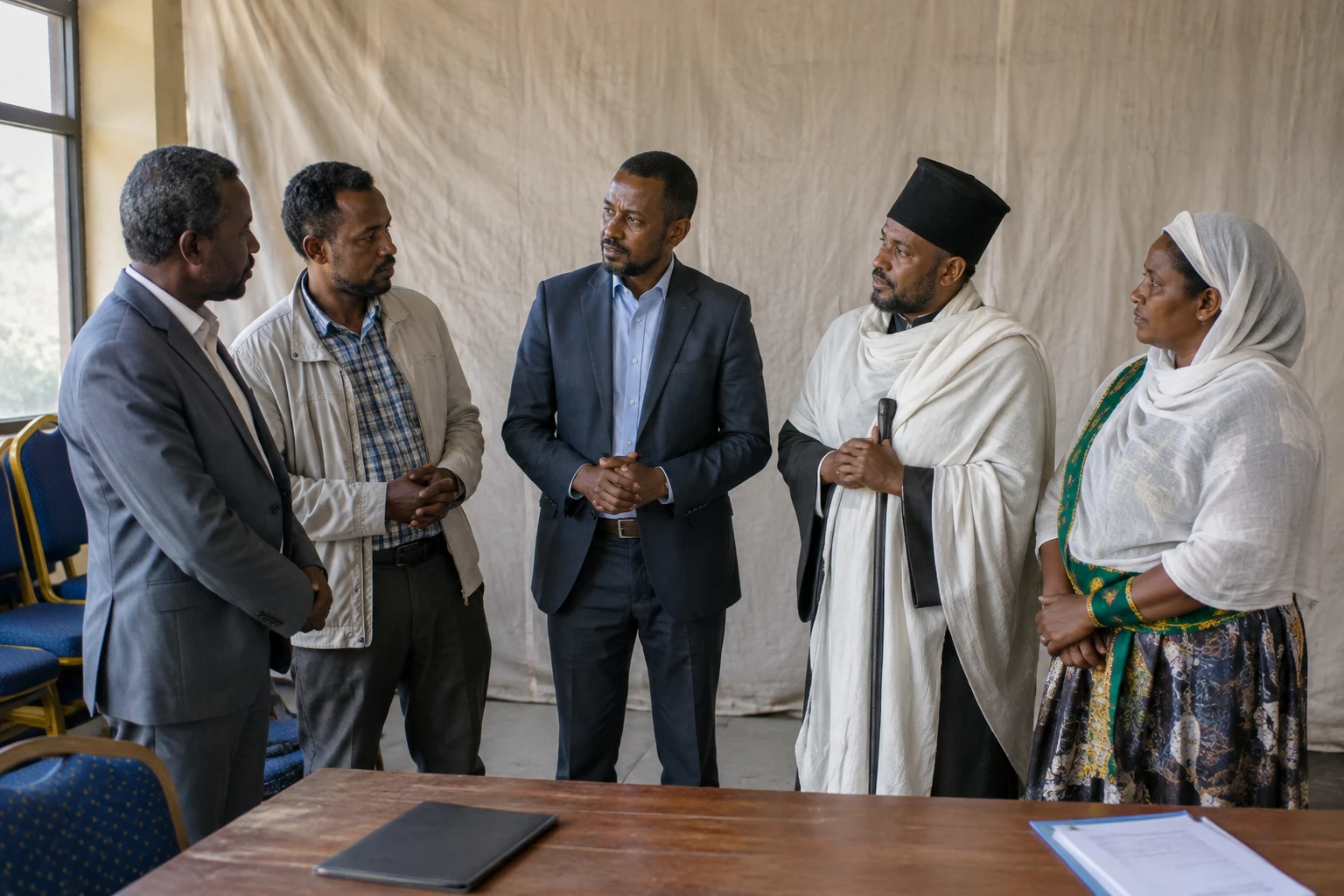
In the countryside of Arsi, in Oromia, residents’ security is sometimes measured by an immediate question: can they stay at home after nightfall? Two deadly attacks in October have revived this concern. They targeted civilians and displaced families, while responsibility for them remains disputed.
Two attacks, with death tolls covering different areas
The Holy Synod of the Ethiopian Orthodox Tewahedo Church announced that at least 60 people had been killed in two separate attacks on 20 and 24 October 2026 in the Arsi zone, within the Oromia region. According to its statement, 14 people were killed in Gora Silingo, in Merti district, followed by 46 more in Tereta, Chole and Birbo, in Shirka district. The Church also reported more than 20 people seriously injured.
For the localities of Chole and Birbo, residents interviewed by Ethiopian outlet The Abay Times put the death toll at 48 as of 26 October, after attacks that began on the 24th and continued the following day. This figure concerns those two localities and does not therefore necessarily contradict the total of 60 announced by the Church for the two episodes in Merti and Shirka. Witnesses described civilian victims, including women, older people and children. Not all these details have been independently verified.
Residents’ accounts describe armed assailants and families caught unawares. The Church says 20 houses were burned during the series of attacks. Residents fled or hid, according to testimony gathered locally. These accounts point to an impact extending beyond the death toll: the loss of homes, displacement and more difficult access to healthcare in rural areas.
Responsibility remains uncertain
Regional authorities have blamed the violence on a group they identify as “Tsimdo”, according to The Abay Times. A local official cited in the original material accused a recently formed rebel coalition that includes the Oromo Liberation Army (OLA). These names and accusations have not been substantiated by a publicly released independent investigation. The OLA, which has been fighting the government since 2018, has previously denied responsibility for attacks on civilians; no verified evidence allows these incidents to be attributed to it.
The distinction matters. In a region where several armed groups operate, repeating one side’s accusation as an established fact could put civilians at greater risk and obscure responsibility. An impartial investigation must establish who carried out the attacks, how security forces responded and whether prior warnings were taken into account. The Associated Press has described restricted access for journalists and human rights organisations to some areas of Oromia, complicating independent verification of events.
The Synod says it has repeatedly alerted the authorities to security problems and is calling for residents to be protected and those responsible prosecuted. The regional government has promised to act, but the information reviewed does not specify what concrete measures were taken on the ground after the attacks. The gap between warnings and the ability to protect villages is now at the heart of demands from the Church and residents.
A local conflict with national consequences
Oromia is Ethiopia’s largest region and is home to a diverse population. The conflict between the federal state and the OLA forms part of broader tensions over autonomy, political representation and security. It does not, on its own, account for the region’s violence. The Associated Press has also reported abuses attributed to government forces, armed groups and criminal actors. This multiplicity makes it necessary to document responsibility on a case-by-case basis.
Religion is central to accounts from the Church and some residents, who describe attacks targeting Orthodox worshippers. But local sources also report violence against Muslims and tensions involving ethnic, political and religious factors. These elements neither justify nor minimise the killings. Rather, they underline that no single explanation is sufficient to account for power dynamics and communities’ experiences.
For rural families, the consequences are immediate: leaving a home, halting farming activities, seeking medical care elsewhere or living in fear of another attack. In Addis Ababa, the federal authorities are under scrutiny over their ability to coordinate security forces and ensure a credible investigation. Political announcements alone cannot restore either everyday security or trust.
The authorities’ response, a test for the region
In East Africa, Ethiopia plays a major role in the Intergovernmental Authority on Development (IGAD), the regional organisation that deals, among other issues, with peace and security. Instability in an Ethiopian region does not automatically constitute a cross-border crisis. But population displacement, community tensions and the persistence of armed conflicts make civilian protection important for the entire Horn of Africa.
The next indicator will be the authorities’ verifiable response: access for investigators to affected areas, identification of victims, protection for displaced people and clarification of responsibility. The Holy Synod has announced plans to meet government officials to discuss lasting security measures. For residents of Merti and Shirka, the issue is concrete: being able to return home and live there without facing a new threat. For Ethiopia, it is also a matter of showing that security and freedom of worship can be guaranteed without naming a culprit before an investigation.