Algeria
 Egypt
 Libya
 Morocco
 Sudan
 Tunisia
 Benin
 Burkina Faso
 Cabo Verde
 Ghana
 Guinea
 Guinea-Bissau
 Liberia
 Mali
 Mauritania
 Niger
 Nigeria
 Senegal
 Sierra Leone
 The Gambia
 Togo
 Cameroon
 Central African Republic
 Chad
 DR Congo
 Equatorial Guinea
 Gabon
 Republic of the Congo
 São Tomé and Príncipe
 Burundi
 Comoros
 Djibouti
 Eritrea
 Ethiopia
 Kenya
 Madagascar
 Malawi
 Mauritius
 Mozambique
 Rwanda
 Seychelles
 Somalia
 South Sudan
 Tanzania
 Uganda
 Angola
 Botswana
 Eswatini
 Lesotho
 Namibia
 South Africa
 Zambia
 Zimbabwe
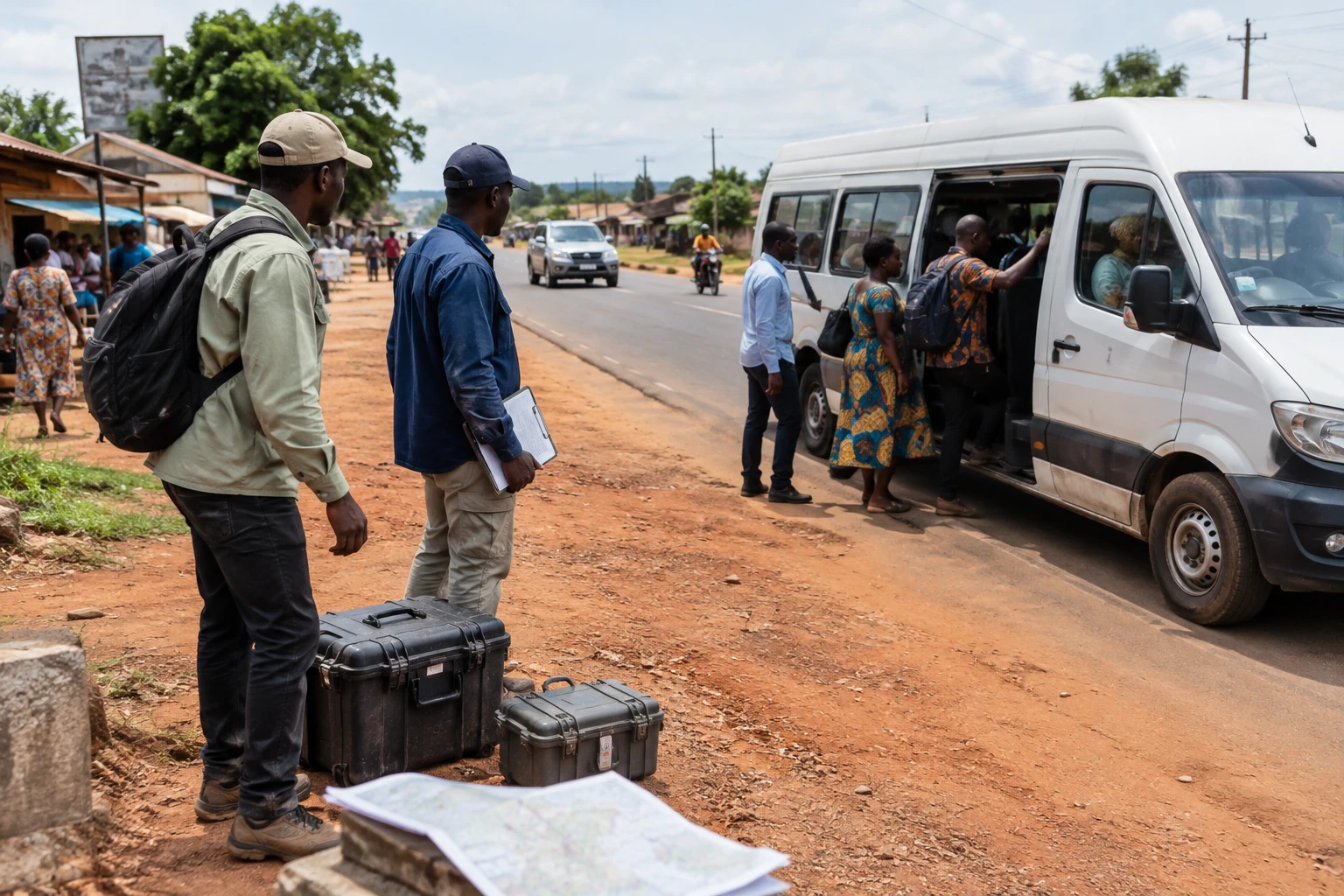
In Côte d’Ivoire, a significant part of the race for gold takes place even before a mine opens. Exploration companies are seeking positions near known deposits, where the geology raises hopes of new discoveries — but never guarantees them.
Northern Côte d’Ivoire attracts new projects
On 26 October 2026, Waraba Gold announced an agreement to acquire 80% of Leo Resources, a company that holds exploration permit PR-683 in the north of the country. The area covers 212.66 km² and adjoins ground already held by Waraba in the Tengrela area. The transaction could reach A$5 million, or about US$3.5 million. It remains subject to Ivorian regulatory approvals. Waraba sets out its agreement on the Tengrela permit.
The expansion is in an already explored gold region. The permit lies on the Boundiali greenstone belt, a geological formation stretching across northern Côte d’Ivoire that hosts several mining projects. The Sissingué mine, operated by Perseus Mining, is nearby. Waraba is seeking to consolidate its ground around Tengrela to cover nearly 1,000 km², including pending permit applications.
A few days earlier, on 23 October, Eminence Minerals announced that it had exercised options giving it access to an initial 30% stake in five gold projects: Tarato, Kounouman, Banandjé, Sarhala and Tonkpi. The Australian company, listed on the ASX, plans to review the permits and their historical data before setting out its work programme. Its projects are in districts where other companies, including Endeavour Mining, Montage Gold and Aurum Resources, are also conducting exploration or development activities. Eminence outlines its five Ivorian projects.
Budgets are rising, but mines are still a long way off
The context explains the interest in these areas. According to S&P Global Market Intelligence’s World Exploration Trends 2026 report, mining exploration budgets in Côte d’Ivoire reached $186 million in 2025. The country thus regained the top spot in Africa for exploration spending. Across the continent, these budgets rose by 11% to $1.44 billion, while global budgets edged down. S&P Global’s global exploration report measures budgets allocated to mineral exploration, not investments already made in producing mines.
This distinction matters. A permit, exploration spending or a promising target is neither a confirmed discovery nor a viable reserve. Field campaigns, assays and drilling are needed, followed by technical, environmental and economic studies. Moving from one stage to the next can take years and does not always lead to a successful outcome.
The progress of Aurum Resources’ Boundiali project illustrates both the potential and the time required. The company announced a mineral resource of 3.22 million ounces of gold in 2026, after several drilling campaigns. An estimated resource, however, is not the same as metal already extracted: it still needs to be assessed in light of technical, economic and regulatory conditions. Aurum publishes figures for its Boundiali and Napié projects.
National ambitions will depend on local benefits
Ivorian authorities want to increase gold production and strengthen the mining sector’s role in the economy. National production has risen over the past decade, driven by the opening of new mines and the expansion of existing sites. Côte d’Ivoire’s public economic portal provides a production series and projections for the coming years, while official announcements stress that these forecasts depend on projects still under development coming on stream. Public data on Ivorian gold production.
For companies, the immediate challenge is to turn permits into drilling targets and then into adequately documented resources. Waraba plans to prepare a drilling programme if the acquisition is completed. Eminence intends to start by analysing historical data and conducting reconnaissance work across its five projects. Both timelines will depend in particular on approvals and the quality of results obtained in the field.
For people in mining regions, the benefits are not limited to production figures. Locally accessible jobs, training, procurement from Ivorian businesses, access to land and the management of environmental impacts also count. Exploration generally employs fewer people than mining. Any benefits will therefore be neither immediate nor evenly distributed among sites, towns and rural communities.
A strategic choice in a mining region of West Africa
Côte d’Ivoire is part of a region where gold plays an important role in economies and public policy. But the country is pursuing its own path within ECOWAS — the Economic Community of West African States — and the African Union. Its mining ambitions will be measured as much by its ability to attract capital as by its capacity to turn projects into public revenue, skilled jobs and local economic activity.
Rising exploration budgets are a positive signal for the sector, but do not predict the geological outcome. The next concrete steps will be Ivorian approvals for Waraba’s project, followed by the fieldwork announced by both companies. These milestones, and the drilling data published afterwards, will show the real significance of this renewed interest in Côte d’Ivoire’s subsoil.