Algeria
 Egypt
 Libya
 Morocco
 Sudan
 Tunisia
 Benin
 Burkina Faso
 Cabo Verde
 Côte d'Ivoire
 Ghana
 Guinea
 Guinea-Bissau
 Liberia
 Mali
 Mauritania
 Niger
 Nigeria
 Senegal
 Sierra Leone
 The Gambia
 Togo
 Cameroon
 Central African Republic
 Chad
 DR Congo
 Equatorial Guinea
 Gabon
 Republic of the Congo
 São Tomé and Príncipe
 Burundi
 Comoros
 Djibouti
 Eritrea
 Ethiopia
 Kenya
 Madagascar
 Mauritius
 Mozambique
 Rwanda
 Seychelles
 Somalia
 South Sudan
 Tanzania
 Uganda
 Angola
 Botswana
 Eswatini
 Lesotho
 Namibia
 South Africa
 Zambia
 Zimbabwe
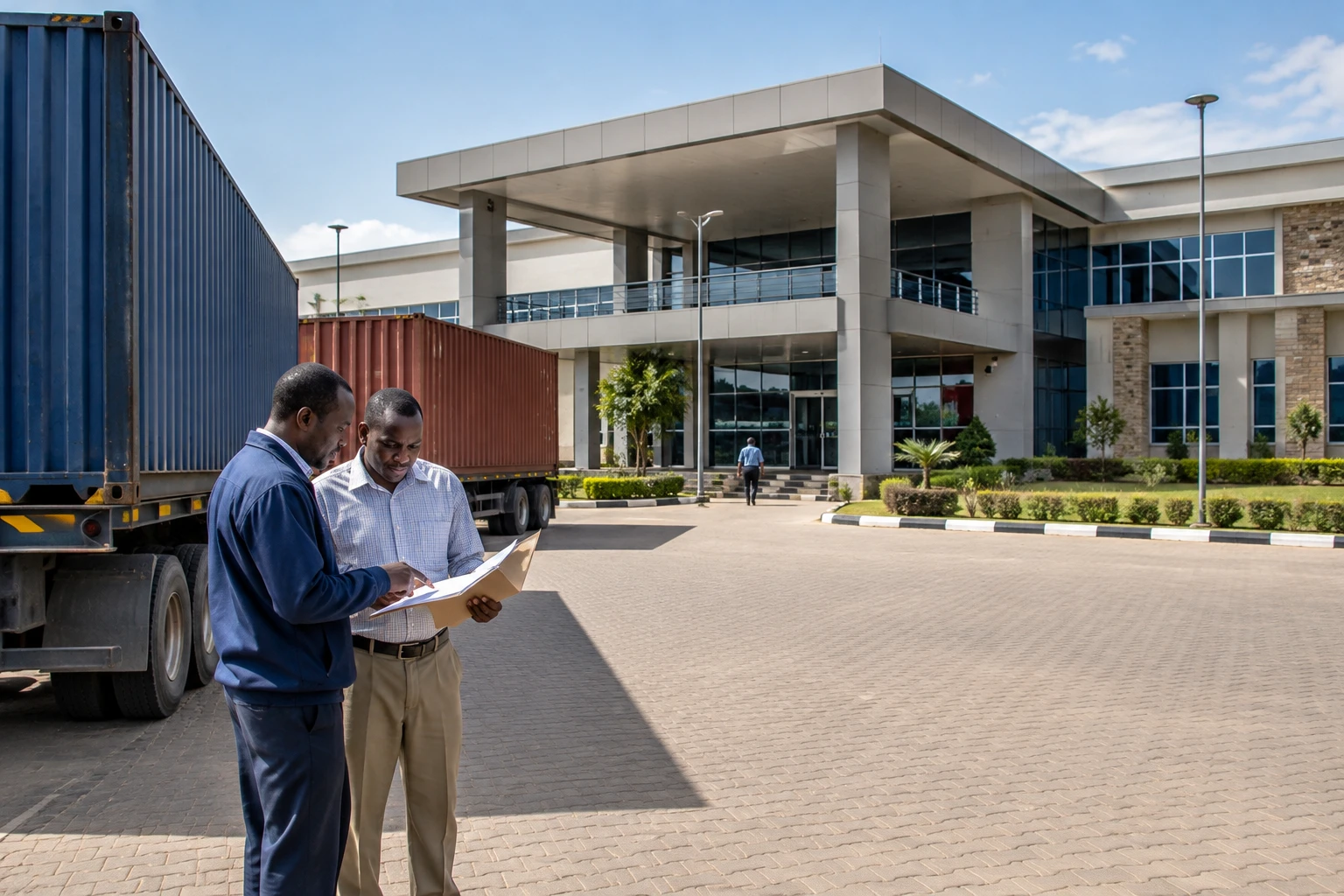
A mine can resume operations without its products reaching markets. For Kayelekera, in northern Malawi, the next test is now logistical: moving uranium concentrate through three countries, obtaining transport-related authorisations and reaching a port.
On 26 October 2026, Lotus Resources announced that it had received Namibian transport and export authorisation, which it described as the last major approval needed for its first shipment. The consignment has not yet departed, however. Notifications, inspections and shipment-specific clearances still need to be completed.
A three-country corridor to France
Malawi is landlocked. To reach a port, the concentrate must therefore cross neighbouring countries. The planned route starts at Kayelekera, passes through Zambia and Namibia, and then reaches Walvis Bay. From there, the consignment is to be shipped to an Orano CE conversion facility in France. Conversion turns the mine concentrate into a material that can proceed through the stages of the nuclear fuel cycle.
Lotus plans an initial batch of about 145,000 pounds of uranium concentrate, divided among four containers. Road transport from the mine was due to begin in the week following the announcement, and a sea departure from Walvis Bay was booked for November. This timetable therefore remains a company forecast, not confirmation that a delivery has been made.
Namibia’s authorisation completes the major clearances obtained in the three countries involved, according to information published on 26 October by Mining Weekly. The South African mining publication and Engineering News also report that the corridor runs through Zambia and Walvis Bay. However, these publications draw primarily on Lotus’s announcements, so operational details should be understood as information provided by the company.
A commercial comeback still to be demonstrated
Kayelekera had already put Malawi on the uranium market. The mine ceased operations in 2014, after a period of falling prices and economic difficulties. The World Bank valued uranium exports at $169.9 million in 2013, then $40.4 million in 2014, the year operations were suspended. These figures appear in its economic report on Malawi.
Production resumed in 2025, but restarting mining activity is not the same as restoring regular exports. The mine must produce concentrate that meets buyers’ requirements, organise its transport and coordinate the rules of several states. Each authorisation and inspection therefore becomes a concrete step between extracted ore and export revenue.
The mine is 85% owned by Lotus and 15% by the Malawian state, according to company data cited in financial publications. Lotus is targeting annual production of 2.4 million pounds in the longer term. That target does not guarantee that this level will be reached, or that production will be sold at that rate. The first shipment marks commercial progress, but it is not yet enough to assess the stability of operations or future revenues.
For Malawi’s economy, the issue is diversification. The country remains exposed to fluctuations in export revenues. In its 2025 economic report, the Ministry of Finance lists Kayelekera among mining projects revived through agreements with the state. But the share that will actually accrue to public finances will depend, among other things, on the volumes sold, the terms of the project and the continuity of production.
Impacts to monitor beyond the mine
The effects are not distributed equally among stakeholders. The state holds a stake in the mine and may benefit from public revenues if activity is sustained. Workers and businesses providing transport or services may benefit from the restart. In Karonga district, where Kayelekera is located, local effects will also depend on sustained employment, procurement from Malawian businesses and the management of environmental impacts. An increase in national exports is not, in itself, enough to show that these benefits are widely shared.
Uranium transport also entails specific radiation-protection and safety requirements. The authorisations obtained do not replace the checks required for each shipment. This distinction matters: general approval for the corridor does not mean that the four containers have already left the mine or completed every regulatory step.
The project has regional significance. Malawi, Zambia and Namibia are members of the Southern African Development Community (SADC), a regional co-operation organisation with 16 member states. The corridor illustrates both the interdependence of infrastructure and the role of regional ports for landlocked countries. It also shows that the movement of strategic resources depends on co-ordination between national administrations, not just production at the mine. The list of SADC members is available on the organisation’s official website.
For Malawi, the next indicator will therefore be the consignment’s actual departure, followed by the regularity of shipments and Kayelekera’s ability to move closer to its production target. In Lilongwe, the authorities may also be judged on how they monitor revenues, the operator’s obligations and local benefits. The return to international markets is thus unfolding in stages: produce, transport, sell, then turn those sales into verifiable benefits for the country.