
 Algeria
 Egypt
 Libya
 Morocco
 Sudan
 Tunisia
 Benin
 Burkina Faso
 Cabo Verde
 Côte d'Ivoire
 Ghana
 Guinea
 Guinea-Bissau
 Liberia
 Mali
 Mauritania
 Niger
 Nigeria
 Senegal
 Sierra Leone
 The Gambia
 Togo
 Cameroon
 Central African Republic
 Chad
 DR Congo
 Equatorial Guinea
 Gabon
 Republic of the Congo
 São Tomé and Príncipe
 Burundi
 Comoros
 Djibouti
 Eritrea
 Ethiopia
 Kenya
 Madagascar
 Malawi
 Mauritius
 Mozambique
 Rwanda
 Seychelles
 Somalia
 South Sudan
 Tanzania
 Uganda
 Angola
 Botswana
 Eswatini
 Lesotho
 Namibia
 Zambia
 Zimbabwe
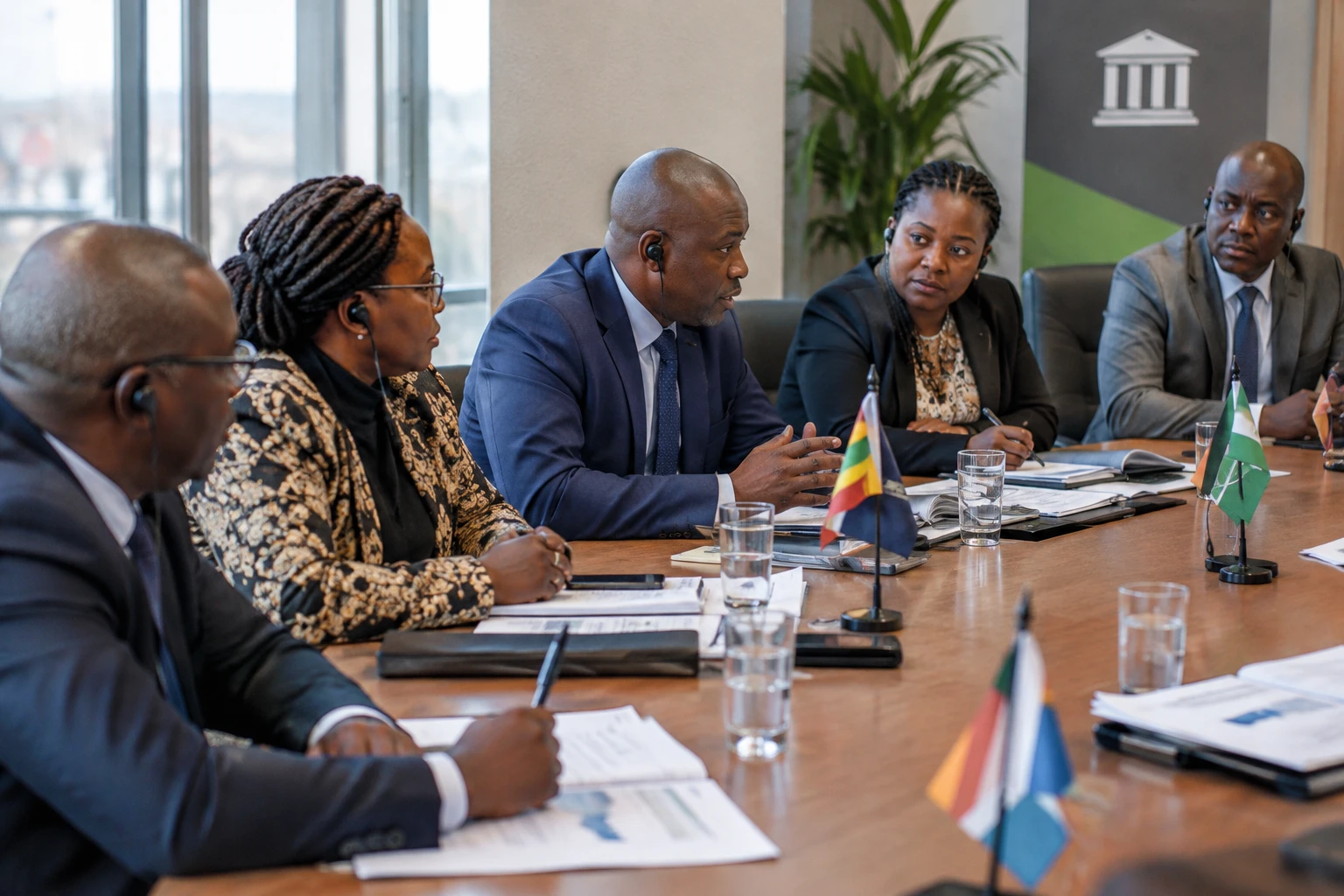
For many residents, the state is measured in tangible things: water from the tap, electricity, maintained roads and collected rubbish. In South Africa, the announced reform of municipal administration aims precisely to bring these services closer to everyday needs, amid fragile finances and wide disparities between municipalities.
Adjusting the municipal model
President Cyril Ramaphosa launched a revised version of the White Paper on Local Government on 22 October 2026. The document sets out public policy priorities; it is not, by itself, a new law. The government presents it as the starting point for institutional, financial and legislative reform, nearly 30 years after the first White Paper in 1998.
The first policy had accompanied the creation of a democratic municipal system after apartheid. It was intended to bring together territories that had long been separated and unequally endowed with infrastructure and resources. The government now acknowledges that municipalities do not have the same resources or capacities. A major metropolitan area therefore cannot be assessed or organised in exactly the same way as a small town or rural municipality.
The document therefore proposes better matching municipal responsibilities to the size, resources and performance of each municipality. If a municipality cannot provide a particular service, it could be assigned to another level of government or organised through a partnership. This differentiation will nevertheless need to specify who is accountable for decisions and how residents can demand answers.
Funding networks and clarifying responsibilities
The president also emphasised the maintenance of existing infrastructure. Revenue from the sale of water and electricity should be protected and reinvested as a priority in the corresponding networks. The aim is to prevent infrastructure already built from deteriorating for lack of regular maintenance.
Payment difficulties with energy suppliers illustrate the scale of the problem, but figures must be treated with caution: they vary depending on the period and on whether arrears or all outstanding debts are counted. The National Treasury says municipalities participating in its recovery programme owed Eskom 85.2 billion rand in December 2025. This figure should not be confused with broader estimates published at other dates. It nevertheless points to lasting tension between local finances and the operation of the national electricity grid.
The reform also aims to draw a clearer distinction between the role of elected officials and that of municipal employees. It provides for stronger financial controls and the professionalisation of administrations. At the same time, trade unions, businesses, associations and residents are being called on to take a greater part in planning and monitoring services. This openness will produce results only if consultations genuinely influence budget decisions.
Different challenges across territories
The consequences of an outage or a failing network are not the same everywhere. In large cities, population density and economic activity increase demand for transport, water and electricity. In small towns and rural areas, a narrower tax base can limit the revenue available to maintain infrastructure. The revised policy recognises these disparities and proposes a more differentiated system.
The issue also affects households and businesses. Irregular water or electricity supply disrupts everyday life and commercial activity. Formal businesses can sometimes invest in alternatives; small shops and workers in the informal economy often have less room to manoeuvre. Conversely, reserving revenue for network maintenance can reduce the sums immediately available for other municipal needs. Trade-offs will therefore have to be transparent.
The government wants to move from diagnosis to implementation through a transition plan and a temporary body tasked with coordinating the stages. The authorities say this arrangement will not replace the statutory powers of ministries, provinces, municipal councils or local administrations. Several changes may require new laws, suitable funding mechanisms and, potentially, constitutional amendments. Their timetable and substance will need to be discussed before implementation.
Reform tested at the ballot box and across SADC
The launch comes ahead of South Africa’s municipal elections, scheduled for 4 November 2026. These polls will determine the composition of the councils responsible for approving budgets and overseeing local administrations. The proximity of the vote gives the reform immediate political significance, but the White Paper’s commitments can be judged only through concrete decisions: funded maintenance, audited accounts, clearly assigned responsibilities and more reliable services.
The issue also extends beyond national borders. South Africa is a member of the Southern African Development Community (SADC), which brings countries in the region together around economic cooperation and development. The ability of cities and municipalities to provide water, energy and infrastructure matters for regional activity and cross-border trade. Pretoria will therefore have to show that the new framework can work beyond announcements and take account of disparities between municipalities.
The central test will be accountability: who steps in when a municipality can no longer provide a service, who funds that intervention and how are residents informed? The answer will determine whether this overhaul permanently transforms local government or adds another layer of coordination without resolving the problems first seen in neighbourhoods.
Category: Politics



