Algeria
 Egypt
 Libya
 Morocco
 Sudan
 Tunisia
 Benin
 Burkina Faso
 Cabo Verde
 Côte d'Ivoire
 Guinea
 Guinea-Bissau
 Liberia
 Mali
 Mauritania
 Niger
 Nigeria
 Senegal
 Sierra Leone
 The Gambia
 Togo
 Cameroon
 Central African Republic
 Chad
 DR Congo
 Equatorial Guinea
 Gabon
 Republic of the Congo
 São Tomé and Príncipe
 Burundi
 Comoros
 Djibouti
 Eritrea
 Ethiopia
 Kenya
 Madagascar
 Malawi
 Mauritius
 Mozambique
 Rwanda
 Seychelles
 Somalia
 South Sudan
 Tanzania
 Uganda
 Angola
 Botswana
 Eswatini
 Lesotho
 Namibia
 South Africa
 Zambia
 Zimbabwe
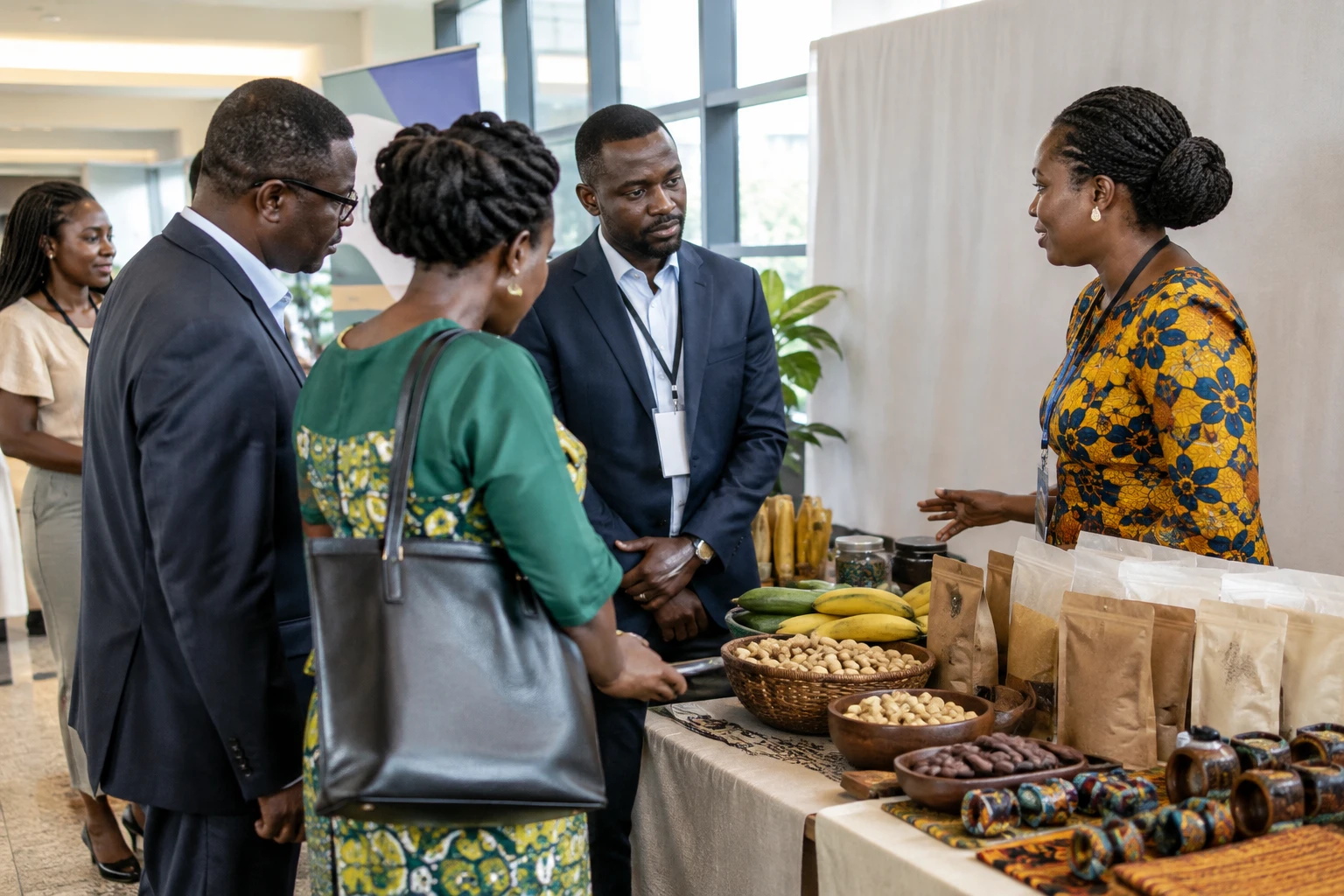
A permanent space to showcase products and a monthly market to sell them: in Accra, Ghana is banking on more direct business contacts to turn local businesses into exporters. The challenge goes beyond finding buyers. Companies must also produce regularly, meet standards and ship goods at a competitive cost.
A place to sell and prepare for export
On 23 October 2026, the Ghana Export Promotion Authority (GEPA), the public body responsible for promoting exports, inaugurated the Accra Trade House and launched the GEPA Friday Market. The ceremony was held at Africa Trade House in the Ghanaian capital. Several Ghanaian media outlets reported the opening and the aims of the two initiatives.
The Accra Trade House is intended to serve as a permanent showcase for products made in Ghana. It aims to bring producers, exporting businesses and buyers together beyond one-off trade fairs. According to announcements made at the inauguration, the venue is also expected to help bring together products for Ghanaian commercial spaces abroad, including in Nairobi, London and Philadelphia.
The Friday Market complements this role. It is scheduled to take place on the last Friday of each month, from 8am to 7pm, giving producers the chance to sell directly to consumers, wholesalers, retailers and institutional buyers. The announced range includes cocoa products, cashew nuts, bananas, yams, plantains, pineapples and handicrafts.
For small and medium-sized enterprises, the market also offers a chance to test their products and presentation with the public. Feedback can help them adjust packaging, prices or quality. But a presence at a market does not, by itself, guarantee an order from abroad: businesses must still meet the certification, traceability and delivery requirements of their target markets.
Turning growth into lasting orders
The initiatives follow a sharp rise in non-traditional exports. GEPA put revenues from these exports at $5.006bn in 2025, up from $3.83bn in 2024, an increase of 30.7%. These exports comprise products other than Ghana’s main traditional exports, notably gold, crude oil, cocoa and timber.
The Ghana News Agency, the national news agency, reported GEPA’s figures in April 2026. The Bank of Ghana has also recorded growth in non-traditional exports in its economic data, although its statistical series do not use exactly the same scope or figure. The discrepancy is a reminder that categories and calculation methods must be distinguished before figures are compared.
Value addition is already an important part of this trend. According to GEPA’s report, as relayed by the national agency, processed or semi-processed products accounted for a significant share of 2025 revenues, with cocoa products playing a notable role. Processing goods locally can increase the value captured by Ghanaian businesses rather than simply shipping raw materials. This, however, depends on reliable access to finance, energy, inputs and equipment.
The potential benefits will not be distributed automatically. Businesses based in Accra can access buyers and logistics services more easily. Producers in farming regions need roads, storage and cold chains to deliver on time. Smaller businesses can benefit from a shared showcase, but they remain exposed to compliance costs and financing difficulties that larger companies can absorb more easily.
From national ambition to the West African market
The strategy is part of Ghana’s accelerated export development programme and its 24-Hour Economy agenda, which seeks to strengthen production, processing and employment. In May 2025, the presidency set a target of increasing annual revenues from non-traditional exports from about $3.5bn to at least $10bn by 2030. The 2025 results bring the country closer to that target, but do not yet show that growth will be sustainable.
The regional market is central. Ghana belongs to ECOWAS, the Economic Community of West African States, and participates in the African Continental Free Trade Area (AfCFTA), which aims to facilitate trade between African countries. However, access to these markets also depends on rules of origin, standards, customs procedures and transport infrastructure. A showcase in Accra can create contacts; it cannot remove these obstacles.
Progress will therefore be measured by concrete results: repeat contracts, volumes actually shipped and more small businesses able to sell beyond the domestic market. GEPA has also mentioned possible commercial spaces in European cities, but these locations remain announced plans. Ghana’s challenge is to connect trade promotion, local production and real access to West African and international markets.