Algeria
 Egypt
 Libya
 Morocco
 Sudan
 Tunisia
 Benin
 Burkina Faso
 Cabo Verde
 Ghana
 Guinea
 Guinea-Bissau
 Liberia
 Mali
 Mauritania
 Niger
 Nigeria
 Senegal
 Sierra Leone
 The Gambia
 Togo
 Cameroon
 Central African Republic
 Chad
 DR Congo
 Equatorial Guinea
 Gabon
 Republic of the Congo
 São Tomé and Príncipe
 Burundi
 Comoros
 Djibouti
 Eritrea
 Ethiopia
 Kenya
 Madagascar
 Malawi
 Mauritius
 Mozambique
 Rwanda
 Seychelles
 Somalia
 South Sudan
 Tanzania
 Uganda
 Angola
 Botswana
 Eswatini
 Lesotho
 Namibia
 South Africa
 Zambia
 Zimbabwe
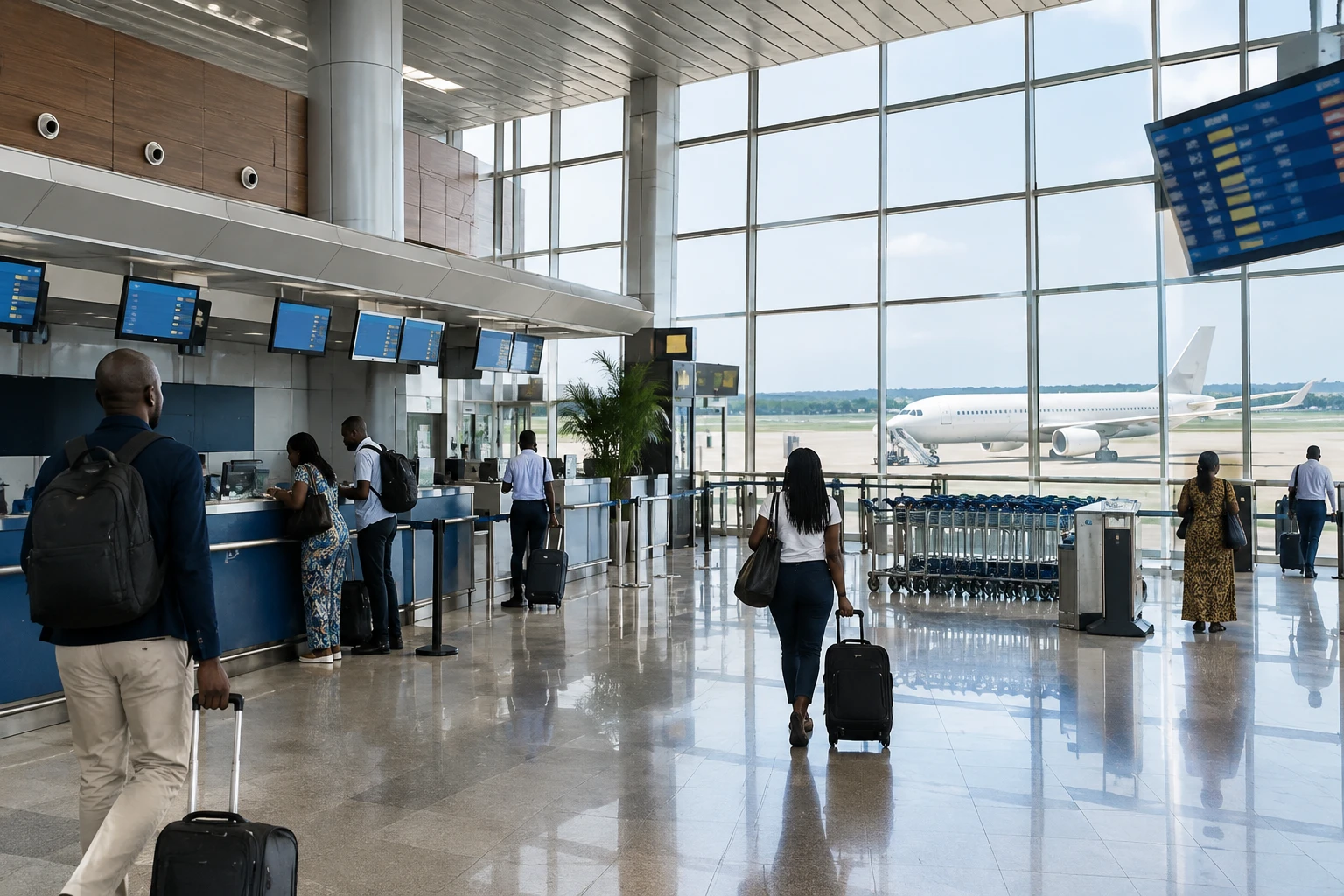
For travellers between Abidjan and Paris, the name shown on the ticket will not always indicate which airline operates the flight. Since 25 October 2026, Air France and Air Côte d’Ivoire have been marketing some of each other’s flights on the route. The change expands booking options, but does not mean the airlines have merged or that all their services are automatically shared.
A commercial agreement on a busy route
In practice, one airline can sell a seat under its own code on an aircraft operated by its partner. Passengers can therefore choose from more flights offered for sale by each airline. However, the carrier operating the flight remains the one named in the travel details. Schedules, baggage allowances and arrangements for assistance should be checked at the time of booking.
The agreement covers Paris-Charles-de-Gaulle and Abidjan’s Félix-Houphouët-Boigny International Airport. The two airlines confirmed that it would take effect on 25 October 2026. They describe the cooperation as a way to offer greater flexibility in choosing flight times. Codesharing can also make it easier to sell tickets and, depending on the journey, some connecting flights. It does not, by itself, guarantee lower fares or additional services.
The route changed significantly in 2025, when Air Côte d’Ivoire began operating its first long-haul service to Paris with an Airbus A330-900neo. The Ivorian airline subsequently expanded its schedule. Since 29 March 2026, it has announced eight weekly flights to the destination. Air France and Corsair also remain on the route, which links a major West African economic hub with Europe.
Competition remains alongside cooperation
The commercial rapprochement is taking place in a market where the airlines do not have the same weight. An analysis published in Côte d’Ivoire in October put Air Côte d’Ivoire’s schedule at eight weekly flights and Air France’s at twelve, excluding Corsair’s services. These figures describe a particular period and scheduled flights; they should not be confused with a guarantee that the flights will actually operate every week.
This difference in scale gives the agreement particular significance for the Ivorian airline. With Air France’s code, its flights can appear in its partner’s sales channels. In return, Air Côte d’Ivoire can distribute tickets linked to Air France flights. This is a way to make the offer more visible and broaden sales channels, without the codeshare itself redistributing frequencies or aircraft between the two companies.
The partnership also rests on shareholding ties. The 2024–2025 report of the Ivorian government’s Directorate General of the State Portfolio says Air France Finance holds 11.11% of Air Côte d’Ivoire’s capital. The national airline remains majority-owned by the Ivorian state, which holds 57.54% of its capital, according to the same document. These stakes shed light on the relationship between the players, but do not erase their distinct commercial interests.
The route has already been the subject of discussions about frequencies and flight authorisations between Abidjan and Paris. In autumn 2025, Air Côte d’Ivoire’s entry into the long-haul market revived debate about the position given to French and Ivorian airlines. Codesharing is another form of cooperation: it does not resolve questions of competition, airport slots or the balance between carriers.
Different effects for different travellers
For families, business travellers and the Ivorian diaspora, the immediate benefit is mainly practical: more options may appear when searching for a ticket, with different flight times or sales options. Companies arranging travel between the two cities can also compare a wider range of marketed flights. But codesharing does not mean that a ticket bought from one airline gives access to all the other’s loyalty benefits or services. These details depend on the rules applied to each fare.
For Air Côte d’Ivoire, the stakes extend beyond the journey to France. Its regional network is organised around Abidjan, where passengers from other Ivorian cities and neighbouring countries transit. The long-haul route can therefore serve as a gateway to Europe for some West African travellers. That depends, however, on connections, schedules and ground services being adequate. The effects will not be the same for a passenger departing from Abidjan and one who must first reach the economic capital from another region.
The regional dimension is tangible, without making this agreement an ECOWAS initiative. The Economic Community of West African States brings together countries in the sub-region and promotes their integration, but the agreement presented here concerns two airlines and the route to Paris. Rather, it illustrates how African carriers can seek to strengthen their access to international markets while working with more established partners.
What happens next will depend on tangible results
Air Côte d’Ivoire said it had carried 13,150 passengers on the Abidjan–Paris route between October and December 2025, during its first three months of operations. The figure, provided by the airline’s management and reported by several Ivorian media outlets, offers an initial indication of demand. It is not enough, however, to establish the route’s profitability or the effect of the new agreement, which took effect a year later.
Monitoring will therefore focus on very tangible indicators: the actual availability of flights for booking, punctuality, connection arrangements and changes in passenger numbers. It will also be important to observe how competition between Air Côte d’Ivoire, Air France and Corsair on the route evolves. For Côte d’Ivoire, the challenge is to turn greater commercial visibility into useful connectivity, without confusing partnership with control of the market.